
CFO | Empower Society for Good I Author
Why Israel’s Survival May Depend on Being Feared, Not Loved
Growing up in apartheid South Africa, I knew what it felt like to live in a pariah state. Boycotts were not an abstract headline—they were a lived reality. The sports boycott cut South Africa off from rugby, cricket, and the Olympics. Economic sanctions, cultural boycotts, and diplomatic isolation followed. Protest movements abroad were loud and coordinated: marches, university divestment campaigns, and concerts turned into anti-apartheid rallies.
From inside South Africa, it felt like the world was pressing in from all sides. Whether or not you supported the government’s policies, the isolation was inescapable.
Today, living in Israel, that feeling is familiar. Protests in cities like Sydney, Athens or London are loud, angry, and morally uncertain. But there’s a question we must face: what kind of opposition are we facing now—and is it the same as South Africa in the 1980s?
Fear or Love?
Daniel Gordis, in conversation with Micha Goodman, posed a blunt choice: should Israel aim to be loved by the West, or feared by its enemies? In reality, love and fear aren’t equally available—and sometimes, being liked is irrelevant to survival.
The Torah commands us to remember Amalek—not just for their cruelty, but because their hatred was irrational. Egypt’s oppression, by contrast, had a “reason”: fear of a growing minority. Rational hostility can be negotiated; irrational hatred cannot be appeased.
Rabbi Jonathan Sacks taught that love based on a cause will fade when the cause disappears—and the same is true for hate. If today’s hostility toward Israel is grievance-based, it can be addressed. If it’s an irrational obsession, rooted in something deeper, changing policy will not erase it.
Selective Outrage
Consider the Kurds: about 40 million people—much more than the Palestinian population—spread across Turkey, Iraq, Syria, and Iran. They have a coherent identity, a history of persecution, and a legitimate claim to statehood. Yet there are no weekly global marches for Kurdish independence.
If this were purely about justice, why not revisit the 1917 Sykes–Picot agreement that carved up the Middle East? Why not question Jordan’s creation on land, which was promised, as part of the Jewish homeland? The world’s disproportionate focus on Israel suggests something beyond rational grievance.
The Current War and the Cost of Incompleteness
The war with Hamas is not just a border dispute—it’s a fight against an ideology committed to Jewish erasure. Agreeing to a ceasefire that leaves Hamas intact risks another October 7.
History shows that wars ended inconclusively often return, bloodier than before. As uncomfortable as it may be, deterrence—being feared by one’s enemies—can be more stabilising than conditional goodwill. Incomplete wars invite more bloodshed.
Parshat Eikev’s Ancient Warning
In Parshat Eikev, Moshe warns:
“You shall not fear them… You shall not say in your heart, ‘These nations are more numerous than I; how can I dispossess them?’ Remember what the Lord your God did to Pharaoh and to all Egypt.” (Deut. 7:16–18)
The numbers are as stark now as then—about seven million Jews surrounded by hundreds of millions in a hostile region. The Torah’s answer is not bravado but conviction: do not fear, remember your history, and act with purpose.
And when success comes, Moshe adds:
“Do not say: ‘My strength and the might of my hand have made me this wealth.’ But remember: it is the Lord your God who gives you the strength to succeed.” (Deut. 8:17–18)
Rabbi Yehuda Amital’s Guidance
After the Yom Kippur War, Rabbi Yehuda Amital warned against two opposite dangers:
- Arrogance after victory—forgetting that success is a partnership with God.
- Paralysis after loss—forgetting that God gives us the ability to act.
His balance applies today: fight decisively when forced to, act with moral restraint (tohar haneshek), and remember that our strength is both a gift and a responsibility.
Reflection
Looking again at Parshat Eikev this week, I’m struck by how often it speaks of love, fear, and dealing with enemies. We are told not to pity them, not to fear them, but to remember what God did to Pharaoh and Egypt. As a conscious Jew, that’s not easy to read. We do pity the suffering in Gaza. We send humanitarian aid, even in wartime. But the war would end tomorrow if Hamas surrendered and laid down its arms.
It’s the same choice again: be feared by enemies or loved by the Western world. Some nations considering joining the Abraham Accords want us to “finish the job.” Other voices urge restraint. The signals are mixed, but the parsha is clear: follow God’s judgments, act correctly, and the nations will respect you.
What “acting correctly” means in our time is not always simple. But Israel’s desire to do good for its citizens —for Jews, Arabs, minorities, and the world—is real. The challenge is aligning that desire with the hard demands of survival.
I’ve seen the crosswinds before, growing up in a pariah state. And I’m left wondering: how do we act in a way that is true to who we are, faithful to the text, and still able to survive in a world that does not always love us?
After Apartheid: Lessons for the Palestinian State Debate
The protests against South Africa had a clear political goal: to end apartheid. They succeeded in changing policy. The protests against Israel are different: disproportionate, selective, and often rooted in something far deeper than stated grievances.
Apartheid ended. It was a moral necessity—ending racial laws and opening democracy to all. It brought positive change: international acceptance, new freedoms, and opportunities for millions who had been excluded.
But it also brought unintended consequences: staggering crime rates and unemployment, entrenched poverty, and a culture of political corruption that eroded public trust. Prosperity came unevenly. The ideals of liberation were noble, but the institutions to sustain them were weak.
This is not to equate the two situations, but it is a cautionary parallel: statehood without the foundations for accountability, law, and order can collapse under the weight of its own expectations. Advocates for a Palestinian state must confront this reality.
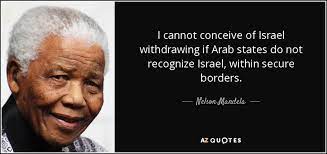
A Palestinian state formed without disarming terror groups, reforming governance, recognising Israel to exist as a Jewish State, and building a political culture that values human rights and peace would risk becoming another Gaza, only with international legitimacy. That would be a danger to Israel, to the Palestinians themselves, and to regional stability.
Afterthought on Memory
Parshat Eikev commands us to remember:
“Remember what the Lord your God did to Pharaoh… do not forget.” (Deut. 7:18; 8:2)
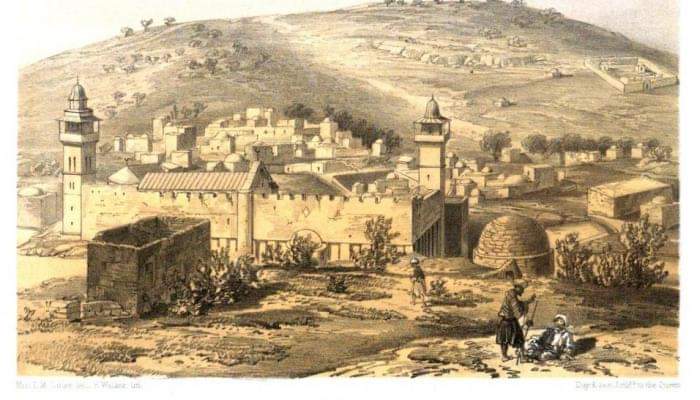
96 years ago, this week, on the night of the 18th of Av, 1929, the streets of Hebron ran red with Jewish blood. Sixty-seven Jews—including 14 children—were butchered by their Arab neighbours. Twenty-four were young men studying Torah at the Hebron Yeshiva. Nearly 80 more were wounded. Homes were looted and burned. The thousand-strong Jewish community of Hebron was erased in hours, long before any “occupation” or “settlements.”
This wasn’t about borders. It was about unadulterated hatred—the same ideology that fuels Hamas, Hezbollah, and Iran today. The same chants heard in the streets of London, New York, and Sydney: “Khaybar, Khaybar, ya Yahud”—a call to repeat a 7th-century massacre of Jews.
October 7th wasn’t an isolated act of terror. It was the continuation of a centuries-old war against the Jewish people. Hebron 1929 proves it.
The Hebron Yeshiva survived—relocated to Jerusalem—and today 2,200 students study there. We are still here. And we are not leaving.
Closing Thought
Parshat Eikev offers a roadmap for moments like this: do not fear the numbers; remember your story; act with conviction; and when you succeed, remember Who gave you the strength.
Am Yisrael Chai.
Cover image created by ChatGPT (DALL·E) and is free for commercial use in accordance with copyright law and OpenAI’s terms of service. Other Images are sourced from social media.
Related Topics
Related Posts