Why Jerusalem is More United Than America Right Now
I live in perhaps one of the most divided cities in the world: Jerusalem. Not only do the followers of the three Abrahamic religions vie for their place here, but Orthodox and secular Jewish communities struggle over what kind of city and country they want to inhabit. There are near-daily clashes between Jewish and Arab residents, both Christian and Muslim. Less frequently reported in the global media is the tension within religious Jewish society itself. With so much friction, it is remarkable that anyone can walk through the streets unscathed.
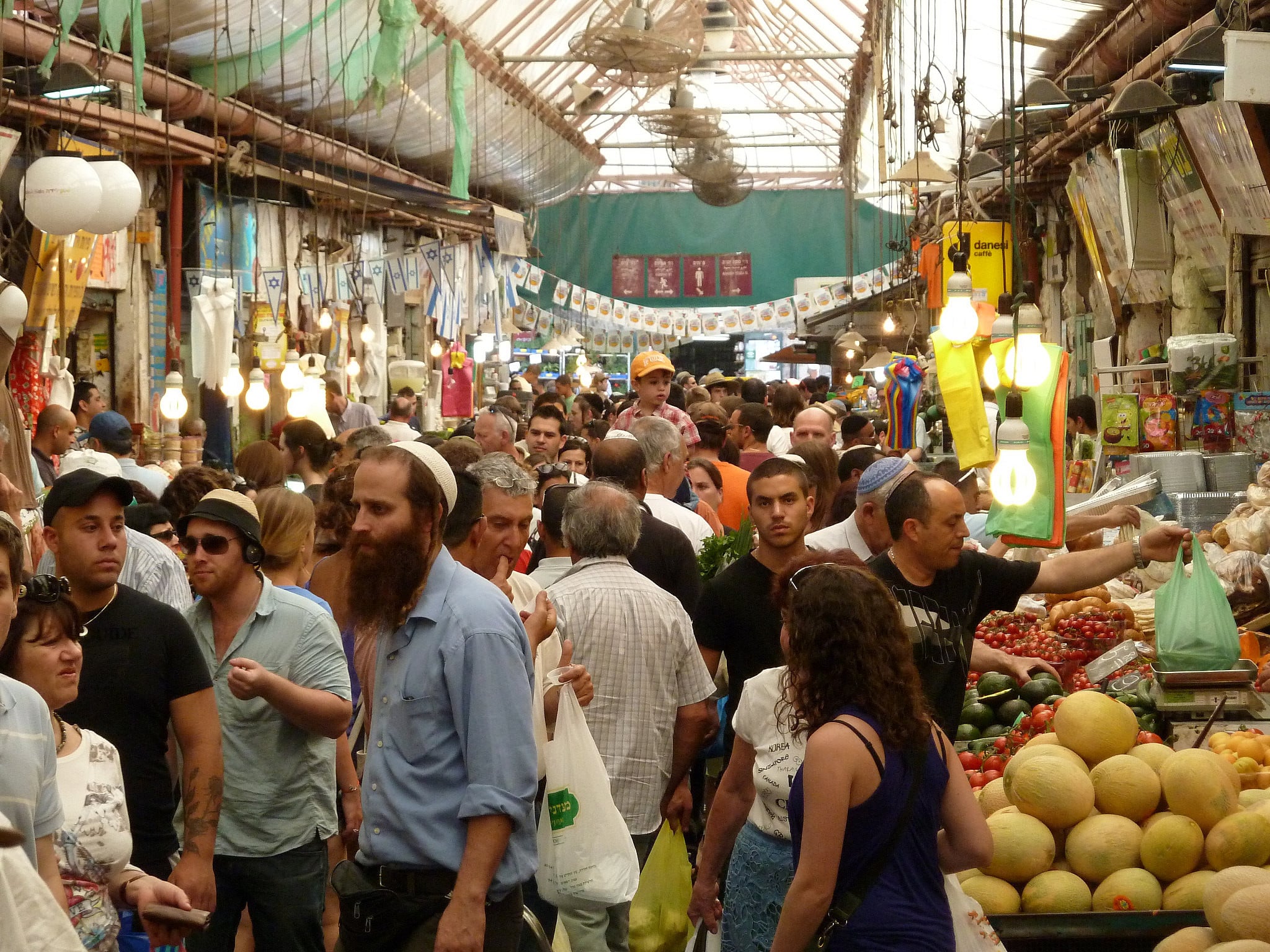
And yet, despite accusations that Israel is an “apartheid state,” the people of Jerusalem often share the same public spaces. At the Mahane Yehuda Market, I regularly hear shopkeepers speaking Arabic to one another while most customers chat in Hebrew. Each evening at the park near my home, Muslim and Jewish children swing and slide side by side, though rarely together. Despite our religious and political differences, we live in close proximity and try to coexist in some fragile, imperfect form of peace, layered with deep and unresolved tensions.
After more than twenty years in Israel, I recently found myself losing sleep, not over Jerusalem’s divisions, but over America’s.
The country where I grew up, and where I learned my early ideals, seems increasingly fractured. Recent articles document widening political divides over everything from climate change and immigration to transgender rights and how history is taught in schools. Studies by the Pew Research Center over the past decade show that political polarization has grown dramatically, with partisan hostility reaching unprecedented levels.
I see this polarization not only in the headlines but in my own social media feeds, from Facebook to Twitter to Instagram.
As a Messianic Jew, many of my friends are American Christians. Most post photos of family gatherings, meals, workouts, or milestones. But some regularly complain about living in “blue states” or use the word “liberal” as if it were a disease. Ironically, many of these same friends praised the film Jesus Revolution, which tells the story of how God reached hippie communities despite resistance from conservative churches. After watching it, I wondered how many of them would actually open their homes or churches to people who support gay marriage or socialized medicine.
I am also deeply involved in theatre, having worked on more than twenty-five productions as a performer and director. Many of my theatre friends post similar everyday content, but hardly a day passes without someone lamenting life in a “red state” or raging about new legislation, such as a law requiring parental permission for teachers to use a child’s preferred nickname. Yet I find myself wondering whether their commitment to “wokeness” would allow them to befriend a neighbor who owns guns or believes abortion is wrong.
Through these posts, I see how many of my American friends have come to define themselves primarily by political tribe rather than shared citizenship. Trust in institutions has eroded. Loyalty to one’s side often outweighs concern for the common good. Some scholars now describe this shift not merely as tribalism, but as “political sectarianism,” in which the other side is viewed as immoral, dangerous, and existentially threatening.
A few years ago, one of my theatre friends shared a post about a local beekeeper:
“I wanted to buy local honey, so I checked out his business page. But since I don’t like supporting bigots and right-wingers, I checked his personal page too, lol. He seemed fine: family photos, nature shots, support for local schools. Then BAM! A repost from The Mark Kaye Show in 2020 about Trump owning the libs. I knew my intuition was right.”
Last week, my aunt made a similar post about an ice cream shop whose owner supports ICE. Another friend urged people to boycott Target over LGBTQ+ issues.
I read these posts, and I cry.
I cry for America, for its brokenness, and for divisions that seem to deepen rather than heal. I cry because I have come to realize that, in some ways, people in Jerusalem show more day-to-day respect for one another than many Americans do, even though America prides itself on freedom, diversity, and equality while we are living through war.
I find myself asking: How did Americans reach a point where they decide where to shop based on political alignment? If we did that in Israel, we would starve. And yet we are the ones often labeled as genocidal maniacs.
A personal story brings this home.
A few years ago, my family was given a used Mazda 3. Last summer, during a heatwave with desert temperatures soaring into the 30s Celsius, over 100 Fahrenheit, our air conditioner died. It happened on a Friday, when all the local mechanics were closed for Shabbat. So I did what any practical Israeli would do: I crossed the Hizma checkpoint into the West Bank.
There I met Muhammad.
Within two hours, he had located the needed part and restored our air conditioning. Muhammad and I do not share a religion, nationality, or political outlook. We barely share a language. We almost certainly disagree about the Israeli-Palestinian conflict. But he is a skilled and honest mechanic, and I would trust him with my car again without hesitation.
That is what coexistence looks like on the ground.
I genuinely appreciate that my social media feed includes people with different opinions. But I worry that many of my American friends live inside ideological bubbles, consuming information that only reinforces what they already believe. I worry that empathy is disappearing. I worry that polarization will continue to fuel violence. I already feel safer walking in Jerusalem than shopping at a grocery store when visiting family in the United States.
Abraham Lincoln famously said, “A house divided against itself cannot stand.” He was quoting Jesus.
Unity is not a sentimental ideal. It is a necessity for stability and strength. The growing political division in America is weakening it. If we cannot find ways to bridge religious and ideological divides, the future may grow even darker.
I know it sounds ironic, given that the ink on Israel’s ceasefire with Hamas has barely dried, but perhaps Americans could learn something from our imperfect attempts at coexistence. We create dialogue forums where people share personal stories. We promote businesses owned by people with differing views. We support joint community initiatives. We keep showing up in shared spaces.
Or maybe you have a better idea than simply canceling anyone who disagrees with you. If so, I would love to build community with you.
I do not pretend to have the answers. Not even close. But I do have questions:
Can we recognize the humanity of those who think differently from us?
Can we approach conversations with humility and love, even when we feel hurt or offended?
Can we, as a wise rabbi once taught, focus first on the plank in our own eye before pointing out the speck in someone else’s?
The situation in America is complex. So is the situation in Israel. So is the situation everywhere. But peace will always remain out of reach if we insist on seeing the other as the enemy.