Why Jews mourn Jewish strangers
When a Jewish person is killed thousands of miles away, Jews around the world often feel it as a personal loss. Not symbolically. Not intellectually. Personally.
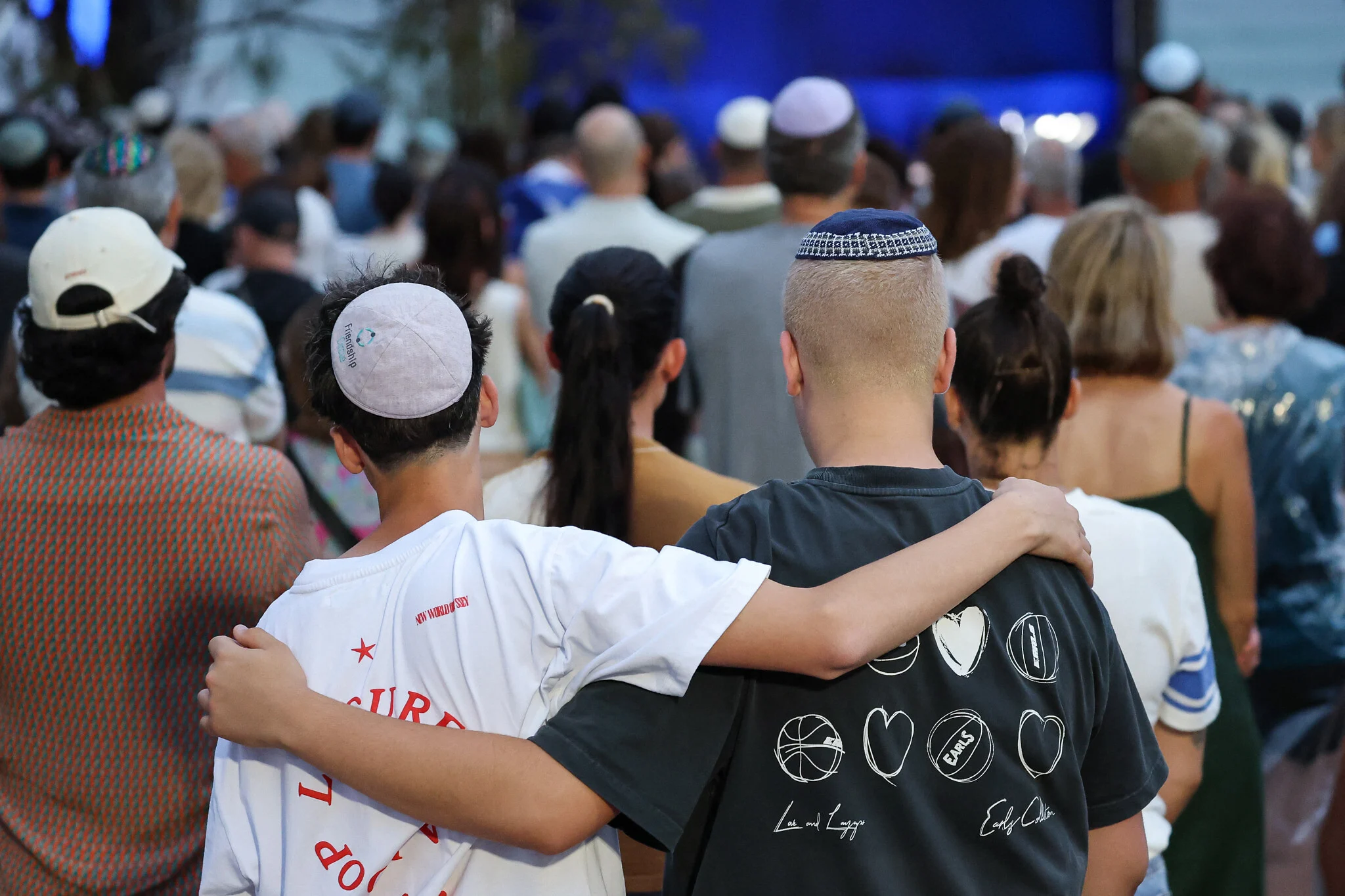
After the recent mass killing in Bondi, Jewish communities across continents gathered, mourned, and checked in on one another. Most of them have never been to Australia. Most of us did not know the victims. And yet the pain traveled fast and deep, as if the loss had occurred in our own neighborhood.
This reaction often puzzles people outside the Jewish community. Why would the death of a stranger feel so immediate? Why does it produce not just sadness, but anguish and despair? Or as my son put it simply, why do our hearts hurt?
The answer matters, because it reveals something fundamental about how Jews understand belonging, memory, and responsibility. It also challenges a modern instinct to treat grief as private, contained, and proportional only to proximity. For Jews, grief does not work that way.
Start with the obvious but often overlooked fact: Jews are very few. Roughly 15 million worldwide, less than two-tenths of one percent of the global population. That is not a metaphor. It is a demographic reality.
When a people is that small, distance collapses. Six degrees of separation become one or two. A stranger is never entirely a stranger. Someone knew their family, or prayed in the same language, or shares a lineage that has been counted, expelled, scattered, and counted again. This is not tribal narcissism. It is what happens when you belong to a tiny people whose survival has never been guaranteed.
But numbers alone do not explain the depth of the response. Plenty of small groups do not react this way. The Jewish reaction is shaped by something more enduring. Jews carry history differently.
For most peoples, violence against their group is episodic. For Jews, it is cumulative. Pogroms, expulsions, forced conversions, massacres, and the Holocaust are not separate chapters. They are read as a long, unfinished sentence. This does not mean Jews live frozen in trauma. It just means that the past is not safely archived. It is present tense. Jewish memory is not nostalgia. It is vigilance.
So when a Jew is murdered in Bondi, or on the streets of Washington DC or Israel or Manchester, England, or anywhere, the Jewish mind does not ask only, “What happened?” It also asks, often unconsciously, “What is this a continuation of?” That question is not paranoia. It is pattern recognition shaped by centuries of experience.
Moreover, Jews have a moral architecture that centers an ancient teaching that all Jews are responsible for one another. This is not just a saying. It is a demand. Historically, Jewish communities survived because they treated that responsibility as non-negotiable. If one Jew was targeted, all were implicated. If one family fell, the community caught them. When states failed or turned hostile, Jewish life persisted through mutual accountability.
That worldview did not evaporate when Jews gained citizenship or prosperity. It became instinct. So when a Jew is harmed anywhere, many Jews feel that a line of responsibility has been breached and that it demands a response. This is often misread as insularity or clannishness. In reality, it is a form of moral seriousness that refuses to outsource care.
Jewish identity also complicates the idea of the “stranger.” Jews may disagree fiercely about belief, politics, Israel, or God itself. But disagreement does not dissolve peoplehood. Jews argue, sometimes bitterly, and still often show up for one another in moments of grief. That is because Jewish identity is not just a religion you practice. It is a story you inherit and a future you feel obligated to protect. When tragedy strikes, it does not feel like news. It feels like something has happened to the family.
This is where the reaction becomes hardest for outsiders to understand, and easiest to caricature. Jewish grief for Jewish victims is sometimes portrayed as exclusionary, as if caring deeply about one’s own diminishes compassion for others. That is a false choice. Jews grieve civilians killed in wars, victims of mass shootings, refugees fleeing violence, and innocent lives lost across the world. Jewish ethics insist on the sanctity of every human life.
But universal compassion does not erase particular bonds. When a family loses a child, we do not accuse them of caring too much about their own. We understand that proximity intensifies pain. Jewish grief operates on the same human principle, intensified by history and obligation.
There is one more truth that must be said plainly.
After the Holocaust, Jews made an unspoken commitment to one another: no Jewish death would pass unnoticed. No name would disappear quietly. No loss would be absorbed without witness. Lighting candles, saying prayers, and gathering across oceans are not performative acts. They are acts of resistance against erasure. They say: this life mattered. This person belonged. We will not look away.
When Jews mourn Jewish strangers, they are not indulging in sentimentality. They are honoring a covenant with the dead and a responsibility to the living. This response can look excessive. It is not. It is disciplined, learned, and tested over millennia.
So when you see Jewish communities grieving for people they never met, understand that you are witnessing more than grief. You are seeing a people responding as they always have, drawing lines of connection across distance and time, insisting that what happens to one of us matters to all of us. Small numbers make that circle visible. Memory keeps it intact. Obligation keeps it alive.
May the memories of those killed in Sydney be a blessing, and may those who were injured find healing, strength, and comfort in the days ahead.