Philosophy, kabbalah, screenwriting...
Why Restoring Ties with Israel Anchors Venezuela in the West
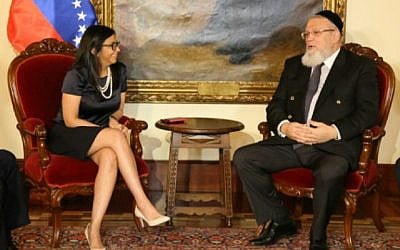
A single letter can alter a nation’s foreign policy course. Chief Rabbi Isaac Cohen’s recent letter to Acting President Delcy Rodríguez, formally requesting the resumption of diplomatic ties between Venezuela and Israel, marks a long-anticipated step. Far from past rhetoric, this proposal finds fertile ground in mutual respect and strategic calculation.
Ideological, political, and military battles are not won by cannons alone. There is soft power, and Israel excels in this diplomatic arena. This framework encompasses post-disaster humanitarian aid, technical assistance, education, and even defense modernization. Israel has applied this model across Christian-majority African nations, delivering vital support in water management, agriculture, and healthcare. Venezuela stands to benefit from that exact expertise.
I. Shared Goodwill, Passover, and Gesture Diplomacy
This rapprochement is no accident. The Acting President has repeatedly expressed warm regard for Rabbi Cohen. During the recent convergence of Holy Week (Eastern) and Passover, Rodríguez extended heartfelt greetings to the Venezuelan Jewish community, expressing hope for renewed bilateral relations grounded in sovereignty and mutual understanding.
That momentum built following the arrival of an Israeli emergency response delegation after the recent earthquakes. Official receptions for Israel Defense Forces (IDF) personnel—represented in part by Spanish-language spokesperson Roni Kaplan—translated intent into action. Kaplan was captivated by Venezuela, a familiar outcome for those who visit us.
In La Guaira, technical assistance forged bridges of direct solidarity. Local residents welcomed the delegation warmly. Beyond the immediate aid, there is cultural resonance: for a Christian-majority population, hostility toward the birthplace of Jesus holds little appeal—a contrast to the geopolitical posture of the previous twenty-six years, which sought to distance Venezuela from the Western fold. Even at the Central University of Venezuela (UCV), long considered an ideological stronghold of the left, students welcomed the delegation with chants of “Am Yisrael Chai.” Times change.
II. Water and Land: Technical Solutions for Critical Needs
Beyond goodwill, this decision serves pragmatic national interests. Venezuela faces severe infrastructure and food production deficits. Israel leads globally in desalination and water management technologies, which are essential for resolving the water crisis along Venezuela’s central coast.
In agriculture, Israeli expertise in arid-land farming and precision drip irrigation offers a framework to revive farmlands in Guárico, Barinas, Portuguesa, and Cojedes affected by past expropriations. Deploying these technologies alongside local producers and rural workers can quickly turn underutilized land into productive agricultural hubs. Generating rural prosperity and securing national food supplies also serves as a structural deterrent against irregular armed groups, positioning Venezuela to eventually reclaim its status as a food exporter.
III. The Abraham Accords and Geopolitical Realignment
Internationally, normalizing ties aligns with the Abraham Accords framework, which emphasizes economic integration and mutual recognition across the Middle East. Formally acknowledging the reality of the State of Israel, established in 1948, connects Venezuela to a expanding global trade network.
This alignment does not require severing ties with the Islamic world. Instead, it allows Venezuela to strengthen engagement with Sunni-majority nations focused on economic development, such as Saudi Arabia, Qatar, and the United Arab Emirates. This pivot moves the country away from previous alignments with actors like Iran and non-state militant groups, re-anchoring foreign policy in economic pragmatism.
IV. A Final Diplomatic Question
Should full diplomatic relations be restored, Venezuelan diplomacy will face a key decision regarding its embassy location: the established diplomatic center of Tel Aviv or the recognition of Jerusalem as the capital. As the political transition continues, Rabbi Cohen’s initiative opens a necessary debate on Venezuela’s role within the evolving global order.
Related Topics
Related Posts