
Educator, Mother, Learner, Wife — Guided by Torah
Why the Chareidi & Dati Leumi Divide Goes Deeper Than Strictness
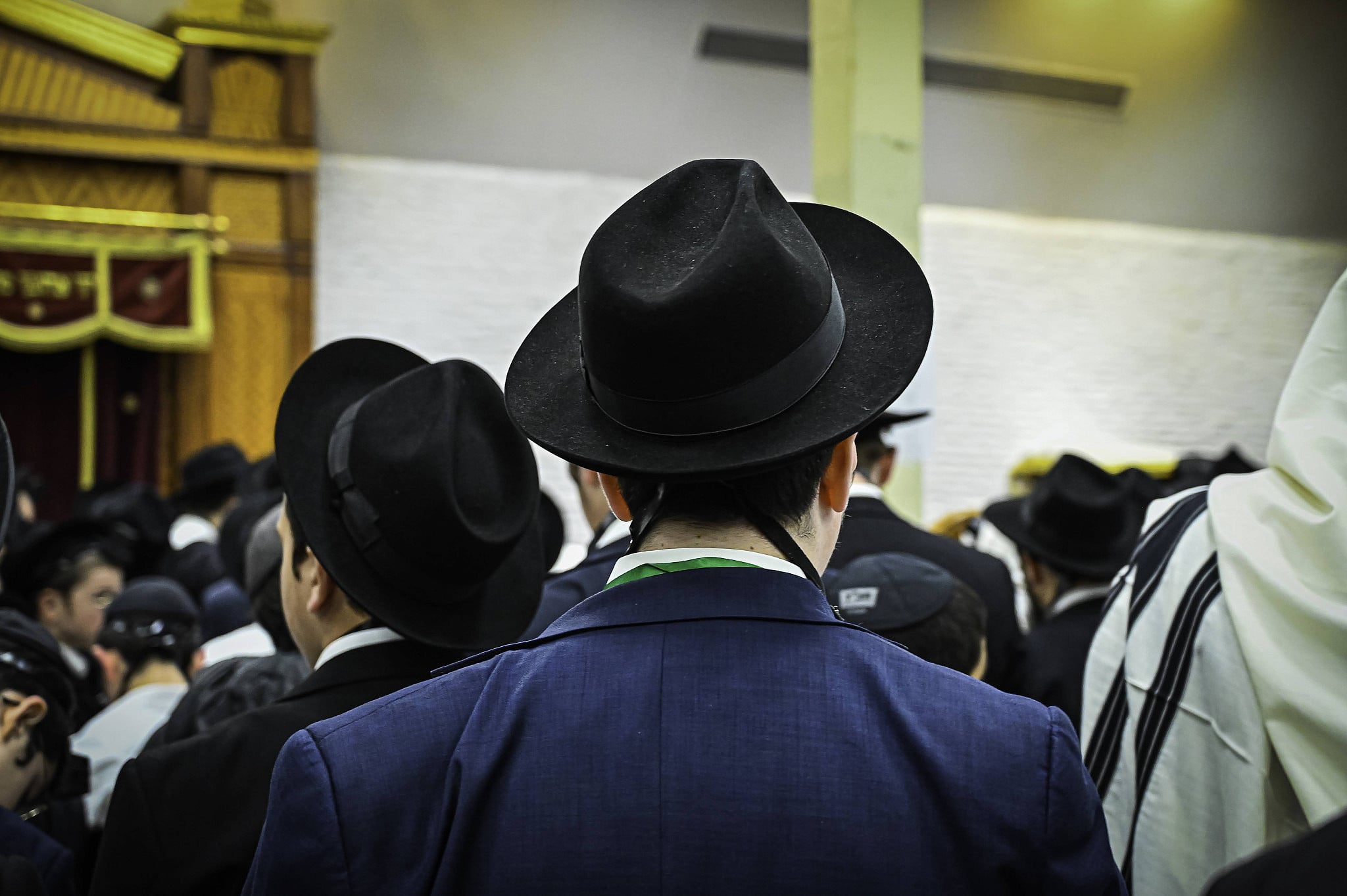
We are looking inside a world that outsiders flatten (David Katash, FrockInStock.com).
It is not a frumkeit ranking, but a question of religious instinct, cultural memory, and which world feels like home.
Recently, I saw an online discussion on Imamother — a popular online forum for frum women — about whether there is really such a big difference between a more modern chareidi family and a very strict dati leumi family in Israel. It put words to something I have felt for a long time: yes, there is a very big difference.
From the outside, I understand why people ask. A more relaxed chareidi family and a shtark dati leumi, chardal, or Torani family may look surprisingly similar. Both may be serious about halacha. Both may care deeply about tznius, Torah learning, Shabbos, chinuch, traditional family values, and raising children with yiras Shomayim. Both may look, to the untrained eye, like conservative Orthodox families who simply occupy neighbouring points on the same religious spectrum.
Yet that is exactly where the misunderstanding begins.
This is also part of why I still understand myself as chareidi. Not because I think chareidi automatically means “more religious” or dati leumi automatically means “less religious.” I do not believe that. There are dati leumi people who are more knowledgeable in halacha than many chareidi people, and there are chareidi people who are more knowledgeable than many dati leumi people. There are dati leumi men who are far better about davening with a minyan three times a day than some chareidi men. There are also areas of halacha where chareidi poskim may be more meikel than certain dati leumi poskim. The map is not always “chareidi equals stricter” or “dati leumi equals more lenient.” It is much more textured than that.
A chareidi man who sneaks off to a cinema instead of going to Mincha is not suddenly “not chareidi.” He may be doing something that his own world would see as wrong or problematic, but the fact that he understands it that way is itself part of the point. His failures and inconsistencies are still happening inside a chareidi hashkafic framework. The same concept applies to a chareidi woman who sometimes wears leggings instead of tights or stockings — it is not only about what you do, but what you believe is right or wrong to do. A person can fall short of a standard they still believe in without leaving the world that gave them that standard.
That is why the distinction matters. The difference is not always about who is more careful, more learned, or more externally strict. It is not even always captured by visible markers like a Borsalino, a knitted kippah, a sheitel, or a particular school uniform. It is about the framework in which a person’s religious life takes place.
In America, this distinction often matters less. There is much more natural crossover. People daven in the same shuls and often share the same general Orthodox social world. Americans sometimes treat chareidi as the rough Israeli equivalent of yeshivish and dati leumi as the rough Israeli equivalent of Modern Orthodox — but those parallels are imperfect. Israeli and American Orthodox hashkafic cultures developed differently and thus categories like chardal or Torani make the map even more complicated. In Israel, though, the lines can feel much sharper.
There is also a real cultural difference. In many dati leumi spaces, it can sometimes feel as though old world Ashkenazi texture is treated as something to be softened, set aside, or outgrown in order to appear more fully Israeli, more religiously Zionist, or even more spiritually serious. That can show up in small things: Ashkenazi families using Sephardi pronunciation instead of Ashkenazi pronunciation — like saying “Shabbat shalom” instead of “gut Shabbos” — or choosing yontif recipes that lean more toward Israel’s spicy Sephardi flavours than Eastern European shtetl food.

Sometimes, to me, it can feel almost like we Ashkenazim are expected to give up parts of our own inherited religious culture and move into a more Israeli, vaguely Sephardi-sounding religious register. Sephardi minhagim belong fully in Eretz Yisroel, as do Ashkenazi minhagim, language, pronunciation, dress, and heimishness. We should not all have to flatten ourselves into one Israeli religious style. An Ashkenazi woman who comes from the USA, France, or the UK should be able to live in Eretz Yisroel as an Ashkenazi Jewish woman in a sheitel, with her own minhagim and Yiddishkeit intact.
That cultural piece matters because it points to something deeper. The divide is not only about recipes, pronunciation, or school uniforms. It is also about hashkafah. It is about schools, social norms, gender separation, and which poskim and gedolim you instinctively look to. It can even touch questions like army service and what the State of Israel means religiously. That is where the difference between the chareidi left and the dati leumi right becomes much more than a matter of “strict” versus “relaxed.”
One woman in the Imamother discussion put it very clearly: the divide is also about whether you see the State of Israel as reishis tzemichas ge’ulaseinu — the beginning of the flowering of redemption — or whether you see us as still living in galus, in the painful and confusing period of chevlei Moshiach. Those are not small differences. They shape the entire religious imagination.
Sometimes it is also something much more instinctive. It is the mother who looks at her little girl and simply cannot imagine sending her to elementary school in anything other than a crisp button-down shirt, pleated skirt, tights, and that sweet, eidel bais yaakov look. Not as a political statement, but because that is what feels normal, refined, and safe.
Clothing is not just clothing. Schools are not just schools. These things carry worlds inside them. That is also why my instincts, religious language, cultural centre of gravity, which poskim and rabbinic voices I instinctively look to, and my sense of what feels like “home” are still much closer to the chareidi world than to the dati leumi one.
It also matters to me, very deeply, that it was chareidi poskim and gedolim who gave me a life-saving psak, and who truly rallied around me. Open Orthodox and Modern Orthodox spaces accept the psak too (especially now that what secular scholars call the “Ultra Orthodox” rabbinic world has stood behind it). Nevertheless, that is not the same thing as being held up, encouraged, and defended. In my case, it was the chareidi world that moved with the most Torah confidence. The people who stood by me — and frankly saved my life — were the ones who did not seem to care what the outside world, the media, or pop culture had to say. That kind of Torah confidence means more to me than I can explain.
That experience clarified something for me. Labels can help describe broad communities, but they cannot answer the deeper questions: which world shapes your instincts? Which rabbinic voices feel like your address? Which school culture feels like home? Which vision of Jewish history makes sense in your bones? Not every chareidi person is more observant than every dati leumi person. The real question is which world shapes your sense of Torah life, your hopes, your fears, and your understanding of what it means for a Jew to live in Eretz Yisroel.
For me, the answer is chareidi.
Related Topics
Related Posts