
Why the Houthis Ignored Israel’s Elections
The Houthis are fixated on Israel, yet they had surprisingly little to say about the country’s recent elections. The movement has chanted “death to Israel” for more than two decades and has fired drones and missiles at Israeli territory over the course of two years, and its media routinely cites Israeli outlets, often out of context, to reinforce the regime’s talking points. During and after Israel’s election season, however, Houthi media and the group’s leader, Abdelmalek al-Houthi, barely mentioned the vote. When they did, it was usually to accuse Israeli politicians of pre-election provocations at the Temple Mount, or al-Aqsa as the Houthis call it.
Hezbollah media, by contrast, followed the election closely. Its channel Al-Manar began covering the race nearly four months before the vote, noting that Gadi Eisenkot’s Yashar party had pulled ahead of Benjamin Netanyahu’s Likud. In late October it published an election special. On election day it ran a video report from its correspondent in the West Bank, and once the votes were counted it published an explainer. Secretary General Naim Qassem declared that it makes no difference who rules Israel, and then, two weeks later, gloated over what he took to be Netanyahu’s defeat.
The gap is surprising because the two media operations were built together. Al-Manar and the Houthis’ al-Masirah both belong to the IRGC’s Islamic Radio and Television Union, but the relationship goes well beyond membership in the same hub. According to Farea al-Muslimi, Hezbollah set up al-Masirah’s headquarters in 2012 next to Al-Manar’s offices in the southern suburbs of Beirut, trained its staff, and ran the “Yemeni” channel directly in its early years. Two outlets built by the same hands, working for the same axis, covered Israel’s elections in very different ways. The four reasons why, three circumstantial and one fundamental, shed light on how the Lebanese and Yemeni branches of Iran’s axis differ.
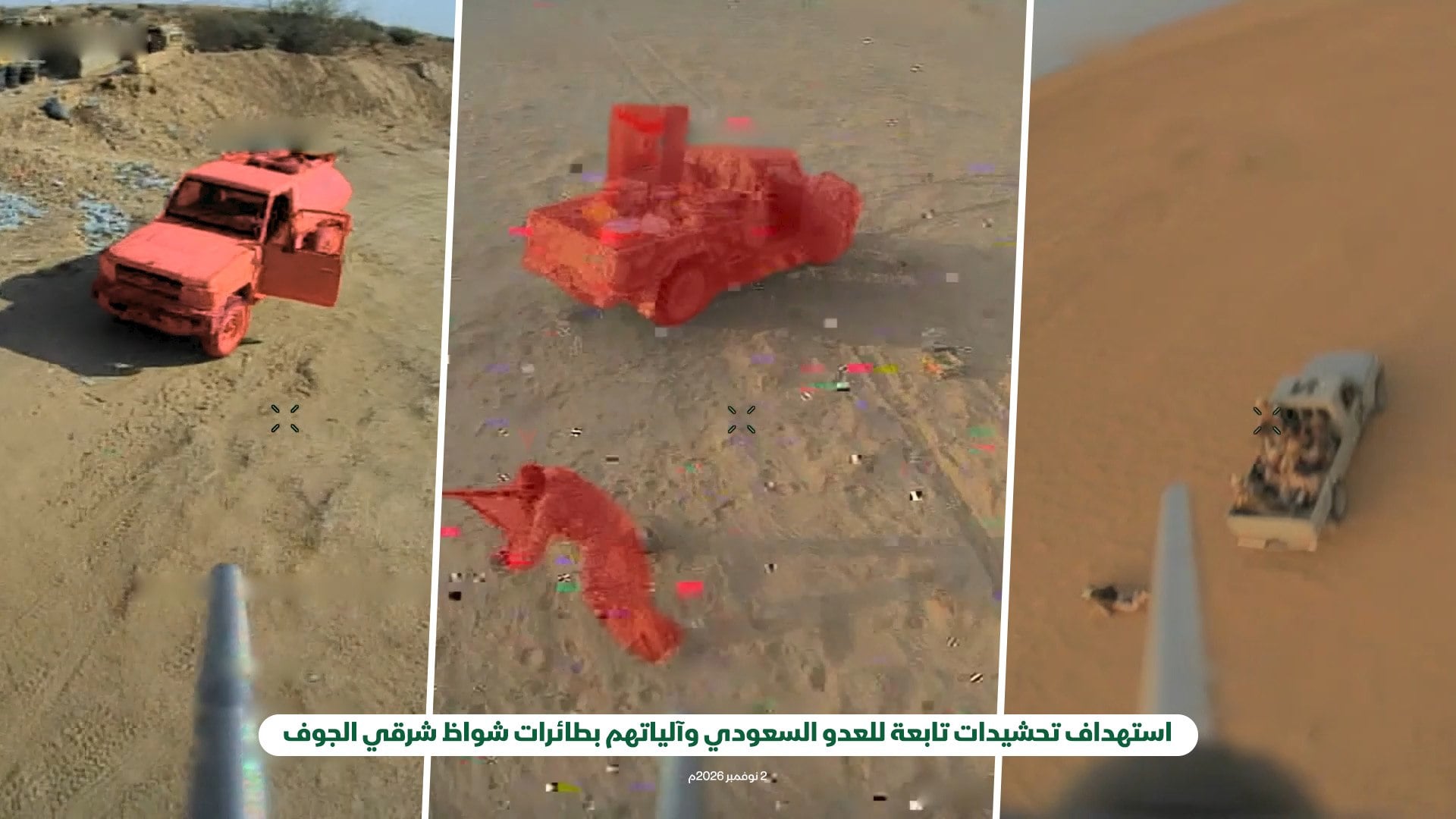
First, the Houthis were watching a different front. For the past four months the group has been fighting a more localized conflict with the Government of Yemen and Saudi Arabia, and that conflict has absorbed its attention. The Houthis like to project an image of an insatiable appetite for total war on all fronts, but their record shows that they pick their fights. They had the capacity to attack Israeli shipping or Israeli territory for years before October 2023 and did not use it; Israel fought Hamas several times in that period, and the Houthis stayed out. What kept them out was their preoccupation with the Saudi-led coalition from 2015 to 2022, and the current round of the Houthi-Saudi conflict, which erupted in July, appears to be having the same effect. A movement that is focused closer to home has little reason to follow electoral politics 2,000 km away.
Second, Israel is a new front for the Houthis in a practical sense, despite its long-standing place on the group’s ideological agenda. Hezbollah has fought Israel since the 1980s across a shared border, lived under the occupation of south Lebanon until 2000, negotiated prisoner exchanges with it, and spent four decades studying it. The Houthis fired their first missile at Israel in October 2023 and have no real experience with Israeli society beyond what reaches them secondhand through axis media. For them Israel is a target and a symbol, and a movement that did not have any practical reason to understand Israel until recently is less inclined to find its elections noteworthy.
Third, the Houthis’ al-Masirah channel no longer seems to be under the same degree of influence from Hezbollah’s Al-Manar media arm. Hezbollah has endured three years of heavy Israeli bombardment, including a strike on Al-Manar’s offices in Beirut, which may have functionally disrupted day-to-day collaboration with al-Masirah. The bombardment, together with Israel’s deep penetration of Hezbollah, also appears to have persuaded some al-Masirah staff that they are safer in Yemen than next door to Israel. In addition, as the Houthis have developed into a more independent and, by several measures, more successful organization than some of their axis peers, it stands to reason that they no longer see themselves as in need of Hezbollah’s mentorship or talking points from Beirut.
Fourth, and most fundamentally, the Houthis ignored Israel’s election because in their telling there is no need for nuance. For two decades al-Masirah and the movement’s leaders have described Jews, Israelis, and the world beyond Yemen in terms so flat that a vote in Israel carries no worthwhile information. When Houthi media does quote Israeli news, it is to show Israel’s weakness or its inability to deter the Houthis, not to follow Israeli politics. If Jews are the root of all evil, it hardly matters which of them holds office.
That flatness is a result of doctrine and circumstance. The movement’s founder, Hussein al-Houthi, turned the Quran’s ban on taking Jews and Christians as allies into a political test: a Muslim who fails it has joined them, and walks to the mosque, in his terminology, as “a Jew without sidelocks.” He taught that Arab and Muslim nations “will not be delivered from the evil of the Jews except by their eradication,” and his brother and successor Abdelmalek still calls them “the fundamental enemy of this nation.” Hezbollah’s rhetoric can be just as absolute about Israel: it pledges to fight until Israel “is obliterated,” and its late leader Hassan Nasrallah said in 2021 that there are no people in Israel: “they are all occupiers and settlers.” But in general, Hezbollah media speaks with more nuance because it has no choice.
The Lebanese terror group competes for a more educated audience in a more open media market. Nearly every Lebanese adult can read, about 80 percent use the internet, the country has a large Christian population, and its diaspora is tied to Europe, the Gulf, and the Americas. Al-Manar shares that media space with foreign channels and the open internet, and Hezbollah sits in a government alongside Christian and Sunni parties. An outlet in that position cannot spew Manichean doctrine all the time, because much of its intended audience knows better and its competitors in the marketplace of ideas will offer more nuance.
The Houthis answer to no such audience. Roughly 70 percent of Yemeni adults can read, fewer than one in five use the internet, income per person is around $500, the population is almost entirely Muslim, and the regime controls the phone networks, broadcasters, mosques, and schools in the areas it rules. No competing narrative reaches most Yemenis under Houthi control. This is not to say that Yemenis are not smart, creative, and industrious, but that the Houthis have been able to turn their territory into a Middle Eastern hermit kingdom.
Seen from Saada, an Israeli election is a quarrel among the cursed. For the Houthis and the Yemeni population under their control, a change of government in Israel is one more name attached to an enemy whose nature the Quran and then the writing of Hussein al-Houthi had determined long before the first ballot was cast. Any new leadership in Jerusalem should expect Houthi hostility to continue unabated: to the Houthis, these are the same one-dimensional Jewish characters they hate inside Israel and outside it.