Why the Torah Honors a Failure—Not a Hero
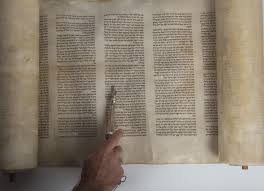
A Torah scribe generally has the freedom be begin each Torah column with any word. But there are six specific words in the entire Torah that must appear at the very top of a column.
The first letters of these “Top 6” words form an acronym:
בְּיָה שְׁמוֹ
(BeYaH SHeMO – “In God’s Name” – a phrase found in Psalm 68:5).
There are differing traditions regarding which words these letters represent. According to the Ashkenazi custom, they correspond to the following six words, each of which appears at the top of the column in a Torah scroll:
ב — Bereshit (בראשית) — of course, because the first word of the Torah will always be at the top.
י — Yehuda (יהודה) — in Vayechi, Genesis 49:8, beginning Jacob’s blessing to Judah
ה — Haba’im (הבאים) — Exodus 14:28, a few lines before the Song of the Sea
ש — Shmor ( שְׁמָר לְךָ ) — Exodus 34:11, in Parshat Ki Tissa
מ — Mah Tovu (מה טבו) — Numbers 24:5, from Balaam’s blessings to the Israelites
ו — Ve’ahidah (ואעידה) — Deuteronomy 31:28, just before Shirat Ha’azinu
What’s remarkable is that none of the Patriarchs or Matriarchs, nor any other major biblical leaders, receive this “top-tier” honor. No Abraham. No Jacob. No Moses.
Only Yehuda.
Why?
The classical commentators don’t address this directly, but one answer seems compelling: Yehuda’s capacity for teshuva (repentance).
He began as the brother who orchestrated the sale of Joseph into slavery. He gave in to his impulses in the episode with Tamar.
But he changed.
He publicly admitted his wrongdoing with Tamar, and later, was willing to sacrifice his own freedom to save Benjamin from permanent servitude in Egypt.
A true leader doesn’t excuse wrongdoings but admits mistakes, takes responsibility, and changes course.
The Masoretic tradition placed Yehuda at the top of the column. And when our leaders fail to meet that standard, it is time — long past time — to remove them from power and choose different ones.