A Call to the Moral Debate the World Refuses to Face — A Black Jewish Voice Speaks for Israel and Global Jewry
Why the UN Risks Global Chaos and Israel’s Right to Live
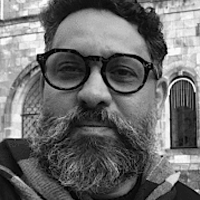
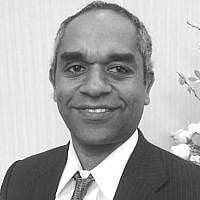
By Dr. Shmuel Legesse, reported by Jonathan Takele
Israel does not celebrate the suffering of others. No Israeli parent wants Palestinian children to die, but every Israeli parent wants their own children to live. That is the human truth too often lost in debates at the United Nations. When rockets rain on Israeli cities and families are forced into shelters, Israel responds not from cruelty but necessity, the defense of life itself. Hamas, however, is not just an organization but an ideology dedicated to eliminating Israel “from the river to the sea.” This ideology is taught in schools, reinforced in worship places, and celebrated in homes. Even after the October 7 massacre, terrorists were praised as martyrs, with their families and communities glorifying horrific acts of violence. Such indoctrination does not seek coexistence but sanctifies death.
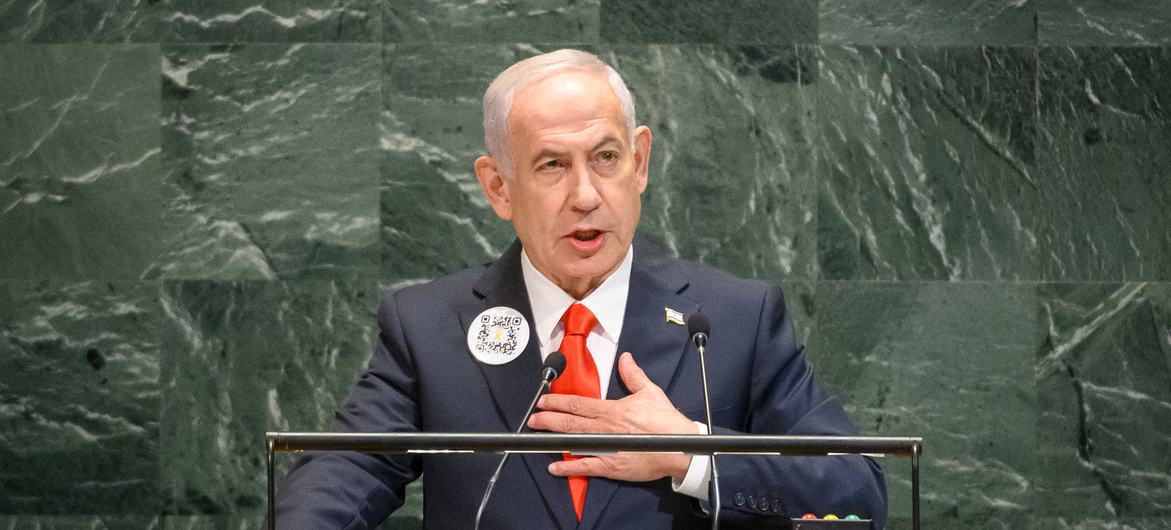
The UN’s recent New York resolution calling for an immediate and unconditional ceasefire, alongside renewed calls for a two-state solution, risks granting Hamas an undeserved victory. By rewarding Hamas after its atrocities, this resolution strengthens an ideology of destruction rather than paving the way for peace. It overlooks a fundamental reality: Hamas is not merely a political actor, but a movement designed to eradicate Israel, the Jewish people, and Western democratic values. To impose a two-state solution under current conditions is to empower forces committed to Israel’s elimination. From the PLO’s victimhood narrative to chants of and its supporters’ statements “from the river to the sea,” this worldview erases Israel from the map and fuels extremism not only in the Middle East but also in Europe and America. Left unchecked, it encourages radical movements that now grow openly in the West, undermining freedom of speech, women’s rights, and respect for minority faiths. The PLO itself remains another side of the Hamas coin, refusing to denounce the October 7 attacks and denounced after over a year of the incident, teaching the same rejectionist ideology, and never accepting Israel as the homeland of the Jewish people.
As a Black Ethiopian Jew, I know that Israel is not a colonial invention but a homecoming. Jews prayed toward Jerusalem for millennia, and archaeological remains, from the stones of the Second Temple to ancient synagogues, bear witness to our presence. The Bible records God’s covenant with Abraham: “I will give to you and your offspring the land of Canaan as an everlasting possession” (Genesis 17:8). The Quran itself acknowledges this truth: “O my people! Enter the Holy Land which Allah has decreed for you” (Surah Al-Ma’idah 5:21). For centuries, Ethiopian Jews prayed for Zion, and when rescue operations like Moses and Solomon finally brought us home, it was redemption, not conquest. Israel is not a foreign project imposed on the region but the restoration of a people to its ancestral homeland.
The world must understand that peace will not come through resolutions that ignore reality. Gaza must never return to Hamas control, and a neutral trusteeship backed by Arab, Western, and African states should oversee governance, humanitarian aid, infrastructure, and security to prevent diversion of resources to terror. Indoctrination of hate must be replaced with education that teaches pluralism, civic values, and coexistence. International NGOs and vetted local educators must be empowered to rebuild the foundations of society. Only leaders who explicitly reject violence should govern, and elections must be monitored internationally, with reforms ensuring accountability in security and justice. Economic packages from Arab and Western states should be tied to verifiable demilitarization and political reforms, ensuring that prosperity is linked to peace. The Abraham Accords should be expanded, bringing Arab states as guarantors of Israeli security and as economic partners in Palestinian reconstruction.
Peace must also come from within communities. Respected sheikhs, rabbis, priests, and tribal elders—those with real influence on the ground—can guide reconciliation better than distant politicians. Indigenous and minority communities, from Druze to Samaritans, from Bedouins to Christians, deserve recognition, safety, and dignity in any future arrangement. Africa, too, must be a stakeholder. The Red Sea is a shared lifeline, and instability in Gaza threatens African security and trade. The African Union, alongside Ethiopia, Kenya, and others, should be part of mediation and peacekeeping efforts. Ethiopian Israelis, embodying the link between Africa and Israel, can serve as cultural and diplomatic bridges.
The two-state framework is irrelevant at the present time. Regional instability, the rise of radical political movements, and the persistence of ideologies that openly reject Israel’s right to exist have made this model unworkable. A better alternative is to explore confederal or federated structures, arrangements that preserve Jewish security while allowing Palestinians meaningful political self-expression. Such systems would rely on enforceable interdependence, regional safeguards, and international guarantees to prevent a repeat of Gaza’s collapse into extremism. Only by moving beyond outdated frameworks can the region hope to achieve stability rooted in reality rather than illusion.
But the stakes go beyond Israel and the Palestinians. If the UN fails to deal responsibly with this conflict, if it allows Hamas and similar ideologies to grow unchecked, the consequences will not stop at Gaza. Hamas’s ideology is already exported across the Middle East, into Africa, and into Western societies through extremist networks. Left unresolved, this conflict will accelerate the destabilization of the West, weakening democratic institutions, deepening divisions, and emboldening radical movements that seek to overturn the very values of freedom and human dignity. The failure of the UN to act wisely in this region could become the seed of global disorder, risking not only Israel’s security but the stability of the world.
History will ask whether the world chose appeasement or moral clarity. The UN’s resolution, by rewarding Hamas, risks perpetuating violence. A real peace must secure Israel’s right to exist, liberate Palestinians from terror ideology, and involve not just Western powers but Arab neighbors and African partners. Only then will the dream of a region where life, not death, is celebrated become possible.
Dr. Shmuel Legesse is an Ethiopian Israeli social activist, educator, and international diplomacy expert. He holds a doctorate in educational leadership from Yeshiva University, NYC and has represented the Israeli Knesset in global public affairs. Jonathan Takele is a community activist and son of an Ethiopian Jew who was killed by communists for his Zionist activity in Ethiopia. He currently works in the Israeli Knesset in the Human Resources Department.
Related Topics