Entrepreneur
Why this Jewish VC believes immigrant grit is a key factor for startups
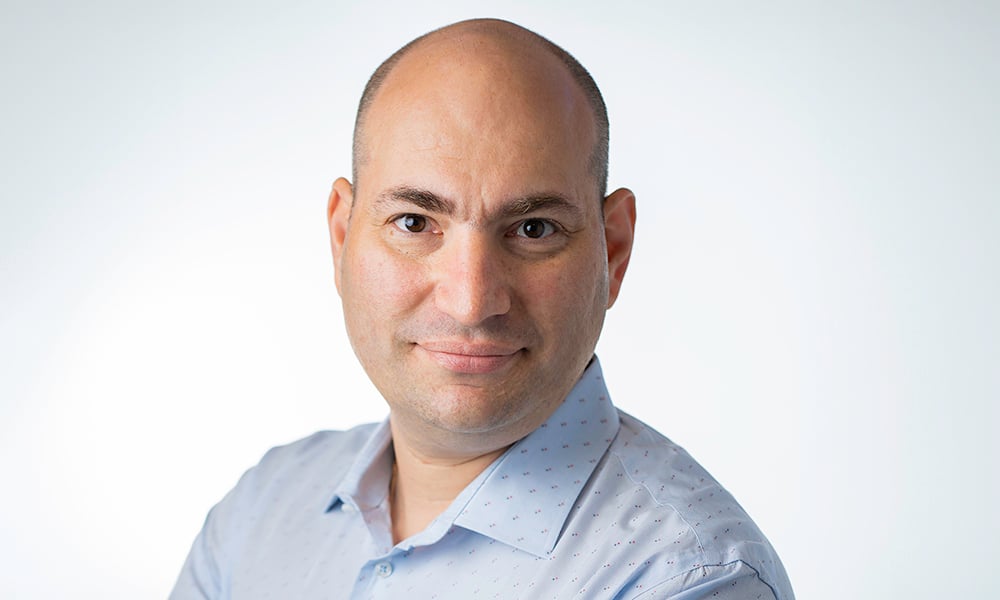
Eugene Malobrodsky (image free for use on a commercial platform in accordance with copyright law, courtesy of Eugene Malobrodsky)
Israeli startups this year are experiencing a strong rebound, according to a recent report by Startup Nation Central, with the first half seeing a 54% jump in funding as compared to the second half of 2024.
This was the strongest six-month performance for startup funding in the country for the past three years.
Across the globe, while 2025 so far has been rocked by global shifts in trade and economic policy, the startup industry appears to be weathering the storm.
Investor confidence remains steady, aided by the promise of emerging innovations that support hyper specialized growth and the increased public interest in AI.
One Jewish entrepreneur and investor, Eugene Malobrodsky, is the Co-founder of AnchorFree, whose product Hotspot Shield has more than 650 million users in 190 countries. He is also the Managing Partner at One Way Ventures, where he’s committed to backing the drive and determination of immigrant founders.
We had the chance to speak with Malobrodsky to learn more about the VC’s journey to running a $100M VC fund for first-gen immigrant founders, and the lessons he’s learned building his own successful ventures.
Could you tell us about your experiences as a founder and the lessons you learned?
Prior to One Way Ventures, I founded two successful startups. The first opportunity arose in 2005 when we decided to establish AnchorFree. The company’s mission was to promote internet access democracy through a VPN. We pioneered creating a consumer VPN version, which significantly impacted providing free and open internet access worldwide. This enabled people to voice their opinions and reveal hidden truths in countries that suppress free speech. In developed nations, it also offered users enhanced security and privacy. Interestingly, the company was founded by two Jewish immigrant kids who contributed to the revolutions in the Middle East.
By 2018, AnchorFree was acquired by a private equity fund, WondrCo, and I continued my involvement as Chief Strategy Officer.
The process taught me some lifelong lessons about founder-investor dynamics. Trying to build something at 23 years old meant I had limited experience. Our network connections were key to helping access both advice and investment that opened up the doors to key opportunities.
For example, our network paved the way for us to be introduced to telecom industry heavyweight Bert Roberts, Chairman and CEO of MCI Communications. In our early twenties, we were speaking to someone who had built one of the largest telecoms in the United States, pitching our idea about ideas to him.
After some questions about how the model would be monetized, we closed the meeting and thought that would be the end of it. But an hour later, we had a call confirming his support and he also brought in a number of his own contacts.
On the investor side he connected us to the DuPont family offices, and a lot of the telecom guys. That was the first time somebody really believed in us and then stayed on as a mentor and board member till the end. Which we were extremely thankful for.
All of this illustrates the incredible multiplying benefits of the network effect for founders of all stages and levels of experience.
So when I joined One Way Ventures, I wanted to make it easier for founders in our portfolio to benefit from what others have learned through a network of peers with similar backgrounds. That’s why I created the Pathfinder Collective, where immigrant unicorn founders would provide guidance to early-stage immigrant founders.
What was the transition from founder to investor like?
After I sold my first company, I found myself in the privileged position to invest in and support other young startups. I’d done a little angel investing, but I wanted to create additional impact by building or joining a venture capital fund. The problem was that I didn’t really have a clear picture of what the process was like or but I was determined to create an impact.
The one thing that took me a while to learn, and sometimes I still catch myself doing, is how to ask questions instead of telling founders what to do. Being an operator for so long, it’s easy to tell others what to do and not ask them enough questions for them to figure out the answer themselves.
At One Way Ventures, I focus on finding the best founders in B2B SaaS, cybersecurity, SaaS, and AI/ML companies, and work closely with companies such as Zero Systems now (Hercules AI), Buddy.ai, Britive, Truckpedia, and Helm.ai, among others.
Why do you believe immigrant founders are such a safe bet?
If you look at the stats today, 55% of American unicorns are actually built by immigrant founders, and 80% of American unicorns have an immigrant founder or executive, which is staggering considering they only represent 14% of the population.
This is why I really believe in the investment thesis we have at One Way. Think about how much immigrants have to give up by moving to the US. You’re giving up your friends, your relatives, the home that you grew up in, to move halfway around the world.
This breeds a desire to grind and to succeed, to make all that sacrifice worthwhile. Immigrants can’t afford not to succeed, and that often leads them to entrepreneurship, where the data shows they are highly adept at building great companies.
What are you looking for in founders?
We’re looking for founders who have an idea that they truly believe in to the point of madness. You have to be really mad or very frustrated the the problem you are trying to solve. Being a founder is a lonely road and a painful road, so the passion for what you are trying to solve is extremely important. In terms of industry, we primarily focus on fintech, healthtech, logistics, deeptech and B2B SaaS, and obviously AI, mostly in the categories mentioned.
We want to see innovators who are dedicated to generating true large-scale impact in their industries, and who won’t give up until they’ve found a way to bring their product to the most people.
In terms of personality traits, resilience and that survival instinct are big differentiators. These help startups to persist by thinking outside of the box when things don’t go as planned.
Related Topics
Related Posts