
Why Trump Cannot Make Peace if One Party Just Says NO!
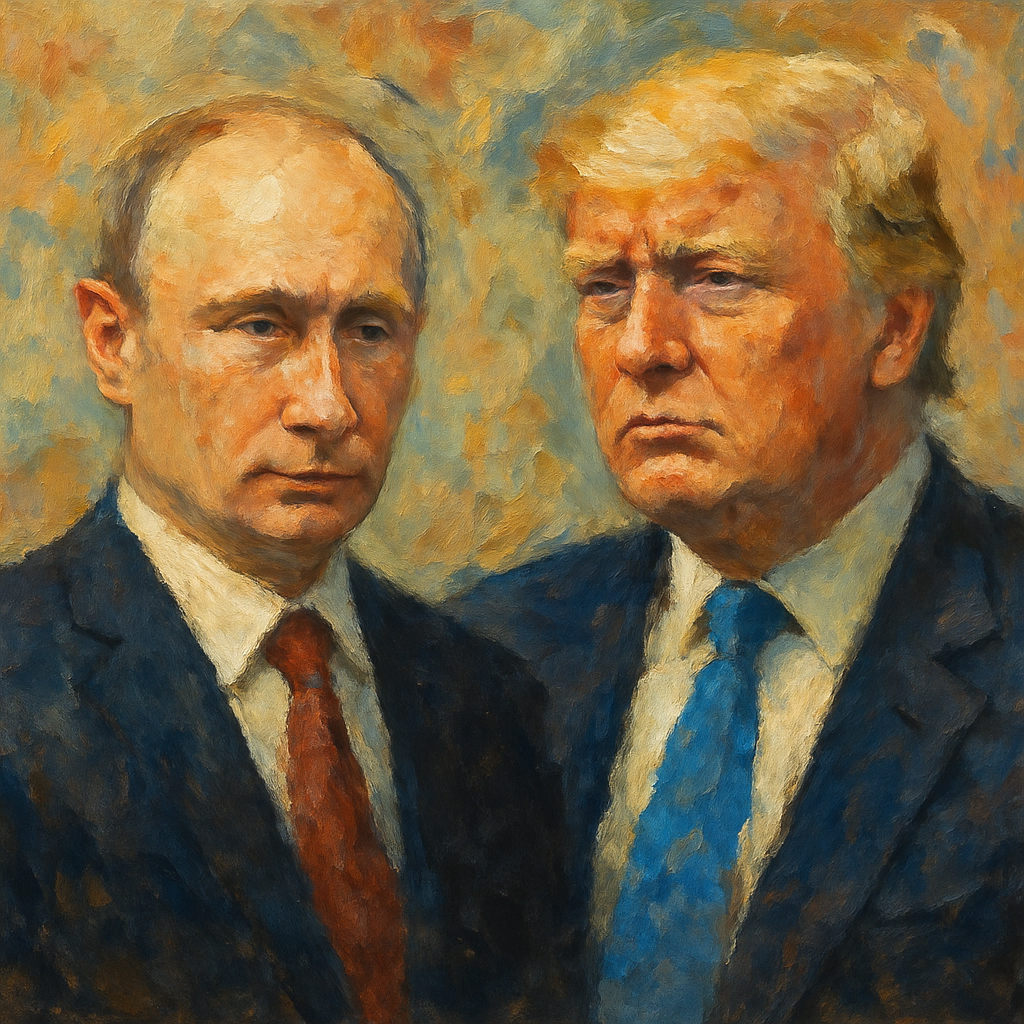
Bullying with no action is not a strategy – as Ukraine and Putin have just shown
When Donald Trump returned to the White House promising he could end the Russia-Ukraine war “in a single day,” many of his supporters believed him. For months, he has teased a “beautiful deal” that only he can deliver. Yet here we are: after ten months of high-profile diplomacy, Trump’s envoys Steve Witkoff and Jared Kushner have just spent five hours in a room with Vladimir Putin — and walked out with nothing.
No ceasefire. No framework. Not even a modest confidence-building step. Just more Russian advances on the battlefield and more vague talk about “constructive” discussions.
For Israelis listening to Trump’s parallel promises to “solve” Gaza or bring a sweeping Middle East peace, this should be a blaring siren. The Ukraine experience has exposed the core flaw in Trump’s theory of deal-making: you cannot make peace when the aggressor simply refuses, and “bullying with no follow-through” is not a strategy. It is theatre — and dangerous theatre at that.
Misreading Who Actually Wants Peace
As Fareed Zakaria’s Global Briefing summarized this week, Trump came into office convinced that Putin was secretly eager for a ceasefire and that the real obstacle was Volodymyr Zelensky’s “obstinate” refusal to concede territory.
But serious analysts have been saying the opposite for months. Ukrainians, exhausted and bleeding, would accept a ceasefire even if it froze Russia in place on about 20% of their land. Putin, however, “wants to keep going” and has refused even that kind of ceasefire unless it comes bundled with a maximal political settlement on his terms.
In other words:
- Ukraine: willing to stop the shooting, but not to sign away its future.
- Russia: determined to keep fighting until its core goals are achieved.
That is not a problem a “master negotiator” can charm away. It is a structural reality: when one side believes time and blood are on its side, peace talks become a stalling tactic, not a path to compromise. Lawrence Freedman, one of the leading scholars of war and peace, has warned repeatedly that some wars do not end in neat negotiated deals — and that insisting every conflict has a magical bargain waiting to be found is itself a dangerous myth.
Trump has persisted in the myth. Even now, after repeated rebuffs, he oscillates between backing Ukraine and blaming Kyiv for being “intransigent,” depending on whom he last met — Putin, European leaders, or Zelensky. That is not strategy; it is drift.
“Strongman” Bullying With No Real Costs
Trump admires “strong leaders.” But he seems to have drawn the worst possible lesson from that attraction: talk like a strongman, without backing it up with coherent pressure.
His choice of lead envoy illustrates the gap. Steve Witkoff is a real-estate developer with no diplomatic background, now overseeing Trump’s high-profile peace efforts in both Gaza and Ukraine. At key meetings with Putin, Witkoff even relied entirely on Kremlin-supplied interpreters — a basic breach of diplomatic common sense — and reportedly misread Putin’s hints, leading Trump to ease sanctions and invite Putin to a summit in Alaska.
The result? Putin received photo-ops and legitimacy instead of pressure, and yet still refused to budge on territory or core demands.
The latest Moscow round tells the same story in miniature:
- Five hours of talks.
- Kremlin aides calling the meeting “constructive.”
- Zero compromise on the key issue of territorial control.
From Putin’s point of view, this is perfect: keep the Americans talking, keep Trump believing a deal is just around the corner, and keep advancing slowly in eastern Ukraine. As Freedman put it, Putin may simply prefer to “string [the Americans] along with a peace process that cannot be quite declared dead even if it is making no progress.”
That is the heart of the lesson: if one party sees war as the better option, your “bullying” is just noise. Without real, sustained costs — economic, military, or political — the aggressor keeps saying no, and your peace initiative becomes cover for their continuing aggression.
Why This Matters for Israel
So why should readers of an Israeli outlet care about Trump’s misadventures between Moscow and Kyiv?
Because the same team, with the same mindset, now claims it can deliver miracles in our region. The CNN briefing notes that Witkoff was given responsibility for Trump’s “high-profile peace endeavors in Gaza and Ukraine” simultaneously.
Think about what the Ukraine case reveals about this model:
- Misdiagnosing the obstacle.
Trump focused on Zelensky as the “problem,” even while Putin made maximalist demands and refused ceasefires. In the Middle East, that same lens could translate into blaming whichever democratic partner is more responsive to internal criticism — Israel, not Hamas or its Iranian backers. - Rewarding intransigence.
When Putin stonewalled, he was “rewarded” with eased sanctions and a summit invitation. Imagine how that pattern might play out with actors like Iran’s leadership, Hezbollah, or extremist factions in Gaza: hold firm, say no, and wait for Washington to lean on Israel to concede instead. - Substituting spectacle for substance.
The Alaska summit, like the latest Moscow meeting, produced dramatic visuals, not durable agreements. Israelis have seen this film before: handshakes on the White House lawn that don’t match facts on the ground can leave us more vulnerable, not less.
Israelis of every political stripe understand that you cannot build real peace with a party that explicitly rejects your existence as legitimate. You can deter it, contain it, and marginalize it; sometimes you can strike limited arrangements. But you cannot “close the deal” through bravado if the other side believes time and violence are on its side.
In Ukraine, Putin has told us in word and deed that he prefers a grinding war to a compromise he sees as “losing.” Many of Israel’s most dangerous adversaries talk — and act — in similar terms.
Peace Requires Power and Clarity, Not Fantasy
It is tempting, especially in times of fear and fatigue, to believe in the strongman savior: the leader who says, “Only I can fix it,” who treats every war as a real-estate transaction waiting for the right closer.
But Ukraine has given the world, and Israel in particular, a painful reminder:
- Some wars are ended not by clever deals, but by credible deterrence and sustained resistance.
- Some aggressors stop not when you flatter them, but when you convince them that continuing is more dangerous than stopping.
- And sometimes, no deal is better than a bad deal that rewards aggression and sets the stage for the next war.
Trump’s Ukraine record so far is not the story of a master negotiator blocked by fussy Europeans or stubborn Ukrainians. It is the story of a president who misread the core asymmetry of the conflict, empowered an unserious process, and allowed himself to be strung along by a dictator who keeps saying no while his army moves forward.
If that is how he conducts diplomacy with Putin, Israelis should be very cautious when he promises easy, instant peace in our neighborhood. Real peace — whether in Europe or the Middle East — requires aligning incentives, imposing real costs on rejectionism, and facing hard truths about the other side’s goals. Iran is taking note of Trump’s bluster with no follow-through, except for attacking Venezuelan boats with Shock and Awe.
When one party simply refuses, promises and posturing are not a “strategy.” They’re an advertisement — and the customer, in this case, is sitting in the Kremlin. So far, the only force being exerted in the Middle East is by Israel.