
Will Rights Groups Confront Their Base?
Recently, I came across a post by a prominent Palestinian activist denouncing the horrific executions and acts of torture carried out by Hamas against Gazans it suspects of being critics or opponents — and condemning the silence of international human rights organizations in the face of these atrocities. I wasn’t entirely surprised to see Western commenters attacking this Palestinian activist for his stance. Still, I was struck by the extent and bluntness of the pro-Hamas sentiment: “They’re collaborators with Israel, they deserve to die,” was the dominant line.
Many of these commenters, loosely associated with the human rights community, are effectively throwing off Gaza rooftops the very principles they claim to uphold: due process, freedom of expression, support for dissidents under dictatorial rule, and the long-standing human rights opposition to the death penalty. Yet this phenomenon — emerging from grassroots activism — also influences more established human rights organizations. Even if they are far more restrained and nuanced, they too are being somewhat swept along by the younger generation’s trends.
The challenges facing international human rights organizations are immense, including in the Israeli context. Alongside justified criticism, they also face baseless attacks aimed at deterring them from their vital struggle against Israel’s system of oppression, occupation, discrimination, and apartheid imposed on Palestinians — including, to some extent, Palestinian citizens of Israel. At the same time, these organizations are not immune to the opposite distortion: exaggerated or skewed criticism of Israel and a tendency to downplay crimes committed against Israelis, or those committed against Palestinians by extremist Palestinian groups such as Hamas.
How can this complexity be addressed?
One approach says: let’s identify where the greatest injustices occur and focus our attention there — meaning, we’ll minimize or even ignore the “smaller” abuses. Statistically speaking, Israel has killed more, holds the power and maintains control. That’s true. Yet such an approach easily slips into a distortion that undermines the universal essence of human rights work. Moreover, it misses the feedback loop effect between violations on both sides — every act of extremism, repression, or violence by one side reinforces negative dynamics on the other, and the cycle perpetuates itself.
In practice, ignoring abuses committed by Palestinian actors helps Israel justify its own violations as acts of self-defense. Violence against Israelis serves as a pretext for collective punishment of Palestinians in the name of security; Hamas’s brutality toward fellow Palestinians allows Israel to justify its ongoing control of Gaza — ostensibly as a protector of Palestinians who oppose Hamas — while denying a real opportunity for alternative, nationally legitimate Palestinian forces (such as the Palestinian Authority) to take the reins. In this sense, one-sidedness ultimately harms even those it purports to help: ordinary Palestinians.
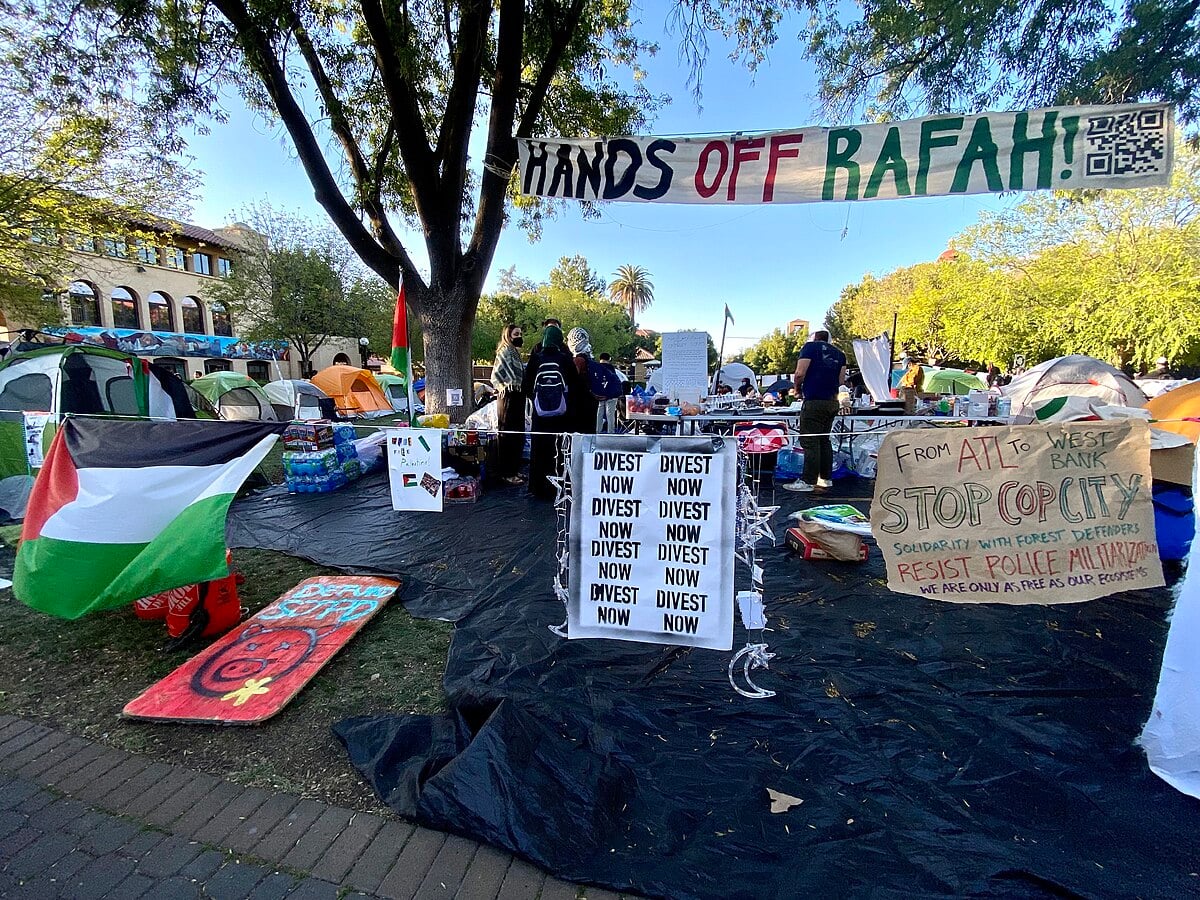
Why, then, does this distortion persist? Based on my experience — as someone who formerly served as Deputy Director of Amnesty International Israel and worked in the movement for many years — there are multiple reasons. Yet a major factor is the fear within the human rights community of alienating the young audiences it seeks to attract: pro-Palestinian, Western, progressive youth immersed in woke culture. For this audience, the procedural, “boring” nature of human rights — the insistence on due process, for example — feels less relevant. The only question is which collective is good and which is bad. Once that binary is set, empathy for the “bad” side vanishes, and any action by the “good” side is automatically justified. As we saw earlier, this logic can lead to enthusiastic support for extrajudicial executions and horrific torture — some documented in videos that should shake anyone with a conscience.
How long can human rights organizations continue to contain the widening gap between human rights principles and the emotional tendencies of large parts of their support base? When will they find the courage to speak out against this broad social phenomenon, even though it doesn’t stem from any government or establishment? Isn’t it necessary to criticize a mass social trend that poses a real threat to human rights — including Palestinians’ rights — especially as it masquerades as part of the human rights camp?
Human rights organizations need every ally they can find, and it is indeed wise not to be overly “purist” or selective. Yet once the red line is crossed — when people begin supporting human rights violations, such as Hamas’s torture of Gazans — silence becomes complicity. This is all the more true when these distorted voices, in fact, only harm the crucial struggle for Palestinian human rights.