Wishing Shabbat Shalom to Israel’s Kanaani Cats — From a Chabad Rabbi
In a person’s life, there are moments
that at first seem accidental.
A phrase.
A joke.
A glance.
A small episode.
But with time, you realize:
nothing was random.
Through moments like these,
God sometimes quietly guides a person.
Not through commands.
Not through thunder.
But through the heart.
This is how my story began.
That Shabbat, when we were reading Parashat Bo, I arrived at the synagogue a little late — on JFK (Just For Kiddush), or as my rabbi likes to joke, on ABC (Arriving Before Cholent).
He smiled and said:
“You’re late. It’s a pity. You would have enjoyed it.”
“Why?” I asked.
“We were reading Bo,” he replied, “and the word Kna’ani appeared — just like your cats.”
“See what you missed?”
“So try to come on time.
Listening to Torah is always worth it.”
I understood:
it was not a reproach.
It was care.
After Shacharit, after Kiddush and the Shabbat meal, we sat and talked for a long time.
When people began to leave, he approached me quietly and said:
“When you get home, tell your cats Shabbat Shalom from me.”
I stopped.
“Rabbi Zalman,” I said, “this is the most important thing you said today.”
“What exactly?” he asked.
“This.
That you are wishing them Shabbat Shalom.
Even if half-jokingly.
It matters deeply to me.”
He looked at me attentively.
Then he smiled.
“I’m glad,” he said.
And added:
“Come to Mincha.
If not, then to Maariv.”
I returned home after the meal — it was already almost 2:30 in the afternoon.
I went to my cats.
And to each one, I said separately:
“My rabbi asked me to tell you personally: Shabbat Shalom.”
“Shabbat Shalom, Arbuz…
Shabbat Shalom, Haifa…
Shabbat Shalom, Laila…
Shabbat Shalom, Spiegel…
Shabbat Shalom, Lila…
Shabbat Shalom, Ketty…
Shabbat Shalom, Spiegelina…”
I stroked them one by one.
Slowly.
Without exception.
And suddenly I felt:
there was holiness in this.
In care.
In attention.
In respect for life.
Only later did I understand what his words truly meant.
He accepted.
He recognized.
He expressed his support — in his own way.
An Orthodox rabbi will not say directly:
“You are right. This is holy.”
He will say it differently.
Through “Shabbat Shalom.”
Quietly.
In a Jewish way.
As a sign of agreement.
As a sign of respect.
As if saying without words:
“This is part of your avodat Hashem — your service of God.
I see it.”
Then I spoke to him openly.
Without hints.
Without detours.
From the heart.
“Rabbi Zalman, I need support.
I don’t want to be alone,
like a warrior in an empty field.
I want to feel
that a community stands behind me.
I believe in this path.
In these cats.
In their connection to Israel.
But if this seems unimportant…
If they are seen as ‘just animals’…
Then I will turn to the dati-leumi community.
Not out of resentment.
But because for them,
everything connected to Israel matters.
Everything that is pride of this land is precious.”
He listened.
Silently.
And I saw — he understood.
Then I added what mattered most.
“This breed is on the verge of extinction.
It can simply disappear.
Forever.
The story of Noah in the Torah is not there by chance.
He saved all creation.
Every living soul.
And maybe I was given the opportunity,
on a small scale,
to repeat that path.
To save what can still be saved.
To preserve what is connected
to Israel and our culture.
This is my small ark.”
It all began during my studies at JSLI —
the Jewish Spiritual Leaders Institute —
during a course on blessing animals.
That was when I first wondered:
There are British cats.
American cats.
Scottish cats.
But does the Jewish people have
its own Israeli breed?
I began searching.
Not immediately.
Not in one day.
Through effort.
Through doubts.
Through prayer.
Through faith.
And when I finally found the Kanaani,
I understood:
this was not luck.
It was a blessing.
It was direction from Heaven.
Because, as our sages say,
not even a leaf falls from a tree
without Divine will.
If this path opened for me,
it means I was entrusted with it.
With responsibility.
And that is why it matters so much to me
who walks beside me on this road.
Who supports.
Who understands.
Who believes.
And here a special place belongs to my rabbi —
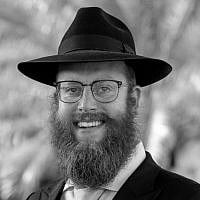
Rabbi Zalman Liberov,
grandson of Rabbi Mendel Futerfas,
one of the closest disciples of the Lubavitcher Rebbe.
For me, this is not just biography.
It is a living connection to tradition,
to faith,
to responsibility toward past and future.
And it truly matters to me
that through Rabbi Zalman Liberov
I feel the support of Chabad.
Not formally.
Not in words.
But humanly —
through trust and respect.
I am not part of the dati-leumi movement,
but I understand:
they too would support this path.
Because for them,
everything connected to Israel is sacred.
The land.
History.
Culture.
Memory.
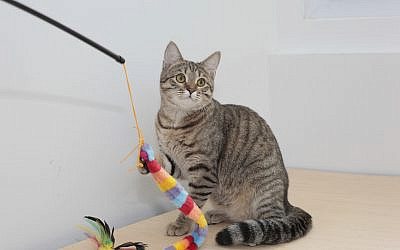
And even such a rare breed of cats,
bearing the letter “M” on their foreheads,
a quiet hint of Mashiach.
But today, what matters most to me is not differences.
Today, both I and the Kanaani breed,
which stands on the brink of extinction,
need the support of the entire Jewish world.
Because these are not just cats.
They are responsibility.
They are continuity.
They are a small ark
that must not be abandoned in the middle of the flood.
And if we walk this path together —
rabbis, communities, Chabad, dati-leumi, ordinary people —
then everything will be well.
Then the path continues.
I believe in this.