The noted author and philosopher Hannah Arendt sat through the Eichmann trial in the early 1960s, listening to the architect of the Final Solution testify. After hearing many of the Jewish witnesses, she reached a conclusion that remains highly controversial today. To summarize it in one sentence, she argued that the Judenrat hastened the implementation of the Final Solution.
Historians today are generally more sympathetic to the actions of the Judenrat during the war. Immediately afterward, some members of the Judenrat were killed by survivors in the Displaced Persons (DP) camps. During the 1950s, others were put on trial in Israel. Today, many historians are less judgmental and emphasize the impossible moral dilemmas they faced. They simply say: it was complicated.
I am less judgmental than I once was. Each case is undoubtedly complicated, but what we are witnessing today in the aftermath of October 7 is telling. We are seeing Jews siding with Hamas, Hezbollah, and Iran while becoming rabidly anti-Israel.
Last week’s primary elections are, to me, another example of Jew denouncing Jew.
Brad Lander, who beat out Representative Dan Goldman in a New York congressional primary, based much of his campaign on attacking Israel. On the one hand, Lander says he is a proud Jew. On the other, he seems to want nothing to do with the Jewish state that rose from the ashes after nearly two thousand years.
He attacked his opponent, a man with a solid record of congressional and public service, for being, heaven forbid, a Zionist. He also criticized him for accepting so-called “dirty money” from the supposedly “evil” AIPAC, despite the fact that accepting support from AIPAC is perfectly legal and that there is nothing inherently improper about what AIPAC does. Its record speaks for itself.
Lander reminds me of Mordechai Rumkowski, head of the Judenrat in the Łódź Ghetto during the war. Rumkowski believed he was representing his people and greatly overestimated his influence. He worked closely with the Nazis, supplied them with lists of Jews for deportation, and displayed a streak of sadism. His ghetto was one of the last to be liquidated, in 1944, but he too ultimately became a victim. He was never truly a partner of the Nazis, although he—and the many Jews around him—came to believe otherwise.
Last week, while on the podium, Mayor Zohran Mamdani, who supported Lander, gave him a warm embrace. His wife, however, declined to follow suit. A Jew is a Jew to her, no matter how he may view himself.
Senator Bernie Sanders leads the pack in proclaiming pride in his Jewish identity while, in my view, repeatedly undermining Israel. He is often among the first to introduce resolutions condemning Israel or seeking to restrict weapons for its self-defense. It is as though he feels compelled to prove his anti-Zionist credentials over and over again.
Sanders reminds me of Vidkun Quisling, who headed Nazi-occupied Norway during the war. Quisling claimed he was acting in Norway’s best interests when, in reality, he served his own interests and ambitions. After the war, he was tried and executed for treason.
Perhaps someday, in some Jewish circles, the word Quisling will be replaced with Sanders.
Jewish Voice for Peace and the growing number of Jewish college students joining anti-Israel activism troubles me deeply. Admittedly, I believe we in the Jewish community must also look inward and accept some responsibility. Many of these students studied the Holocaust and learned about Israel while growing up. In many of their homes, Israel and the Holocaust were central themes. As a community, we need to ask ourselves what went wrong.
That is a topic for another time.
In the meantime, I believe some of these activists represent the worst of the worst in their rhetoric and actions against Israel. One of the major organizations, Jewish Voice for Peace (which I would rename “Jews to Eliminate Israel“), reminds me of the Yevsektsiya during the early years of the Soviet Union. The Yevsektsiya was the Jewish section of the Communist Party charged with overseeing Jewish life in the USSR. Its ultimate goal was to eliminate all forms of Judaism and “re-educate” the Jewish masses into communism.
They largely succeeded. They succeeded to such an extent that the Yevsektsiya itself was disbanded in 1929, and many of its leaders were later executed or purged during Stalin’s Reign of Terror in the 1930s.
So much for claiming to speak on behalf of the Jewish people.
In the ghetto Torchin, where my mother survived, the Nazis appointed a poor man to head the Judenrat. His principal task was to continually collect “taxes” for the Nazis: clothing, jewelry, money, anything of value. He carried out his duties with rapacity. He survived by bribing a Nazi to hide him just before the ghetto’s liquidation.
During my 2001 visit to Torchin with my mother, peasants* who had witnessed the mass murder told me that after the war this former Judenrat leader returned with his mother. He instructed her to remain in a peasant’s house while he went into the forest, dug up a cache, and recovered valuables he had hidden during the war.
What some of our own people will do for power, money, or simply to save themselves. How easily principles can be compromised by ego, fear, and self-interest.
We are living in dangerous times. It is deeply unsettling to witness what some of our own people are willing to do, in my opinion, to sell their souls. History suggests that the outcome of such choices never ends well.
When are we going to learn from our history?
–
*I usually am skeptical when listening to the peasants, but this is the type of story one can’t make up.
About the Author
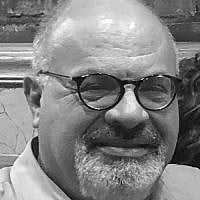
Saul Chapnick was raised in an Orthodox home with deep familial Hasidic roots. Educated in yeshiva and later earning a Master of Social Work degree from Yeshiva University's Wurzweiler School of Social Work, Saul has continued throughout his life to embrace Jewish learning in many settings—from studying at Hebrew Union College–Jewish Institute of Religion to maintaining a weekly chavruta for ongoing Torah study. His lifelong journey has given him a deep appreciation for richness of Jewish tradition across the spectrum of Jewish life.
For more than thirty-five years, Saul has devoted himself to the study of Jewish history, with a particular focus on Jewish life in interwar Eastern Europe. Inspired by the mitzvah of Zachor (to remember), he has explored both the extraordinary vibrancy of the Jewish world that was destroyed in the Shoah and the enduring questions of Jewish memory, continuity, and identity. Through extensive travel, archival research, and conversations with survivors, scholars, communal leaders, and public figures, he has sought to understand not only what was lost, but also what those vanished communities continue to teach us today.
His writing explores the intersection of Jewish history, personal memory, Israel, and contemporary Jewish life, seeking to connect the voices of the past with the challenges of the present.
A gifted storyteller and engaging speaker, Saul has lectured throughout the United States and abroad on Jewish history, Yiddish language and culture, modern Poland, Israel, and post-Holocaust Jewish identity. His presentations blend scholarship with personal experience, inviting audiences to explore the enduring relevance of Jewish history to contemporary Jewish life. He has also prepared adult participants of the March of the Living by providing historical and cultural context that deepens their understanding of both Poland's Jewish past and its emerging Jewish present.
Saul is the author of a widely read weekly Substack newsletter and a contributor to The Times of Israel, where he reflects on Jewish life, history, Israel, memory, and current events. His essays weave together personal experience, historical research, and contemporary issues, encouraging readers to reflect on the challenges and opportunities facing the Jewish people today.
For the past thirteen years, Saul has served as the Substitute Chaplain through the Greater Miami Jewish Federation Chaplaincy Program at Miami Jewish Health. During rabbinic transitions, he has served as the community's interim spiritual leader, leading Shabbat and holiday services, reading Torah, delivering Divrei Torah, teaching adult education classes and study groups, and providing pastoral care to residents and their families.
Professionally, Saul brings more than two decades of executive leadership in healthcare and human services. He specialized in turning around distressed assisted living and memory care communities by rebuilding staff morale, restoring occupancy, improving quality of care, ensuring regulatory compliance, and returning organizations to financial stability. Today, he draws upon that experience as an expert witness in legal matters involving senior care, assisted living, and long-term care communities.
Whether teaching Torah, leading prayer, writing, or speaking, Saul believes that Judaism is best experienced through learning, storytelling, meaningful relationships, and a deep respect for every individual's Jewish journey.
At the same time, Chapnick has witnessed a limited reawakening of Jewish life in his family’s ancestral homeland of Poland. He has spoken at numerous venues on the contemporary relevance of Yiddish and Yiddish culture, the significance of the 19th- and 20th-century Jewish world to modern life, and the shaping of post-Holocaust Jewish identity. He also prepares adult participants of the March of the Living to engage meaningfully with modern-day Jewish Poland.
Chapnick shares his insights and reflections in weekly blogs on https://saulchapnick.substack.com, where readers are welcome to subscribe.