Bringing Torah to Life Through the Language of Color
Witnessing Our Return
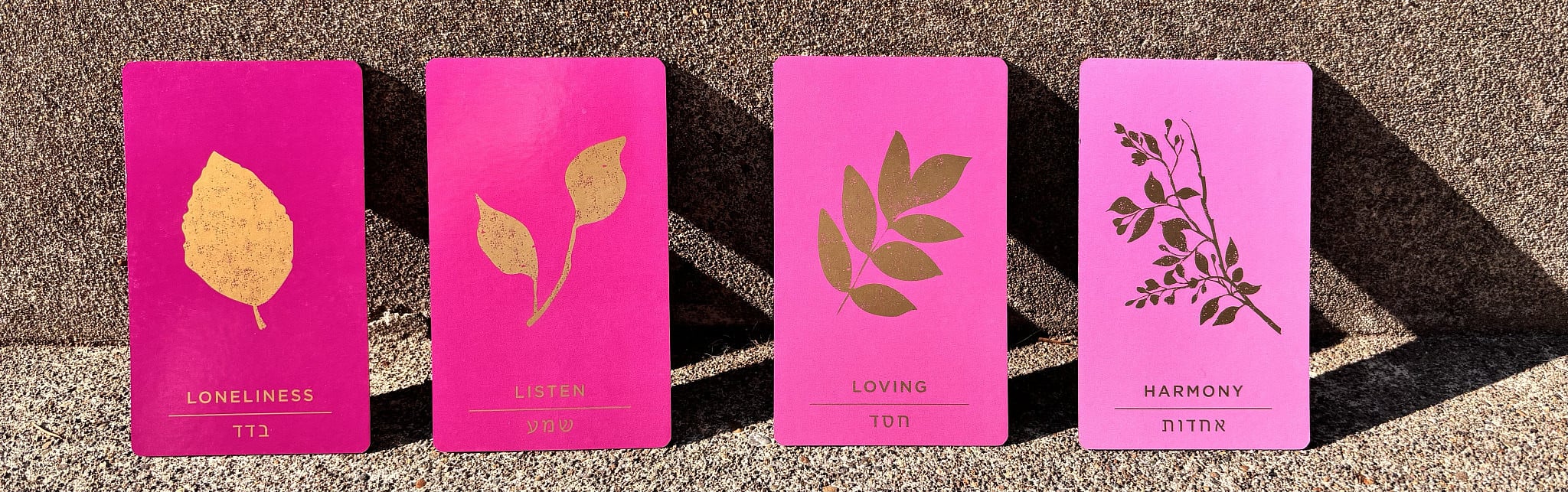
I don’t want to be alone.
I don’t mean that I always want someone beside me. I spend a lot of time alone, and often seek it out. I walk in the forest alone. I think alone. Some of the most important decisions I have made began by getting quiet enough to hear myself.
And when I think about it, there is a difference between being alone and feeling alone.
And lately I have been thinking about how difficult it is to find our way back to ourselves entirely on our own.
Elul asks us to return.
Cheshbon HaNefesh. An accounting of the soul.
Where am I? What has this year revealed to me? Who have I been? Who do I want to become?
It sounds like solitary work.
But the language of Elul suggests something else.
Ani l’dodi v’dodi li.
I am my beloved’s, and my beloved is mine.
It begins with ani — with me. But it does not end there.
I turn toward relationship, and discover that I am being met.
The Hasidic masters offer another image: the King is in the field. The King has left the palace and come out to where the people already are. We are not asked to cross the entire distance ourselves.
And throughout Elul, morning and evening, we recite Psalm 27:
Achat sha’alti me’et HaShem.
One thing I ask.
Of all the things David might have asked for, he does not ask for an easier life. He does not ask to know what comes next.
He asks to remain in God’s presence.
What moves me is that we are all doing this deeply personal work together. God is our witness, and we are each other’s witnesses.
That is what I experienced this weekend at the Chavaya Festival in Duvall, Washington.
During Shabbat morning services, I listened to more than 300 people singing praises to Hashem. Their voices pure. Their hearts open. I wanted to join them, but my heart trembled. Childhood trauma that I thought I had long ago resolved made me feel separate and alone. I stepped into the field, and a friend embraced me. I cried. Then I returned to the big tent to rejoice.
We do not return to our best selves alone.
Sometimes we return because someone is there to receive us.
Because we are witnessed with enough love that we can look honestly at who we have been.
Because someone can see in us more than the particular place in which we happen to be standing.
Maybe that is one of Elul’s deepest invitations.
Not simply to look inward.
Not simply to find our way back.
But to discover that, as we return, we are already being met.
Related Topics
Related Posts