
Woman, Life, Freedom
The month of March marks the celebration of Women History Month across the United States. It began as a weeklong celebration of women’s contributions to culture, history and society by the school district of Sonoma, California back in 1978. Later, in 1987 it evolved to an entire month, designated by U.S. Congress. March 8 marks the celebration of International Women’s Day across the globe. When the United Nations General Assembly officially proclaimed International Women’s Day back in 1977, among the reasoning cited was the need to recognize the role of women in securing peace and social progress and the full enjoyment of human rights and fundamental freedoms require the active participation, equality and development of women; and to acknowledge the contribution of women to the strengthening of international peace and security. This year, the month of March carries profound significance for Iranian women, who for over four decades have waged a courageous struggle against a regime determined to strip them of their most fundamental rights.
The “Woman, Life, Freedom” movement—sparked by the September 2022 death of Mahsa (Jina) Amini after her arrest by Iran’s morality police may be one of the most significant women’s rights movements of our generation. In April 2024 the Islamic Republic of Iran launched the “Noor Plan” to enforce compulsory veiling through increased security patrols, dangerous car chases, mass vehicle confiscations, imprisonment, and flogging. In July 2024, police fired lethal ammunition at a car carrying 31-year-old Arezou Badri as part of hijab enforcement. In August 2024, a disturbing video showed multiple agents violently assaulting two 14-year-old girls who had removed their headscarves. The death penalty has been weaponized against women activists: human rights defender Sharifeh Mohammadi and Kurdish activist Pakhshan Azizi were sentenced to death solely for peaceful activism. However, notwithstanding the cruelty and the imminent risk for their lives, in January 2026, a new wave of protests erupted in Iran, with women and girls—some as young as 8—once again at the front lines. What followed was a harrowing, unimaginable and heartbreaking loss of thousands of lives.
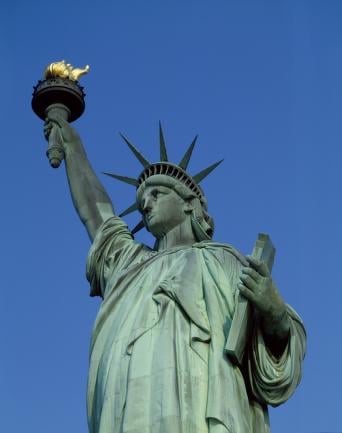
A video clip of a beautiful young Iranian woman performing on a street accompanied by male musicians in 2024 went viral and became a symbol of the Iranian fight for freedom. Since the 1979 Islamic Revolution, women in Iran have been banned from singing solo in public. Violators face accusations of harming public decency, arrest, imprisonment, and even corporal punishment. The image of a woman risking imprisonment simply for the act of singing powerfully illustrates the depth of the regime’s oppression and the extraordinary courage of the Iranian women. This 2026 Women’s History Month, I turn to three words from ‘The New Colossus,’ written a century ago by Emma Lazarus—a Jewish American poet whose poem graces the pedestal of the Statue of Liberty—echoing with evermore power: ‘yearning to breathe free.’ Those words belong to every woman in Iran who has dared to sing, to march, to remove her headscarf, and refuse to be silenced.