
Always out of step with orthodoxy
Words Don’t Radicalise People. Narratives Do.
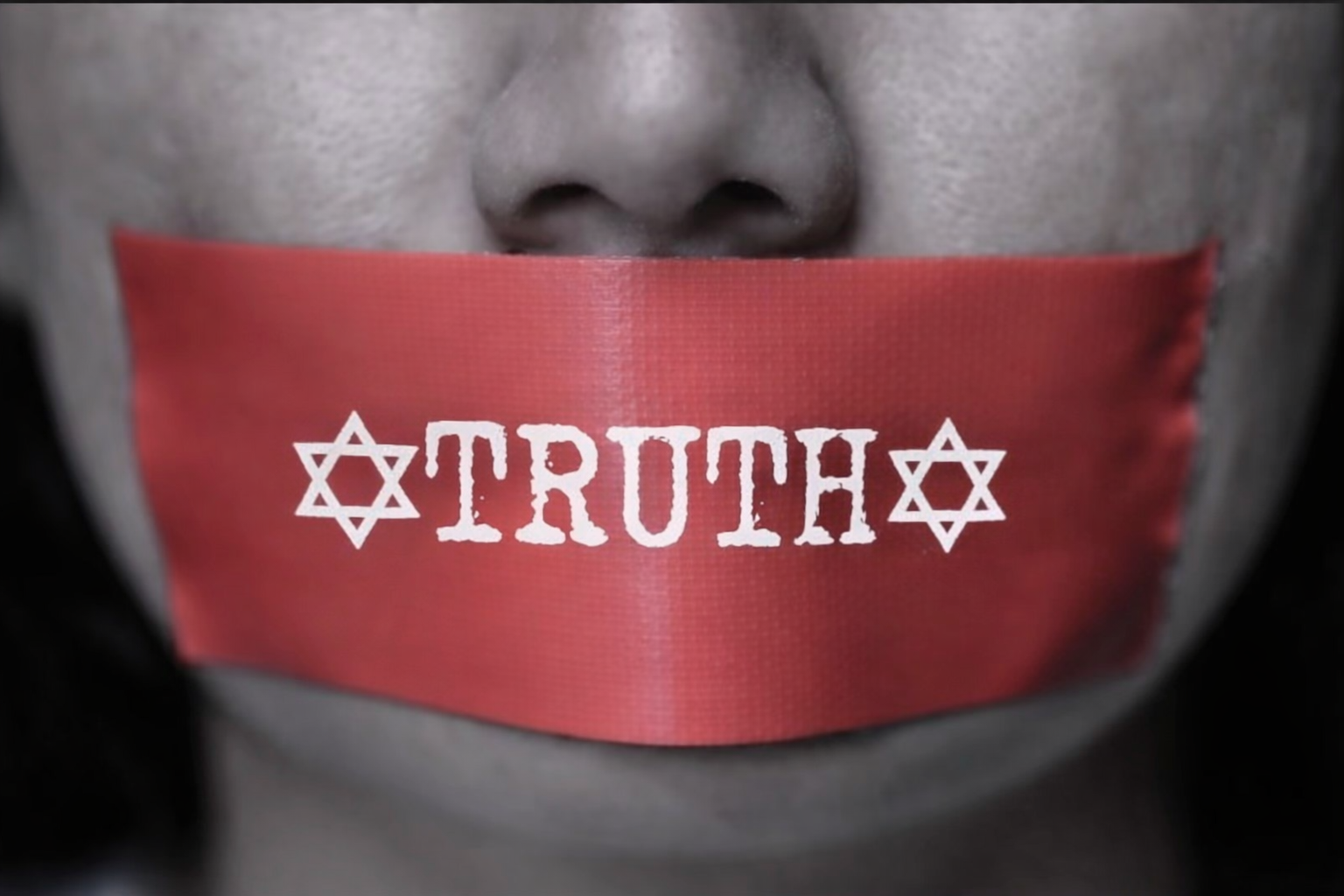
When policy is shaped by emotion, detached from reality, outcomes deteriorate. Image Ai generated
There’s a habit in modern politics of mistaking the symptom for the cause.
The NSW Government’s response to rising antisemitism is a textbook example.
After months of evidence and testimony, a parliamentary committee landed on a narrow conclusion: consider banning the phrase “globalise the intifada.”
It sounds decisive. It reads well in a headline.
But it completely misses the point.
Because slogans don’t create movements. They signal that a movement is already in place.
The Wrong Target
If banning a phrase could solve ideological hostility, this would be easy.
It isn’t.
Language is interchangeable. Remove one slogan and another appears.
That’s because the slogan is not the engine.
The engine is belief.
And right now, that belief has been shaped by a steady stream of false, distorted, and emotionally charged narratives about Israel and Jewish people that have gone largely unchallenged in Australia.
That is where the real failure sits.
How the Narrative Took Hold
This did not happen overnight.
It built through repetition, amplification, and legitimisation.
When the same claims are echoed across campuses, media commentary, and public platforms, they stop sounding like opinion and start feeling like fact.
Once that shift happens, behaviour follows.
People do not shut down streets, occupy public infrastructure, or escalate confrontation because of a chant. They do it because they believe they are morally justified.
That belief is the product of narrative.
And for more than two years, that narrative has been allowed to spread with minimal resistance from those in a position to challenge it.
From Rhetoric to Reality
There is a direct line between narrative and consequence.
When false or misleading information is repeated often enough, it creates moral certainty.
Moral certainty drives action.
Action, when left unchecked, escalates.
This is not abstract. It is observable.
We saw that progression culminate in violence, including the terror attack at Bondi that targeted Jews.
That moment did not emerge in isolation. It was the endpoint of a pattern that had been visible for years.
The warning signs were there. They were ignored.
Two Years of Escalation
Sydney has lived through the consequences.
Major roads shut down. Public order disrupted. The Harbour Bridge itself turned into a platform for protest.
That is not normal civic expression.
That is what happens when a government allows a narrative to build momentum without setting boundaries grounded in fact.
No government needs to agree with a protest to regulate its impact. But it does need the will to act.
Instead, what we have seen is hesitation and avoidance.
And that avoidance has been read, correctly, as permission.
The Cost to Jewish Australians
For Jewish Australians, this has been immediate and personal.
Daily life has changed. Security has become a consideration. Visibility has become a risk calculation.
What was once background concern has moved into the foreground.
This is what happens when a society allows hostility to normalise.
And the Cost to Everyone Else
But this does not stop with one community.
Once false narratives are allowed to override factual grounding, the consequences spread.
Public order becomes negotiable. Social cohesion weakens. Trust in institutions erodes.
Every Australian is affected by that shift.
Because once truth becomes flexible, it does not stay contained. It reshapes everything.
The Political Calculation
The Labor Government is not unaware of this.
The inquiry proves that.
What is missing is not information. It is resolve.
Confronting false narratives carries political risk. It invites backlash. It challenges voting blocs.
So the easier path is taken.
Focus on language. Offer symbolic measures. Avoid the deeper conflict.
But leadership is not about choosing what is easy.
It is about choosing what is necessary.
Facts Before Feelings
There is a principle that should guide any government.
Facts must come before feelings.
Because when policy is shaped by emotion detached from reality, outcomes deteriorate.
What we are seeing now is what happens when that order is reversed.
A government responding to pressure instead of evidence.
A public debate shaped by repetition instead of truth.
The Line That Needs to Be Drawn
If this is going to change, the approach must change.
Stop treating this as a language issue.
Start treating it as an information and accountability issue.
Challenge false claims directly. Reassert factual baselines. Hold institutions and public figures accountable when they amplify distortions.
And enforce the basic expectation that public infrastructure cannot be repeatedly shut down without consequence.
The Bottom Line
Banning a phrase may create the appearance of action.
It does not dismantle the conditions that made that phrase resonate in the first place.
Until the NSW Government confronts the narratives driving this behaviour, it will remain reactive, not in control.
And Australians will continue to live with the consequences of a problem that was allowed to grow, in full view, for far too long.
Related Topics