
Yavne, not Masada

Last week, I followed the news of Edan Alexander’s release with a full heart and trembling hands. After 584 days in Hamas captivity, Edan returned home. Throughout the week, I was texting with his mother, Yael — a woman I’ve come to know over 20 months of joint advocacy on behalf of the hostages taken by Hamas terrorists on October 7. Together, we’ve stood shoulder to shoulder, bound by a fate no family should ever face: the desperate, unrelenting struggle to bring loved ones home.
My brother-in-law, Omri Miran, is still in Gaza. He is one of 58 hostages still held by Hamas — every person a universe. Their continued captivity is a deep, open wound in the collective soul of the Israeli people.
Omri’s daughters, Roni and Alma, are being raised in his absence. Roni will turn four in July. Alma turned two in March. They know their father through videos, framed photos, and hostage posters — not his presence at birthdays and family gatherings. Their questions are no longer soft or vague. “Why hasn’t Abba come home?” they ask us, the adults in the family – and we have no good answers.
My sister Lishay, Omri’s wife, bears this nightmare with relentless strength. She has been forced to fight for his release through sleepless nights. Constant travel, including over the past week to two countries where she met senior US officials, held community events, and marched for the hostages. She delivers public speeches, while carrying endless private pain. She, like so many others, has sacrificed everything to keep Omri’s name — and the names of all our hostages — in the national conscience and international spotlight.
Just a month ago, we received a psychological warfare video — a proof of life from Omri, filmed by Hamas terrorists in the tunnels of Gaza. It was meant to break us. Instead, it reminded us of what still can be done: there are people we can save, and others we must bring home for burial. That is our moral obligation — to those we can still save, and those we must lay to rest
The Case for Ben Gurion’s Realism
Israel now faces a defining decision: continue deepening the military campaign in Gaza, risking more lives and delaying the hostages’ return, or seize a rare diplomatic opening that could bring this nightmare to an end.
But Israel’s decision is only half the equation.
The other half lies with Hamas and its enablers. Edan’s release was not an act of goodwill — it was a concession under pressure. It showed Hamas can be moved. But it also exposed how mediators, especially Qatar, have failed to place sufficient pressure on the terror organization. Qatar pledged to press Hamas to release all hostages unconditionally. It has not. Instead, it continues to offer Hamas protection and a platform to spread lies and disinformation.
In the transactional logic of regional power, where influence is built through leverage, not sentiment, Qatar holds real leverage. And President Trump, who has reengaged the nations of the Gulf region, including Qatar, with a strategic vision for realignment, has unique tools to apply pressure and offer the necessary carrots and guarantees to all the stakeholders.
This war could end tomorrow if Hamas released the hostages, demilitarized Gaza, and sent its leaders into exile. But that will only happen if those who empower Hamas push for such a result. The onus is now on Qatar to do what it has long promised: to press Hamas — and deliver results.
Such pressure on Qatar could make a huge difference – but it will not absolve us Israelis of the need to make our own tough decisions.
President Trump’s message during his visit to the region last week was clear: he wants to end the conflict, bring the hostages home, normalize ties between Israel and key Arab states like Saudi Arabia, and lay the foundation for a demilitarized, post-Hamas Gaza that can be rebuilt and reintegrated into the region.
Yet instead of embracing this momentum, some in Israel’s leadership — notably Finance Minister Bezalel Smotrich and National Security Minister Itamar Ben Gvir — are steering the country toward a ‘Masada policy‘: a path of vengeance, fanaticism, and isolation. One that delays the hostages’ return and threatens Israel’s moral compass and global standing.
The alternative is Yavne.
Rabbi Yochanan Ben Zakkai didn’t call for revenge when the Second Temple fell. He asked for Yavne — a place to rebuild, to reimagine continuity. That same spirit guided David Ben-Gurion: realism without surrender, clarity without despair, and the moral courage to trade pride for the future.
We are again at that crossroads.
Since October 7, Israel’s social cohesion has frayed. Trust in leadership is shaken. The value of pidyon shvuyim — the redemption of captives — has been tested like never before. But that value is not just tradition. It is foundational. And it can be guaranteed with a deal — supported by nearly 70% of the Israeli public, according to almost every recent poll — that will release all the hostages, end the war, allow Israel to heal, and enable Gaza to reconstitute.
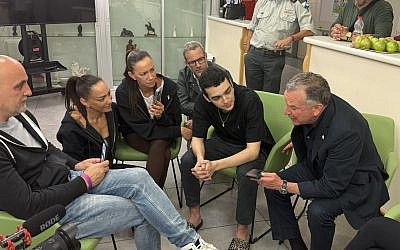
I saw the Alexander family reunite — the embrace, the relief, the moment that stopped everything else. That embrace should belong to my sister and nieces, too. It is our call to action — and it remains the Alexander family’s call to action, even after Edan’s release.
Let Edan’s return not be the end of the story, but the turning point.