Engagement Director, Hadassah Midwest, Hadassah Writers' Circle
Yom Kippur Gives Me the Opportunity to Express the Journey of My Soul
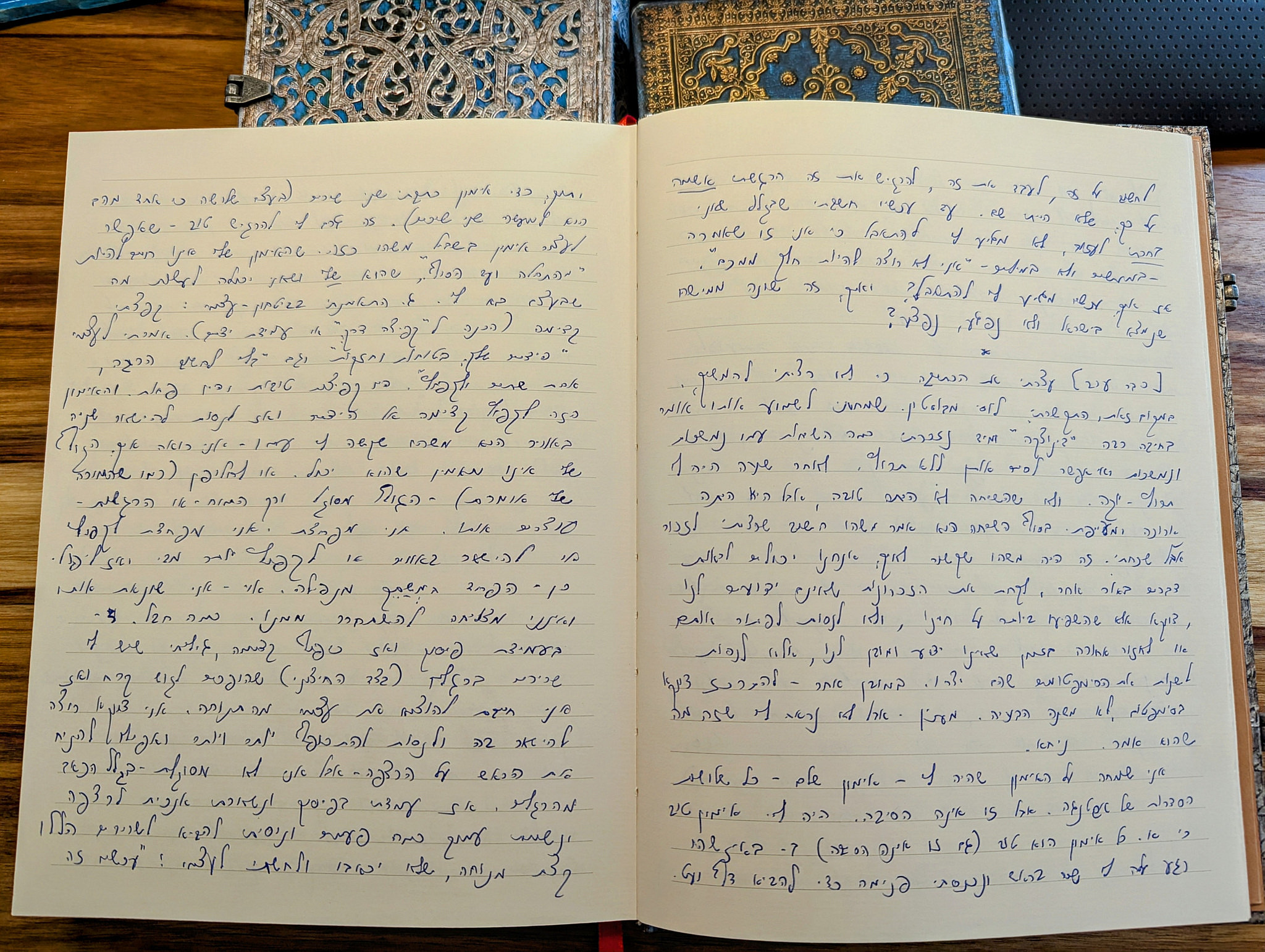
A page from Dina's notebook. Photo courtesy of the author.
Of all the facets of my identity, “writer” is my favorite one. I started writing when I was 14 years old, shortly after my older brother died at age 19. I wrote poems that captured my grief and sorrow. Within a few seconds of writing a poem, I expressed my deepest feelings. The relief, this outlet, allowed me to experience my brother’s loss and then “hop back” to my current daily reality.
Actually, I began writing at age 11, with letters to friends who lived outside the Old City in Jerusalem where I grew up. By the time I was in high school and traveled with a youth group, I had made many friends who didn’t live near me, and I would write about three letters every night. My father, Simcha Bar-Menachem z”l (may his memory be a blessing) always prided himself on being my personal mail man.
With time, I realized that writing played an essential part in who I was, so I began pouring myself into it. In addition to poetry and letters, I kept a notebook under my pillow and would write every morning as soon as I woke up. Later, after my army service, I would spend every Thursday evening writing – either at my favorite café or seated under a lamppost in the middle of a busy intersection, or at the top of the Old City’s wall. I also took my notebook everywhere and would write on the bus or in waiting rooms – or while hiking and traveling. Sometimes, it was first thing in the morning; other times, it was late at night – even after midnight – or anytime in between.
I wrote about my impressions, memories, thoughts, emotions, doubts and questions. It is no wonder that I even brought my notebook to therapy sessions when I was finally ready to deal with my grief and shed my brother’s shadow to discover who Dina is without him. I would write during and right after my sessions and, of course, in between. With time, my writing took all forms — poetry, journaling, dialogs, plays, short stories, articles and more.
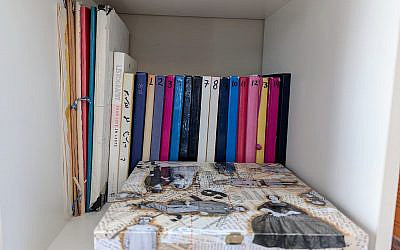
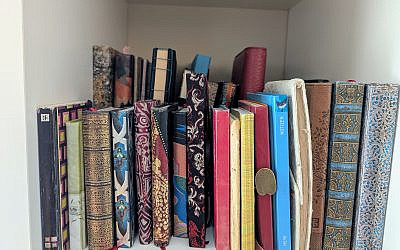
For me, writing is more than self-expression. It allows me to process things faster than my ego allows. When I hold my pen and begin to write, my defense mechanism cannot catch up to the speed of my writing. And so I get to create a genuine and painful-at-times reflection of where, what, how and who I am.
I was brought up Orthodox and, from the age of nine, I started fasting on Yom Kippur. To us kids, it was a real challenge: Who can last the whole 25 hours without food or drink? It was also a competition: Who could stay up the latest? Who could sleep the most? (I believe my record is 15 hours of sleep.)
As a teenager, I looked forward to some of the prayers – like Kol Nidrei, which opens the Yom Kippur service with our release of all the promises we made to God throughout the year before) and Neilah (the segment that concludes the Yom Kippur service, when the gates of Heaven are still open to receive our final prayers and supplications). There was something so powerful in singing, bowing, whispering the words, asking for forgiveness, recognizing my shortcomings and appreciating life all over again.
In my 20s, I started seeing things from a broader perspective. I had non-Jew friends, I traveled the world, and I studied other religions and their history. I never questioned the essence of Yom Kippur, but I began asking myself how its traditions fit my soul.
With time, I recognized that I needed to make Yom Kippur “mine.” I wanted it to remain a special day that I honored once a year, but without the traditional rituals—particularly the 25-hour fast. So, I “recruited” my writing – and created a personal tradition to read my past writings on Yom Kippur.
Every year, I sit down on the floor, take out a few notebooks – poetry notebooks, for example – and stacks of letters (yes, I saved every letter that has ever been sent to me!).
And I read. I read the writings of my 14-year-old self and my writings from when I was a soldier, a student, a lost soul, a fulfilled soul, a person in love and a person in despair. I read the letters of others. They all reflect who I was and what I was interested in at the time. I read my notebook and reminisce on forgotten figures in my life and those who have made an everlasting impression.
I read poems I had written on top of mountains and those I wrote when I felt I was at the abyss of my being. I read about my therapy and all the painful yet astonishing growth it created, such as the dialogs I wrote between me the adult and me the child, which created a strong sense of compassion toward all the “Dinas” I once was.
Yom Kippur is a day when we ask for forgiveness and beg for another year of life. I have found that self-forgiveness is the hardest thing to ask for and the hardest thing for me to grant myself. But reading about myself – the self I was at different points in my life and the self I grew into – achieves that for me.
I think we tend to have more forgiveness for ourselves when we consider how we “were” yet no longer “are.” We can recognize past behaviors that worked then but no longer hold any meaning and reasoning for us. We reflect on states of mind that have long been forgotten. We remember our past selves and realize that we are different.
And I forgive myself for having the self-defense mechanisms I needed then. I forgive myself for all “self-emotions” (you can fill in the blanks: self-anger, self-loathing, self-pity …). I forgive myself for doing things and saying things that are no longer a part of my reality.
I imagine we all have a sense of denial that prevents us from looking deep into ourselves and facing our painful, shameful, low sides. Through writing, I get to capture that side of me, and then Yom Kippur provides me with the prefect time frame to read, reflect, identify my growth and move on to the New Year.
For a long while, I didn’t share my Yom Kippur tradition with anyone because a part of me still thought that there was only one way to experience Yom Kippur— with fasting and prayer (yet I continued carrying on my tradition!). Now, I know that creating personal traditions adds meaning to what we have inherited and may have taken for granted.
Wishing you and yours Shanah Tovah and G’mar Hatimah Tovah. May you be inscribed for a good year!
—
Dina is a member of the Hadassah Writers’ Circle, a dynamic and diverse writing group for leaders, members and staff to express their thoughts and feelings about all the things Hadassah does to make the world a better place. It’s where they celebrate their personal Hadassah journeys and share their Jewish values, family traditions and interpretations of Jewish texts. Hadassah members are proud of their Zionist mission and their role as keepers of the flame of Jewish values, traditions and beliefs as well as advocating for women’s empowerment and health equity for all. Since 2019, the Hadassah Writers’ Circle has published nearly 650 columns in The Times of Israel Blogs and other Jewish media outlets. Interested? Please contact hwc@hadassah.org.
Related Topics
Related Posts