Research Scientist | Data Analyst | Policy Commentator
You are invited!
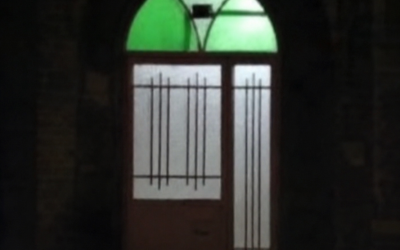
Crown Prince Reza Pahlavi was in Krakow receiving an award when I opened an old photo on my phone and could not look away.
It was our front door in Iran. I had taken it myself, early one morning years ago, on my way out for a hike. That was something I used to do when I was younger—leave before the city fully woke.
I always expected to see my father when I came back. He would be outside, moving between the two long rows of orange trees that stood in front of the house, watering them. After the water touched the soil, you could smell it—dark, sweet, alive. I spent years working with bacteria, but that scent still feels to me like the soil simply breathing.
Birds would already be calling. And inside, breakfast would be waiting.
The photo is dark. The glass looks cloudy, the green arch almost lost. I had kept it without knowing why. While the news spoke of the King Solomon Award, of peace, and of an Iran that might still have a different future, I sat with that door and felt the morning, the orange trees, my father, and the distance, all at once.
I imagined an Israeli friend standing in front of it.
They have traveled far. Perhaps they are carrying a small gift and wondering whether they have found the right house. In the visit taking shape in my mind, I open the door before they finish knocking.
“Welcome. Please come in.”
For a moment, neither of us knows exactly what to do with our hands. We manage the greeting, the bag, the doorway. Then I ask the important question.
“Have you eaten?”
“Yes.”
Unfortunately for them, this does not conclude the matter.
In an Iranian home, “Have you eaten?” is sometimes less a request for information than an announcement that food is coming.
I pour the tea. My guest offers to help and asks where the cups are. Soon, I hope, they will feel comfortable enough to stop asking permission for every little thing.
Eventually, I will also have to sit down. Hosting is difficult when your guest keeps catching you halfway to the kitchen.
We talk about the journey, about Krakow, about the award. I explain how a ceremony in Poland somehow brought me back to this doorway in Iran.
Someone mentions Cyrus.
Most new friends discover they know the same colleague or once lived on the same street. We have a Persian king in common. We can leave it there for the moment and return to the tea.
My guest begins telling me about their family. Halfway through, I realize I need names, dates, and an explanation of who is no longer speaking to whom.
I can offer a similar briefing on my own relatives.
By the second cup, we might need a family tree. Fortunately, I have experience organizing data.
Somewhere in those stories, we begin finding things we recognize: affection complicated by distance, family habits that make us laugh, memories that remain vivid long after the people around us have stopped mentioning them.
We do not have to explain everything perfectly. Sometimes recognition arrives halfway through a sentence.
We disagree about something. My guest raises an eyebrow. I explain myself, possibly at greater length than necessary.
The tea goes cold. We make more.
Then I show them the photograph.
“This is how I remember the door,” I say. “I took it before a hike, years ago.”
They look from the screen toward the entrance, comparing the dark photograph with the house around them.
I tell them about my father’s morning routine. Perhaps that is why I kept such a dark picture. It held more than it showed.
I would love to take this friend between the orange trees, to share the place as I remember it. A memory cannot arrange everything exactly as it was. But in imagining their visit, I find myself making room for something new within it.
Perhaps my guest is Israeli. Perhaps they are an Iranian Jew returning to the country they left years ago. They bring their own memories and attachments; I have mine. Over the course of an afternoon, there is time to hear about both.
By now, they have stopped asking where the cups belong.
That seems like progress.
I look again at the photograph on my phone, and the imagined afternoon gives way to the room around me.
The ceremony in Krakow will end. There will be speeches to read and photographs to scroll past. This picture will stay.
The glass is still cloudy. The doorway is still dark. But I can almost hear the water touching the soil.
One day, I hope, I can show someone more than the picture.
The door will open. The tea will be poured. And if they say they have already eaten, I will know exactly what to do.
If you were the one standing there—Israeli, Jewish, perhaps an Iranian Jew returning after a long time—would you come in? I wonder what memories you would bring to our table.
Related Topics