You can do God’s will without a burning bush
The first book I finished in 2026 was Jonathan Eig’s biography of Martin Luther King Jr. I couldn’t have predicted how deeply it would move me.
Eig refuses to flatten King into a symbol or slogan. He shows King’s greatness and his shortcomings, including the depression he experienced after the height of the civil rights movement gave way to something murkier, as doubts about nonviolence grew and resistance to civil rights hardened.
What struck me most is that even in those darker years, King continued to speak in the language of calling.
In a 1961 BBC interview, speaking candidly about feeling inadequate, King introduced a phrase describing what sustained him: “cosmic companionship,” the conviction that he was not acting alone and that God remained present even when outcomes were unclear.
He returned to this insistence in one of his last sermons at Ebenezer Church: everyone is sent. Everyone can serve. No one is alone.
I kept thinking about that phrase, cosmic companionship, as I read this week’s Torah portion, Shemot.
Pharaoh decides to forget Joseph and recast the Israelites as a threat. The midwives, Shifra and Puah, refuse his command to kill Hebrew baby boys.
According to the midrash, Moses’s parents separate to avoid bringing children into a world where they will be murdered. But Miriam urges them otherwise, and Moses is born.
His mother hides him. His sister watches from the reeds. Pharaoh’s daughter reaches into the Nile and pulls out a crying child. Moses, as an adult, saves an enslaved Israelite before fleeing to Midian.
None of them knows what their actions will set in motion.
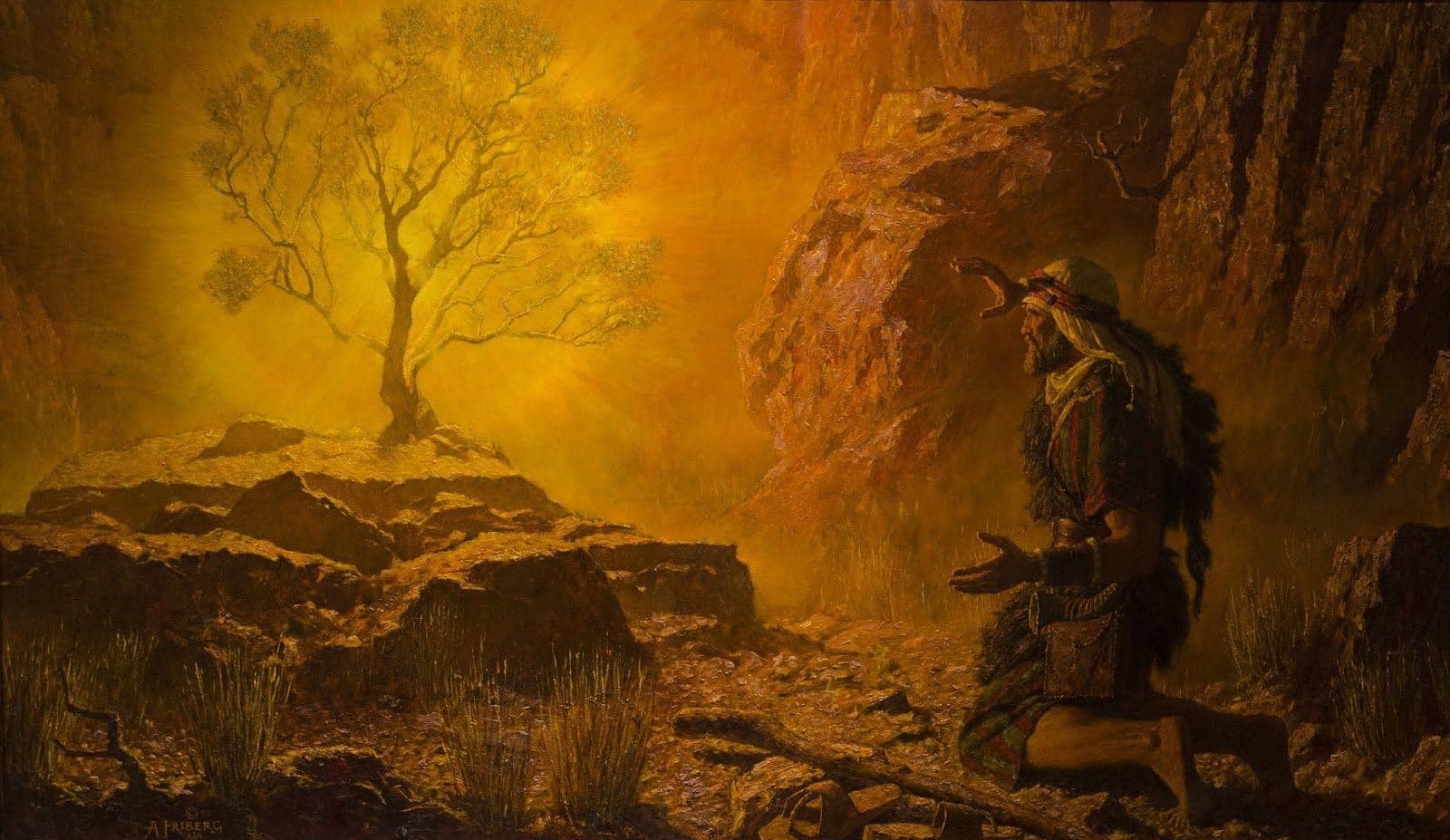
Years later, God appears to Moses in a burning bush and tells him to return to Egypt to liberate the Israelites. Moses resists. He lists his inadequacies. He does not feel chosen.
But God tells Moses that He is sending him, using the word lishloach, “to send.”
Rabbi Joseph B. Soloveitchik offers a teaching that reframes this moment. These words are not only about Moses. God is revealing the principle of shlichut, what it means to be human.
To be human is to be sent.
Shlichut means each of us is born into particular circumstances because there is something only we can do.
On the one hand, I find this uplifting. It means we can all be God’s messengers. What a sublime way to understand our lives.
But I also find it unsettling, even terrifying. Rabbi Soloveitchik admits that most of us do not have a “burning bush” moment.
If my life has a unique purpose but no revelation, how am I supposed to know what that purpose is? What if I miss it, ignore it, or get it wrong? And what if I live out that calling but feel like I make no difference?
Rabbi Soloveitchik does not resolve these questions. He teaches that we have multiple shlichuyot throughout our lives, some we recognize, most we do not. We live inside these missions, without a map.
Shlichut is measured not by results but by mesirut nefesh, the seriousness with which we offer ourselves to the task in front of us. You are not responsible for solving the whole problem. You are responsible for doing the good that is concretely within your reach.
We live in a culture that constantly asks us to prove that what we are doing is big enough to matter. Exodus, the book about grand liberation, offers a different metric. History turns not on those who see the whole map, but on those who stay faithful to what is right in front of them.
And here is what sustains you. Rabbi Soloveitchik explains that when you become God’s conduit, God is with you. This is the promise of shlichut. This is cosmic companionship.
Once you understand yourself as sent, you are not alone.
Not: I know God’s will.
Not: I’ve completed my mission.
Just this: I am trying to be faithful.
As I read his words alongside Rabbi Soloveitchik’s teachings on Exodus, I kept thinking that the choice to live with shlichut is not easy. It requires confidence to act without certainty, and constant self-examination.
But shlichut also offers a gift.
When you understand yourself as sent, you act with a different kind of seriousness. Not because you know your action will succeed, but because you trust that you are part of something larger.
The very possibility that your small act of refusal, your moment of courage, your decision to persist might be the hinge on which something larger turns gives weight to what might otherwise feel insignificant.
Shlichut reframes scale. You are not just being kind or doing the right thing. You are participating in God’s work in the world, even when you cannot see how.
This is what sustains great courage and makes liberation possible. Not through certainty about outcomes, but through trust that we are sent, that our actions matter beyond what we can measure, and that God works through us even in what the world sees as failure.
A mindset of shlichut is what makes cosmic companionship possible: the humility to act without knowing the whole mission, and the courage to believe that our small steps might matter more than we will ever know.