You can weaponize our Haggadah, but our story will prevail
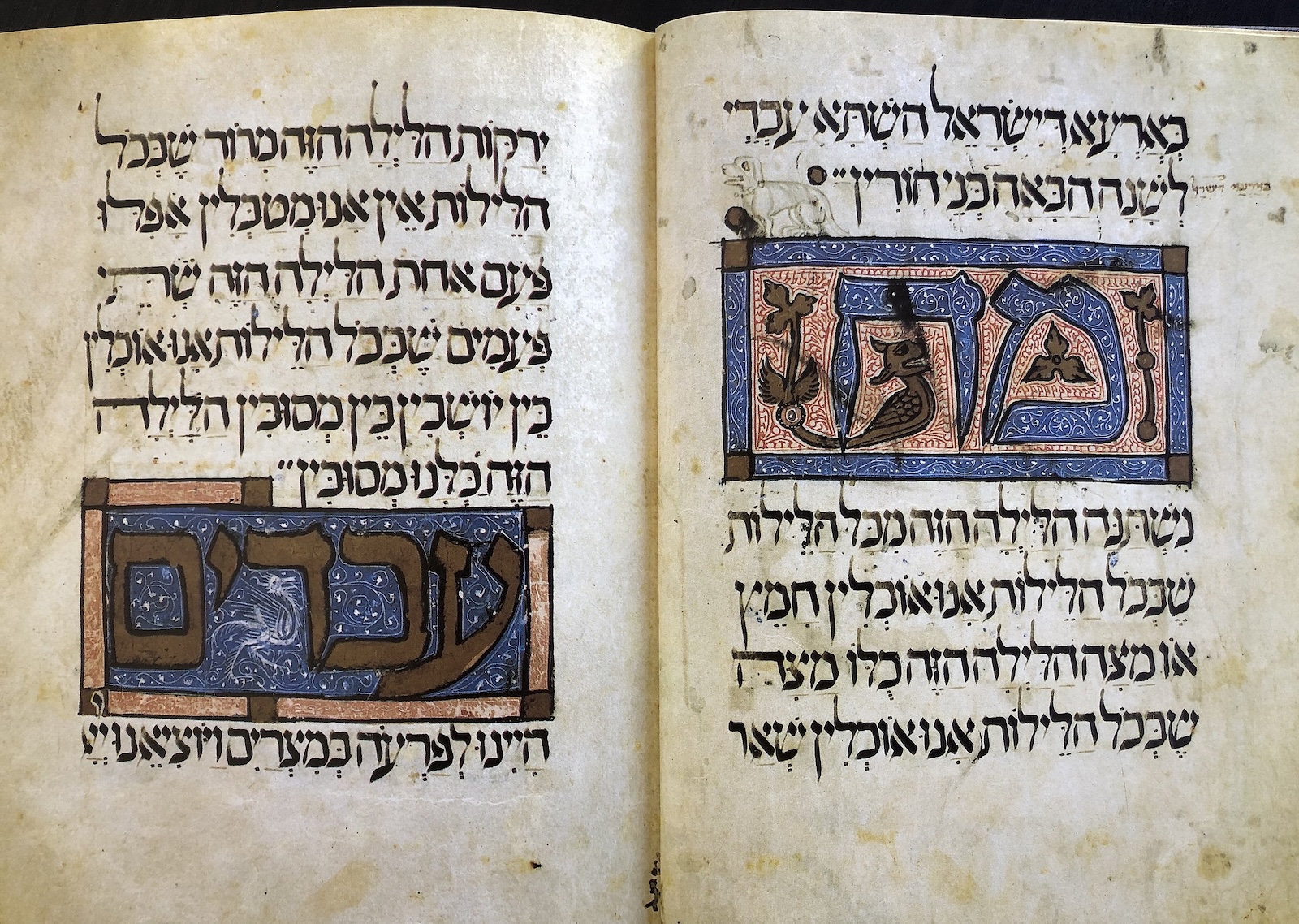
Through the happenstance of history, your museum became the custodian of one of the most beautiful Passover Haggadahs in existence, the Sarajevo Haggadah, created in Barcelona around 1350. Like all Haggadahs, the illuminated text that you are fortunate enough to hold in your possession was created by Jews and for Jews, as a way to keep the soul of our nation – our memories and hopes – alive.
This happenstance of history gives you the legal right to decide that all proceeds from exhibiting the Haggadah will now go to help Palestine, and claim that “in this way, the National Museum of Bosnia and Herzegovina provides support to the people of Palestine who suffer systematic, calculated and cold-blooded terror, directly by the state of Israel…”
But your betrayal of your stewardship of the Haggadah, your audacious attempt to weaponize the very artifact that bears witness to our story to erase our side of the story, is noted. And so is your none-too-subtle hint that the nation that gifted the world the eternal promise of “Next Year in Jerusalem” has become a new Pharaoh.
You claim that “as an institution that deals with the protection of cultural-historical and natural heritage, we are obliged to warn that in the shadow of this tragedy, the targeted erasure of the cultural and religious identity, primarily of the Muslims and Christians of Palestine, is taking place.” But you supply no support for this outrageous claim, nor do you acknowledge the cynicism of making it to justify your erasure of our role as the authors, makers, and intended users of the very artifact you weaponize against us. The Sarajevo Haggadah isn’t a relic of some long-dead civilization; it’s part of a living tradition, a national story that preserved the dream of independence for millennia and led us to the Israel of today.
Your decision ignores the history and content of the very artifact you chose to weaponize, just as it ignores the facts here on the ground. Like all countries, Israel is a real place and wrestles with real problems. Like all countries, sometimes these problems mean that we have to get our hands dirty, that we have to fight and kill. This reality brings me neither joy nor pleasure. I wish Hamas had not forced us to fight this long and bloody war. But while we can and do argue about specific measures and tactics here in Israel, I challenge you to think of a better way to handle a terrorist organization that wants to destroy and kill and rape you, and does in fact engage in “systematic, calculated and cold-blooded terror,” unlike ourselves.
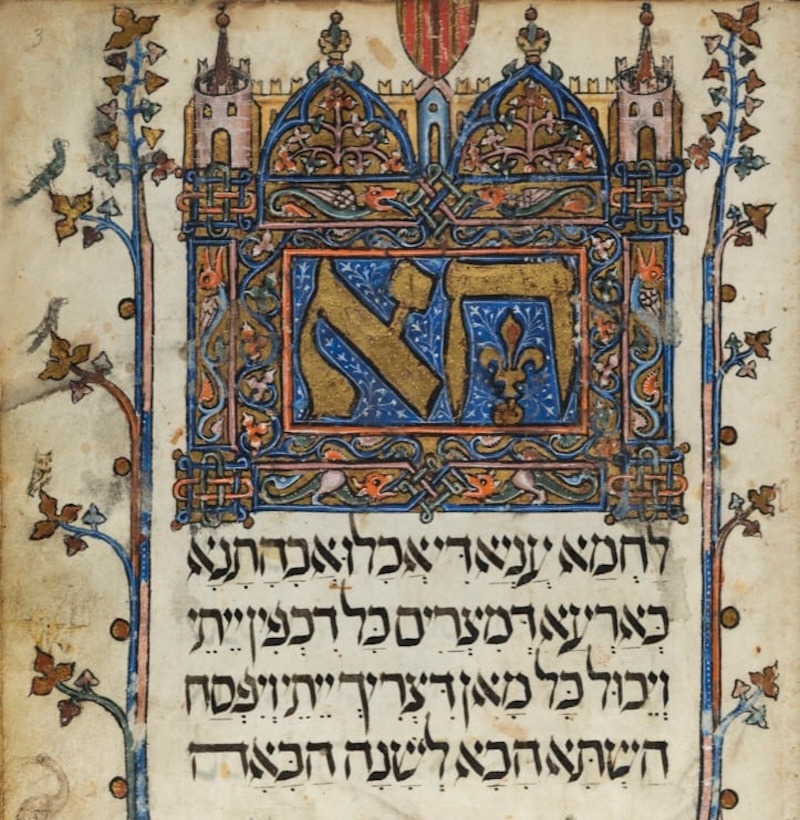
You turn your back on facts with the same ease that you turn your back on your responsibility to use the artifact in your possession in a way that honors the legacy and intentions of the people who produced it. The Sarajevo Haggadah, like all Haggadahs, was born out of our people’s broken backs and hopeful hearts, out of the journeys we were forced on and the redemptions we have welcomed, out of our sweat and tears and the voices we had raised in gratitude and song.
Know this: our song will go on, despite your efforts to erase us. The story that the Haggadah contains is greater than its vessels. You may use this one particular book against us, but our story will prevail.
It is a story we lived before we told it, before our ancestors ever picked up pens and brushes to illuminate it on the page. It is a story that’s embedded in our bodies, in our language, in our sense of self. It is a story we tell through the hands we outstretch to help each other, and through the ideas we uphold to shine a light for the whole world.
The idea that all people were created in the image of God; that might does not make right; that justice is far more precious than any ritual: These are the gifts our story gave humanity, even as the same story reminded us that we, too, have a right to hope for a country of our own.
We told this story to our children in every generation. We told it as terrible storms raged just outside our walls.
We were slaves in Egypt, we told our children as the Romans exiled us, as the Cossacks butchered us, as the Spanish cast us out. God has freed us, we told them as the Ottomans abused us, the crusaders killed us, and the Iraqis massacred us in the Farhud. This year, we are slaves, we told them as the Soviets erased our legacy and our identity. But next year…
Next year, we will be free.
And we are. We are. What a miracle it is, this freedom. What a gift. A hard gift. A gift that comes with strings attached, with responsibilities and power and impossible dilemmas, and yes, also with the necessity of fighting and of shedding blood.
But it is a gift, this freedom that fulfills the prayers and dreams of so many generations of our ancestors.
You can try to use the Haggadah that preserved and nourished these prayers and dreams to vilify us for defending our freedom. But you will fail, because you can’t make the words “Next Year in Jerusalem” lose their meaning, any more than you can force your lies to become truth.