You Can’t Disown Your Way to Safety—Ask Radnóti
Lately, I’m watching something happen that’s so familiar, it’s honestly creepy. More and more Jews — especially in progressive spaces — are scrambling to distance themselves from Zionism, from Israel, from Jewish peoplehood altogether. They post things like:
“Judaism is a religion, not a nationality.”
“I’m Jewish and anti-Zionist.”
“Don’t confuse me with them.”
As if the louder they say “not that kind of Jew,” or “Not in my name” the safer they’ll be. As if disavowing Jewish self-determination will buy them a pass.
BUT WE’VE BEEN THERE, DONE THAT.
A hundred years ago, German and Hungarian Jews were doing the same thing. “We’re Germans of the Mosaic faith.” “We’re loyal Magyars who happen to be Jewish.” They changed their names. Converted. Quoted Goethe and wore tailored suits. Many were ashamed of the poor, Yiddish-speaking Polish Jews arriving from the east. They didn’t want to be lumped in. They tried to prove they were different — refined, educated, European.
SPOILER: IT DIDN’T SAVE THEM.
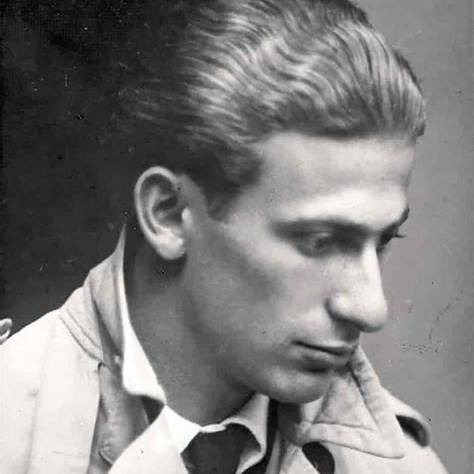
In Hungary, even the most assimilated Jews — lawyers, doctors, bankers, poets — were eventually rounded up and murdered. Among them was Miklós Radnóti, one of Hungary’s greatest poets.
As a teenager, I was obsessed with his poetry. Especially Erőltetett menet — Forced March. I memorized it (the English version).
He was everything a young Hungarian Jew could aspire to be: brilliant, beloved, married to a non-Jewish woman, baptized Catholic, fluent in the language of the elite. He thought he had found his place. He believed that being the right kind of Jew would protect him.
But in 1944, Radnóti was put into a forced labor battalion for Jews, marched, starved, and eventually shot and buried in a mass grave. When his body was found, his final poems were still in his coat pocket.
One line — one version I read years ago — burned into me forever:
“Stupid is he who, falling down, stands up to march again.”
That line isn’t just about the brutality of the death march. It’s about the brutality of trying to belong where you’re never truly allowed in. The tragedy of rising again and again, believing this time the world will let you in — and still being killed as a Jew.
And now?
I see so many of my fellow Jews doing the same dance. Disowning Zionism. Disowning Israel. Disowning peoplehood. Trying to play the part of the “good Jew” for audiences that only accept Jews who don’t act too Jewish. Who don’t believe we’re a people. Who don’t believe we deserve a home.
I’ve spent most of my adult life in Israel, working on issues of inclusion, equality, and civil rights. I know the work, and I’ve done it. But I’ve also seen what happens when Jews turn on their own — when they become pawns for movements that never really wanted them to begin with.
So now, painfully, I find myself separating from many of the people I once saw as allies. Because they’ve lost the plot. Or maybe, more honestly, they were never holding the whole picture to begin with.
Radnóti’s story isn’t ancient history. It’s a mirror. His words were a warning. His life was a promise — that assimilation might buy you time, but not safety.
The State of Israel, with all its complications, is the modern voice of a people who have been hunted, expelled, ghettoized, and massacred for thousands of years — in Europe, the Middle East, North Africa, Ethiopia, and beyond (check out the migration maps below).
It’s what Radnóti and his generation didn’t have when they were begging to belong. It came too late for them — but it still exists for us.
So go ahead, criticize policy. Demand better. I always have, and I always will.
But if your version of justice requires abandoning your own people — history would like a word.