
You don’t have a numbers problem. You have a truth problem
For more than two years, one of the most morally explosive questions of the Gaza war has often been framed as if it had only two possible answers: either you “believe Hamas,” or you “stand with Israel.” The dead, in this framework, become a talking point—and the number becomes a flag.
Then, this week, something quietly disrupted the script.
In a briefing attributed to senior Israeli military officials, reporters were given an estimate: roughly 70,000 Gazans killed in the war, excluding those still missing under rubble—an estimate that aligned, in broad terms, with figures issued by Gaza’s Health Ministry.
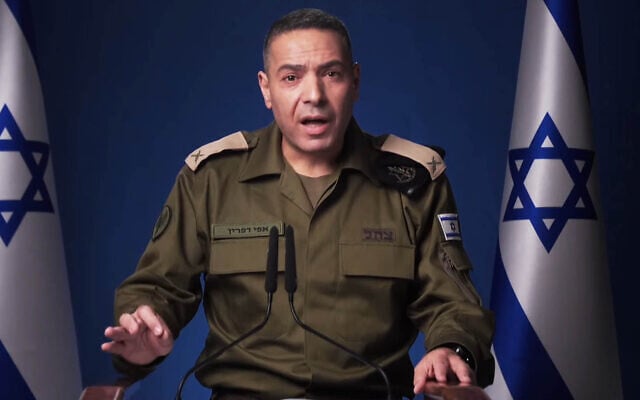
Within hours, the Israeli army’s spokesman for foreign media stressed that no official IDF number had been published, and that any formal data would be released through recognized channels.
It is tempting to treat this as a PR hiccup: a loose briefing followed by a necessary correction. But that interpretation misses what this episode actually reveals. The story isn’t the number. The story is the politics of who gets to declare a number “real.”
The Gaza Health Ministry operates under Hamas rule. That alone has been enough, for many, to dismiss its reporting as propaganda. Yet throughout the war, its totals were used by major international institutions and many news organizations not because they “trusted Hamas,” but because independent verification was severely constrained. In a conflict consumed through fragments — screenshots, cropped clips, and viral assertions — its running tallies remained one of the few consistently updated public datasets available. As Reuters has noted, the UN treated the ministry’s overall totals as broadly reliable during the conflict—less as an endorsement than as a pragmatic baseline under conditions of limited access.
And here’s the uncomfortable part: whatever Israel said publicly, the fact that senior officers briefed a figure close to Gaza’s suggests the internal working estimate may not have been far off. When officials privately converge on a number they have publicly dismissed, they are not conceding a political point. They are acknowledging a data reality that has circulated for months in diplomatic, humanitarian, and analytical channels, only now it briefly surfaced in public view.
So why the retreat? Why the scramble to say: “Not official”?
Because “official” is not a statistical category. It’s a power claim.
To label the number “official” would be to accept the implications that follow, not just about total deaths, but about ratios, targeting, proportionality, and accountability. If the total is around 70,000 and some reports cite Israeli estimates of roughly 25,000 Hamas fighters killed, the civilian share becomes politically and legally incendiary. That doesn’t automatically prove wrongdoing; war is chaotic, and classifications are contested. “Missing” is not the same as “dead,” until it is. But the arithmetic shifts the burden of argument. It pressures the state to explain method, categories, and uncertainty rather than simply contesting the messenger.
And method is precisely what has been missing from public debate: transparent criteria for who is counted, how “combatant” is defined, whether missing persons are included, and what — if anything — can be independently audited. Absent that, “official” becomes less a statement of truth than a shield against accountability.
Over the past two years, a recurring rhetorical pattern in much of the official messaging has been to dispute the legitimacy of outside evaluators — UN bodies, major NGOs, foreign media, ad hoc commissions — often without offering a competing dataset that can be reviewed with clear definitions and replicable rules. This is not unique to Israel; modern wars increasingly feature a second front where facts themselves are treated as hostile terrain. But the effect has been corrosive: it helps build a public culture in which the demand for verification is recoded as betrayal.
Now zoom out, and the constraints that feed this dynamic come into view. Since October 2023, independent access for foreign journalists has been heavily restricted — sometimes limited to controlled entry or contested in court — making on-the-ground verification harder. In a war zone, danger alone limits verification; add policy and politics, and the space for independent counting shrinks further. Uncertainty grows. And uncertainty is propaganda’s natural habitat.
At that point, the story stops being only about Israel-versus-Hamas and becomes about us: the audiences, the platform incentives, the information economy that rewards outrage over precision.
In such an environment, numbers do not merely inform; they identify. A death toll becomes an identity marker. Doubting it can make you an apologist for atrocity; accepting it can make you complicit in antisemitism. Every statistic is recruited into identity warfare. And once that happens, the public stops asking the only question that matters in a war zone: How do we know?
That is the real scandal of the “approximately correct” moment. It suggests that the argument was never primarily about accuracy. It was about control over legitimacy.
If, for two years, a number was dismissed as propaganda, and then, suddenly, treated as a close approximation, what else was waved away not because it was false, but because it was inconvenient? What other claims were rejected reflexively because accepting them would require painful accounting?
An honest society cannot wage war on narrative alone. It cannot outsource reality to slogans. And it cannot expect to defeat propaganda by becoming allergic to independent verification. A democracy that treats verification as treason eventually runs out of facts—and then runs on loyalty.
The solution is not to “trust Hamas.” It is to insist on structures that reduce everyone’s ability to lie: independent investigations; transparent methodologies; defined categories; and access for journalists and monitors where feasible. Concretely, that means publishing counting and classification standards, distinguishing identified deaths from missing persons, and enabling credible third-party audits where operational conditions allow. It also requires a public discourse mature enough to hold two truths at once: that Hamas is an enemy actor, and that an enemy actor can still generate a dataset that is, in aggregate, close to reality, especially when independent verification is constrained and alternative counts are partial.
The question is not whether Israel can win a narrative battle. It’s whether any democracy can survive a war when verification itself becomes the enemy.
Because the moment facts become tribal property, “official” stops meaning true and starts meaning useful.