
A bit more Chesed wouldn't hurt!
Young People Can’t Get their Heads Round Tish B’Av
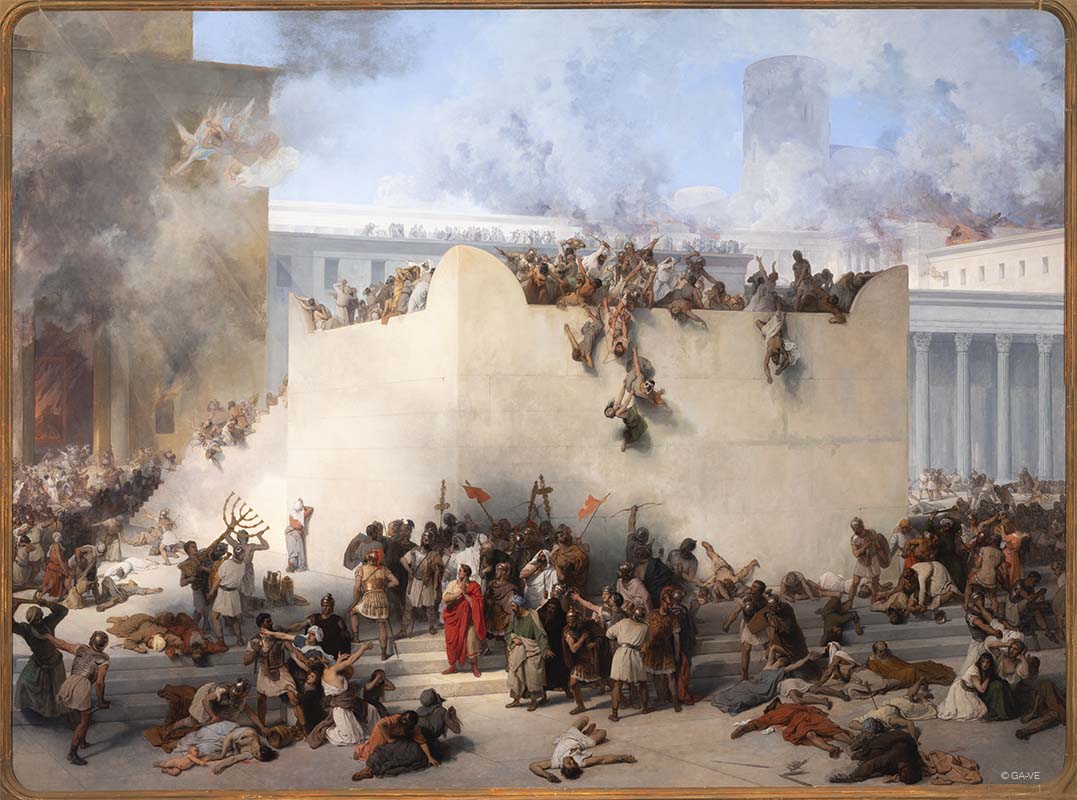
Hayez, Francesco-Distruzione del tempio diGerusalemme Gallerie Academie, Venezia
That’s a failure of Jewish education. Tisha B’Av has never been more relevant, for the fasting is no longer just penance, or a memory of the hunger induced by the Sicarii burning Jerusalem’s food stores, but a reminder of what the hostages in Gaza endure and of how the traditional reasons for our exile can help build a brighter future.
As this first shabbat of consolation beckons, I have been thinking about ‘Avigail.’
Avigail (not her real name) is a very bright, talented, spirited, and questioning young woman. A University graduate but brought up in the Jewish religious community and educational system. Friend not family. I’m always interested in what she thinks.
Last shabbat, she told me, “Tisha B’Av doesn’t really mean that much to me. I’ve never been able to get my head around it.” She’s not the only one. I know several that age who feel the same. And to be honest, when I was young, so did I.
Now, as it says in the Haggadah, I am ‘kven shivim shanim’ , 70 years old. So, here’s my answer to you, Avigail, and any others who feel the same, whatever their age. I hope it helps.
Tisha B’Av, and its preceding weeks, is an act of mourning and of solidarity with Jews worldwide, past and present, undertaken because the impact of the destruction of Jerusalem and its temples, of our subsequent exile, and of the reasons behind them, continues to this day.
It has impacted our very presence in so many countries across the world, as frequent fugitives looking for a friendly port to escape suspicion, discrimination, persecution and a hostility so great that it even followed those of us who returned to our ancestral homeland, after each exile.
It has impacted our very laws, customs and traditions for, unable to govern by these in our own land, their focus narrowed to concentrate on creating a community for survival and successful preservation of our identity.
Its final impact lies in the reasons we sought and now teach to explain the exile, destruction and traumatic painful divorce from God’s covenantal protection, just as bereaved or broken-hearted people seek reasons for their loss.
For the first exile, these were widespread idolatry, followed by sexual licentiousness, bloodshed (Yoma 9b) and generally lax Torah observance (Shabbat 119b).
For the second exile, this was Sinat Chiman (gratuitous hatred) due to bitter internal division with zealots eschewing good political advice (Gittin 56a, 10). Nonetheless, overstrict interpretation of the Torah (Bava Metziah 30b) and rabbinic indifference or failure to speak to some or all of these are considered to have played a role (Gittin 56a, 2 & 5). The second exile deepened after the rebellion of Bar Kochba, who was extolled as messiah by no less than Rabbi Akiva. Since then, classic Rabbinic opinion even ridiculed Rabbi Akiva (Eichah Rabbah 2,4) and counseled against overt Messianic anticipation (Sanhedrin 97b), as ‘bringing neither fear nor love of God’ (Hilchot Melachim 12:5), whereas ‘repentance and good deeds merit redemption’ (Sanhedrin 98b).
So, on Tisha Brave itself, we take part in a massive psychodrama which enacts the symptoms of depression of the broken hearted and bereaved. We neither wash, shave, talk much, enjoy normal activities, or eat. Fasting is also a call to repent and avoid the errors of the past, and a memory of the hunger the Sicarii (zealots) induced when they burnt Jerusalem’s storehouses, reasoning hungry fighters fought harder (Gittin 56a).
We read Lamentations’, whose descriptions of violence, cruelty, violation, captivity, starvation, derision of the nations, and of the living envying the dead, remind us toady not only of past persecutions, but of the fate and privations of those attacked on October 7th 2023, of the hostages in Gaza whose hunger we share for 25 hours, and of how the world considers us a pariah once more.
We reflect on the lessons of the past and what they might mean for today- bitter division, excessive messianic fervor, political misjudgement, overly strict interpretation of Torah, rabbinic indifference to or failure to speak against these problems, and what these may have cost us in disincentivising Torah observance.
But Lamentations ends with hope, ‘Bring us back to you and we will return. Renew our days.’ May that be true of the hostages.
Difficult as it looks, today we can be hopeful. Our external foes are largely vanquished, with some help from and to the satisfaction of surrounding nations. We can expand pragmatic existing political alliances with them for shared prosperity and security against our common enemies. We can also seek the many in our own midst, who would choose compromise and social solidarity over division and exemption.
Tisha B’Av has always been a sentinel for the past and a call to a better future, for us to turn, as we say each shacharit, from ‘children-(banim)’ into ‘builders- (bonim)’ (Berachot 64a).
Well, there you have it, Avigail. I hope it provides some ‘consolation’ this coming shabbat that Tisha B’Av has impact and relevance and helps you ‘get your head round it’ a little bit more.
Related Topics
Related Posts