


CEO of Time to Stand Up for Israel
Zichron Ya’akov: A Small Town That Tells the Story of Israel
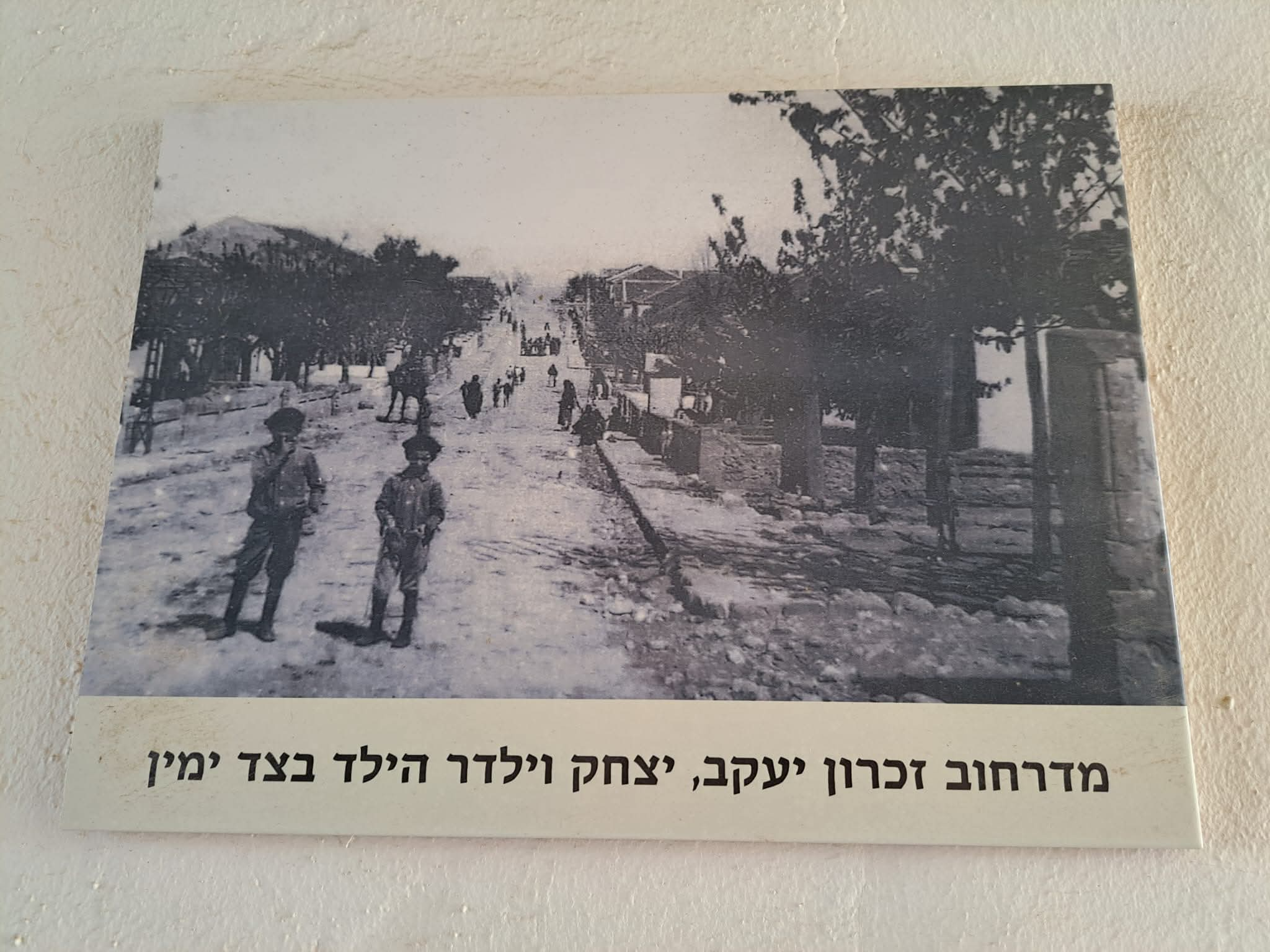
Photo Credits: Sabine Sterk
A history of courage, sacrifice, determination and the lessons the world has yet to learn
There are places in Israel where history is not simply preserved in museums or written in books, but lives in the streets, the houses and the very soil beneath your feet. Zichron Ya’akov, a picturesque town overlooking the Mediterranean Sea from the southern slopes of Mount Carmel, is one of those places. To the casual visitor, it may appear to be a charming destination with beautiful vineyards, historic buildings and peaceful surroundings, but behind that beauty lies a remarkable story of Jewish determination, sacrifice and survival. It is a story that represents something far greater than the history of one small town. It represents the very essence of Israel.
Founded in 1882 by Jewish immigrants from Romania, Zichron Ya’akov was originally known as Zammarin, after a nearby Arab village. These early pioneers arrived during the First Aliyah, decades before the establishment of the modern State of Israel in 1948. They were not welcomed by fertile fields, comfortable homes or an established infrastructure. Instead, they encountered malaria, poverty, agricultural difficulties and an unfamiliar environment. Many became seriously ill, some died and others considered abandoning their dreams altogether. Yet they had come with a purpose that went far beyond establishing another agricultural settlement. They wanted to rebuild Jewish life in the ancestral homeland of their people.
Their struggle might have ended in failure had it not been for Baron Edmond de Rothschild, the French Jewish philanthropist who provided financial assistance, agricultural expertise and infrastructure to several struggling Jewish communities. In his father’s memory, the settlement was renamed Zichron Ya’akov, meaning “In Memory of Jacob.” Under Rothschild’s patronage, vineyards were planted, winemaking developed and the foundations were laid for a community that would eventually become one of Israel’s most recognizable historic towns.
But Zichron Ya’akov contributed more than agriculture to the emerging Jewish national movement. During the First World War, it became closely associated with NILI, a Jewish espionage network that gathered intelligence for the British against the Ottoman Empire. Among its most courageous members was Sarah Aaronsohn, whose family home still stands in the town. After her arrest by Ottoman authorities in 1917, she endured brutal interrogation and died after shooting herself rather than risk revealing information about her fellow operatives. Her story remains a powerful reminder that the struggle for Jewish self determination did not begin in 1948 and that the foundations of modern Israel were built through extraordinary personal sacrifices.
What makes Zichron Ya’akov particularly meaningful to me is that its history challenges one of the most persistent misconceptions about Israel. The Jewish connection to this land did not suddenly appear after the Holocaust, nor was the establishment of Israel merely an international response to European antisemitism. Jewish history in this region stretches back thousands of years, and the pioneers of Zichron Ya’akov were part of a much longer process of Jewish return, national revival and rebuilding. Their achievements were not the result of waiting for others to provide them with a future. They created that future themselves.
And perhaps that is precisely where the greatest lesson lies.
Today, Israel faces threats that those early pioneers could hardly have imagined, yet the fundamental challenge remains remarkably familiar. How does a relatively small nation survive in an environment where its legitimacy is repeatedly questioned, its security threatened and its right to determine its own future challenged? The answer can be found in the spirit of communities such as Zichron Ya’akov, where perseverance was not a political slogan but an everyday necessity.
However, perseverance alone is not enough. Those pioneers understood something that modern Israel, in my opinion, must never forget. A nation cannot build a sustainable future when its people lose sight of their common purpose. They came from different backgrounds, faced disagreements and endured enormous hardship, but their shared ambition to establish a Jewish future in their ancestral homeland was stronger than the difficulties dividing them.
That lesson has become particularly relevant in an era when internal political polarization threatens to weaken Israeli society. Democracy naturally produces disagreements, and Israel’s passionate political culture is evidence of a society that refuses to surrender its freedom of expression. Yet there is an enormous difference between healthy democratic debate and allowing internal hostility to undermine national resilience. Israel’s enemies do not need to create every division themselves when Israelis are perfectly capable of deepening those divisions without outside assistance.
Zichron Ya’akov also reminds us that defending Israel means more than responding to accusations, confronting antisemitism or explaining military operations. It means preserving the historical memory of a people who transformed extraordinary adversity into a functioning society. It means understanding that Israel is not merely a political entity established in 1948, but the modern expression of an ancient people’s enduring national identity.
When I think about Zichron Ya’akov, I do not simply see beautiful streets, vineyards or historic houses. I see people who refused to accept that their future had to be determined by others, people who understood that belonging requires responsibility and that freedom comes with sacrifice.
Perhaps the most important lesson Zichron Ya’akov teaches us is this: Israel was not built by people who waited for the world to approve of their existence. It was built by people who believed their future was worth fighting for, working for and protecting.
And that is a lesson Israel, and those of us who stand beside her, must never forget.
 Support our work: Donate and/or subscribe at:
https://timetostandupforisrael.com/
Related Topics
Related Posts