
10 Questions and Answers on Zionism and Anti-Zionism
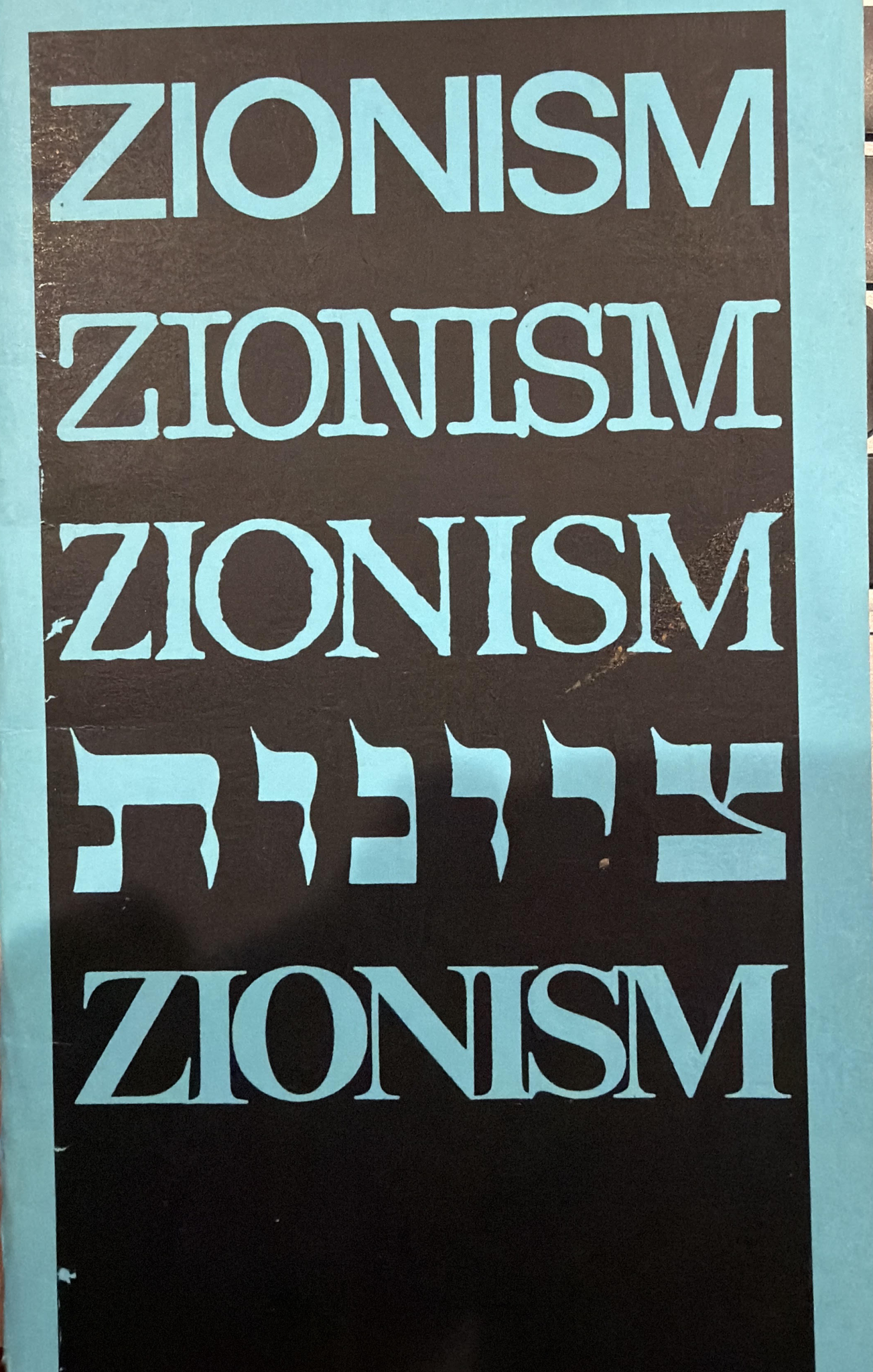
My father John F. Rothmann prepared this question and answer sheet on Zionism and anti-Zionism. Given what’s going on today it seems to me that this is more important and relevant than ever.
___________________________________________________________________________________
10 QUESTIONS & ANSWERS ON ZIONISM & ANTI-ZIONISM
Prepared for Hillel by: John F. Rothmann
- What is Zionism?
Zionism is the national liberation movement of the Jewish people.
Zionism is both an ancient yearning and a modern political movement.
Zionism is based on the belief that the Jewish people, as any people, has the right to political independence.
Zionism is as important to the Jewish people as the national liberation movements have been to the nations and peoples of Africa and Asia.
Zionism is the organized effort by which the Jewish people translated its age-old dream into action.
The fulfillment of the Zionist dream is the State of Israel.
- Are Jews a religion, a people or a race?
Judaism is the religion of the Jewish people; Jews are more than a religion. The attributes of civilization are defined as a people who possess a common history, language, literature, art forms, religion/philosophy and land. The Jews possess these attributes and thus are a civilization.
The Jews are not a race. One need only walk down the streets of Israel to see peoples of diverse origin and color, from every corner of the world, bound together in the fulfillment of the Zionist dream.
- Is Zionism racism?
The myth that Zionism is racism was created by those seeking to deny the right of the Jewish people to national self-determination. Zionism is the antithesis of racism. Zionism has always been a movement that knows no bounds of color. One need only ask the Ethiopia Jews, Vietnamese boat people or Bosnian Moslems, all of whom have been given refuge and a home in Israel.
- But the United Nations says Zionism is racism, doesn’t it?
NO, it doesn’t. On November 10, 1975, in the midst of the Cold War, the United Nations General Assembly did pass Resolution 3379. The vote was 72 in favor, 35 opposed, 32 abstentions and 3 not present. The 72 in favor were made up primarily of the Communist block, including the Soviet Union and its then-subjugated “allies,” China and its allies, and the Arab and Moslem nations.
With the collapse of the Soviet Union and its world-wide influence, the liberation of Eastern Europe and most of the Communist world, coupled with the continuing progress towards peace in the Middle East, the United Nations General Assembly voted on December 16, 1991, to rescind Resolution 3379. The vote was 111 in favor, 25 opposed, 13 abstentions and 17 absent or not voting.
With that overwhelming vote, the United Nations General Assembly emphatically repudiated what has been called “that obscene resolution.”
- What is anti-Zionism? Is anti-Zionism the same as anti-Semitism?
Anti-Zionism is the political ideology that denies the right of the State of Israel to exist, thereby denying the right of the Jewish people to national self-determination.
Since Hitler and the Holocaust, anti-semitism has become unfashionable and so now, anti-Zionism has become the mask for modern anti-semitism.
In the words of Dr. Martin Luther King Jr., responding to a critic of Zionism, “When people criticize Zionists they mean Jews. You are talking anti-semitism.” (Harvard University, 1968.)
- Can one criticize particular policies of the government of Israel and still be a Zionist?
YES. Israel is a democratic, pluralistic, democracy with a vital political system. As with any democracy, debates take place over the direction of national policy. One can disagree with particular policies of the government of Israel and be a Zionist. There is one thing on which all Zionists agree: The State of Israel has the right to maintain its political and national independence.
- Have not most African-American leaders been anti-Zionists?
Quite the contrary is true. Dr. W.E.B. Dubois and Marcus Garvey, founders and leaders of pan-Africanism and of the struggle for African-American liberation, were so inspired by Zionism that they called their own liberation movement “Black Zionism.” It was Dubois who said, “The African movement means to us what the Zionist movement must mean to the Jews.”
Barbara Jordan, who served in the House of Representatives of the United States, declared that “…the dream of Zionism and the existence of the State of Israel must not be swept into the dust bin of history.”
Alex Haley, the author of Roots, who assisted Malcolm X in preparing The Autobiography of Malcolm X, said the following during a visit to Israel, “It stirs my soul to know this story… The plight of the Jews in history is similar to that of Black Africans who were driven into slavery. Both have proved that by courage and perseverance they can surmount whatever difficulties they encounter… Israel is a very special country. The real beginnings and the real roots are here.”
Bayard Rustin, who was the organizer of the March On Washington in 1963, observed that anti-Zionism gives “approval to anti-semitism, one of the oldest and most virulent racisms the world has ever known… The victims of one racism will not be aided by this inciting of another, equally ugly racism.”
- What have the attitudes of other non-Jews been towards Zionism?
Many non-Jews have supported Zionism.
Winston Churchill said, “I am a Zionist. Let me make that clear.” John F. Kennedy declared, “The ideals of Zionism have, in the last half century, been endorsed by both parties, and Americans of all ranks, in all sections. Friendship for Israel is not a partisan matter, it is a national commitment.”
Emir Feisal, the leader of the Arab delegation to the Peace Conference at Paris, wrote on March 3, 1919, “We Arabs, especially the educated among us look with the deepest sympathy on the Zionist movement… We will wish the Jews a most hearty welcome home.”
Positions can evolve and change. Yasir Arafat, the Chairman of the Palestine Liberation Organization declared in 1972, that “the end of Israel is the goal of our struggle, and it allows for neither compromise nor mediation… The purpose of this violence is to liquidate Zionism in all its political, economic and military forms, and to drive it out of Palestine forever… Peace for us means the destruction of Israel and nothing else.” After years of bitter antagonism, Arafat wrote to Prime Minister Yitzhak Rabin on September 9, 1993, “The P.L.O. recognizes the right of Israel to exist in peace and security.”
- Can a Jew be anti-Zionist?
Like most great revolutionary ideas, Zionism at first provoked a vigorous debate among those to whom it was addressed. Today, after the Holocaust and the State of Israel almost all Jews agree with the Zionist idea. Only extremists of the far left and the far right continue to oppose the right of Israel to exist. Anti-Zionism as an ideology has been proven by history and reality to be an idea that failed.
- Is Zionism an imperialistic, oppressor movement?
These terms are antiquated catch-all phrases used today by extreme elements of both the far left and the far right in order to negate the right of the Jewish people to national self-determination. Emir Feisal answered these accusations in 1919 when he wrote that the Zionist movement “is national not imperialist, and there is room… for both of us. Indeed, I think that neither can be a real success without the other.” The truth of these words is even more important today as the harsh rhetoric of the past is put aside by Israel, the Palestine Liberation Organization and most of the Arab States. As the efforts continue towards securing a lasting peace in the Middle East, we should recognize those who oppose the peace process by the rhetoric that they use to make their arguments.