18 Years After 26/11, Mumbai’s Chabad House Is Still in Terror’s Sights
A 20-year-old has been arrested for conducting reconnaissance of Mumbai’s Chabad House, recruited through encrypted mobile applications and paid less than $300 by handlers linked to Pakistan-based criminal networks. The trail leads to a synagogue fire in Kerala and makes the case for closer India-Israel counterterrorism cooperation.
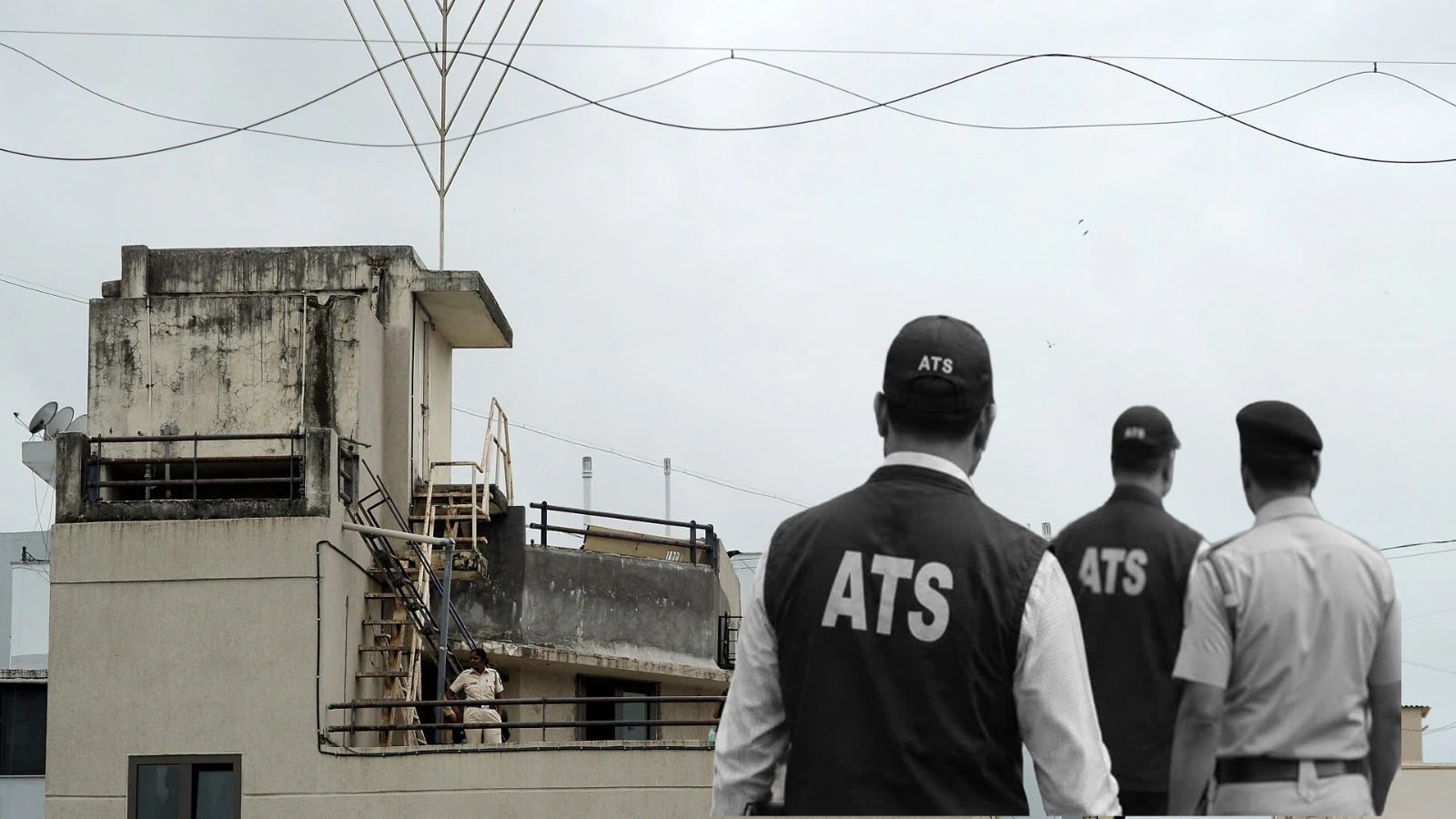
Twelve days before the 18th anniversary of 26/11, a 20-year-old from Navi Mumbai is in custody over the scouting of Mumbai’s Chabad House. Yash Singh, of Airoli, was picked up by the Maharashtra Anti-Terrorism Squad (ATS) over his online contacts with handlers working for international criminal syndicates. A Kerala Police team then travelled to Navi Mumbai and formally arrested him in a case registered in Thrissur, Kerala under the Unlawful Activities (Prevention) Act (UAPA), India’s main anti-terror law. On November 15, he was taken to Kerala and remanded to judicial custody.
Police say his task was to photograph and pinpoint Chabad House, the Jewish-owned businesses around it and the places where foreigners gather in South Mumbai. He was told to watch not just the building but also the people around it, and to send vehicle registration numbers, movement patterns and locations of Jewish and foreign nationals: the ordinary record of where people park, walk and work.
For Jews around the world, that building holds a particular memory. On the morning of November 27, 2008, Sandra Samuel ran out of Nariman House, in Mumbai’s Colaba district, with a toddler in her arms. Inside, Pakistani gunmen held the Chabad House, a Jewish centre run by the Chabad movement, through a 45-hour siege, part of the attacks India remembers as 26/11. When it ended, six people were dead, among them the boy’s parents, Rabbi Gavriel and Rivka Holtzberg. The boy, Moshe, turned two the next day.
Eighteen years later, the scouting came cheap. Singh got the job about fifteen days before he was caught, and investigators put his pay at about 25,000 Indian rupees (less than $300), paid in instalments. He held a vocational qualification from an Industrial Training Institute (ITI) and had no job.
Security agencies say recruiters find young men like him, some still in their teens, on Instagram and Facebook, offering money, fake passports or a way abroad, and then move the conversation to encrypted apps such as Telegram, WhatsApp and Signal. Terror, increasingly, does not need believers. It needs freelancers.
Police say the man who recruited Singh was Gurumoorthi, 27, a native of the southern state of Tamil Nadu who once worked as a photographer in Mumbai. He was arrested on November 12 at a milk booth in Ottapalam, in the neighbouring state of Kerala. The two had been in touch for months, and Gurumoorthi, who is also accused of tracking film stars for gang members abroad, sent Singh money more than once.
From Kerala, the trail leads to a fire a month earlier. At about 2:30 a.m. on October 12, a car stopped near Ernakulam Market in Kochi, Kerala’s port city. Security cameras show a man walking towards the narrow lane that leads to the Kadavumbhagam Synagogue, carrying a can of petrol. He set fire to the signboards of a nursery at the synagogue’s gate, filmed the flames on his phone and left; the synagogue itself was not damaged.
Police say the man, Ebin Paul, 32, took his orders over Telegram from handlers called “Boss” and “Vikram”. He has confessed to being paid 200,000 Indian rupees (more than $2,000) in cryptocurrency. Investigators believe the fire was a test run for a wider plot against Jewish places of worship in India’s major cities, rehearsed through two earlier arsons in the nearby town of Muvattupuzha. The National Investigation Agency (NIA), India’s federal counter-terrorism agency, has taken over that case, and police are now examining whether Kochi and Mumbai were part of one operation.
The target was not a random one. Kerala’s Jews trace their roots on this coast back some two thousand years, and most left for Israel after 1948, drawn by hope rather than driven out by hatred. The Kadavumbhagam Synagogue is still tended by one of the last Cochin Jews, as the community is known. A fire at its gate strikes at one of the oldest Jewish stories anywhere.
Who is paying for all of this is still under investigation, and the overlapping networks behind the recruiters make the answer hard to pin down. Officials pointed to syndicates such as the Shahzad Bhatti Network, a cross-border criminal and terror network led by the Pakistani gangster Shahzad Bhatti, and several reports tie Singh’s handlers to it. On September 16, India’s Ministry of Home Affairs banned the network as a terrorist organisation under the UAPA, saying it smuggles arms, explosives and drugs across the border and lures young people and petty criminals into terrorism.
The Kerala case that caught Singh and Gurumoorthi began with intelligence about associates of a gang that once worked with Bhatti. The modus operandi is the same: a cheap hire, found online and paid in small sums, does the work. The people who gave Gurumoorthi his orders have not been identified, and neither has Kochi’s “Boss”, whom the NIA reportedly suspects of belonging to an international terror group.
Chabad House has been a target before. In 2023, the ATS found images of the building on the devices of two terror suspects arrested in the western city of Pune, and Mumbai police tightened security outside. Each time, Indian security agencies have caught the watchers. Each time, others have taken their place.
That is why the answer cannot stop at another arrest. India and Israel already talk about terrorism through a joint working group, which met for the tenth time in New Delhi in February and named terror finance and the misuse of artificial intelligence among its concerns. When India’s prime minister, Narendra Modi, visited Israel that month, he and Benjamin Netanyahu condemned terrorism in all its forms and pledged deeper cyber cooperation. Mumbai and Kochi show what those words now have to mean.
It means tracing crypto payments and Telegram handlers across borders as fast as they move. It means sharing what each country learns about how young people are recruited online, and treating the safety of Jewish sites and Israeli travellers in India as a joint responsibility. The two countries already work hand in hand on defence and technology. Counter-terrorism must become just as central to their partnership.
Nine years ago, standing between the two countries prime ministers in Jerusalem, Moshe Holtzberg promised to come back to Mumbai one day and run the Chabad House. He called it “my house, a house of goodness.” He turns 20 this month, the same age as the man accused of scouting it. Whether that promise can be kept in safety depends on how seriously India and Israel take what they have just been shown.