
Consultant and writer exploring policy, society, and identity
19 Seats, One Country
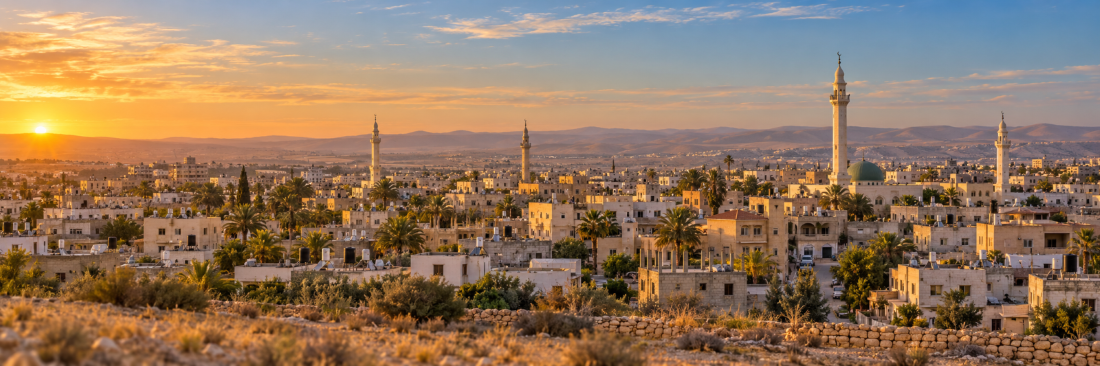
Rahat, northern Negev. AI-generated illustration by the author (ChatGPT).
Israel’s Arab citizens voted in record numbers. Whoever governs, their 19 seats can help pass laws that benefit Jews and Arabs alike.
Israel’s Arab citizens have just sent a message the country should not ignore. In last week’s election, the Joint List won 11 seats and Ra’am 8: nineteen in all, an all-time high and nearly double the outgoing ten. National turnout reached 77.9%, the highest in decades, driven in part by a surge of Arab voters.
Most commentary since has treated those seats as a coalition problem: who will sit with them, who won’t, and whether anyone can reach 61. I want to ask a different question: Whatever government emerges, what can these 19 seats build, for Arab citizens and for everyone else?
A rupture in plain sight
Arab citizens are about a fifth of Israel’s population, with full voting rights and seats in the Knesset. Yet the gap between formal citizenship and real participation is wide. Only about 8% of Israel’s judges are Arab, and just one of twelve Supreme Court justices. In the senior civil service, Arabs held well under 1% of positions as recently as 2020. The 2018 Nation-State Law left many Arab citizens feeling tolerated rather than at home. After October 7, mistrust deepened on both sides.
That is why this turnout matters. By voting in record numbers, Arab citizens said they want to be full participants in a country they consider their own. The two lists differ, as Ra’am wants to join a government while the Joint List offers conditional support from outside, but they share that aim.
What 19 seats can do
The new Knesset is sworn in on November 10, and coalition talks may drag on for months. Every Zionist party except The Democrats has ruled out partnering with the Arab lists. But laws pass on votes, not coalition agreements, and nineteen votes can make or break legislation. They can also be traded: Arab support on issues that matter to Jewish parties, in exchange for real Arab participation in running the country.
Here are five areas where, in my view, those votes can produce a win for everyone.
1. Crime is a national problem
The Joint List has made a funded, monitored anti-crime plan its condition for support, and Ra’am recruited Yoav Segalovitz, a former head of the national serious-crime unit. This should be the first law the new Knesset passes.
The Arab murder rate more than doubled from 4.9 per 100,000 in 2020 to 11 in 2025, against 0.6 among Jewish citizens. The Finance Ministry’s own Chief Economist Department puts the cost to the economy, through disrupted business and lost investment, at NIS 10–20 billion a year, up to 1% of GDP. The higher figure reflects damage to business activity across Israel, not just in Arab towns. In January, tens of thousands of Arab and Jewish citizens marched together in Tel Aviv to demand action. Crime in Arab towns has too often been presented as a problem Arabs bring on themselves, even as it surged under the current government. It is everyone’s problem.
2. Keep the growth engine running
Resolution 550, the government’s five-year plan for Arab society, expires at the end of 2026, and renewing it will be one of the new Knesset’s first budget battles. Israel faces skilled-labour shortages and a deficit near 5% of GDP. Arab women’s employment has reached a record 51%, and Bank of Israel estimates, cited by the employment group Co-Impact, put the potential gain from closing Arab wage gaps at up to NIS 180 billion, roughly 9% of GDP. That is national growth, not a sectoral handout.
3. Let Arab towns build
Planning and infrastructure decisions for Arab towns move painfully slowly. In the north, missing sewage infrastructure alone has stalled master plans for 25 communities. Each year of delay pushes families toward illegal building, then demolition orders, then anger, and deepens the feeling that their citizenship is incomplete. Approving plans and funding infrastructure would ease national housing pressure, create construction jobs and broaden local tax bases.
4. Service as a shared commitment
Equal burden is the most divisive issue in Jewish Israel right now, with Haredi protesters clashing with police over draft arrests. Mansour Abbas has backed voluntary, Arab-led civic service with no military ties. The Joint List has not, and Abbas faced a backlash for saying it. Still, a voluntary offer is more than many Haredi leaders have put on the table. If Arab votes help pass a universal civic-service framework, the gain is cultural as much as legislative: it would show Jewish Israelis that Arab citizens believe in a country united across ethnic and religious lines.
5. Institutions that look like the country
Arab parties can press for appointments to the courts, public boards and the senior civil service. Since 2025, the opposition chooses a Knesset member and a public representative on the Judicial Selection Committee, giving a strong Arab presence in the opposition a voice in who becomes a judge. Institutions that reflect the population earn more trust and draw on more talent.
The objections
Mistrust is real. Some Arab politicians made statements after October 7 that they later retracted, and Abbas condemned them. Naftali Bennett objects that Ra’am is not Zionist. But “Zionist” has always been a moving target, redefined by each generation and each coalition. My argument does not require a coalition partnership. It asks whether specific laws are good for Israel. A crime plan or a housing plan should be judged on its merits, not on who votes for it. Refusing a coalition is a legitimate choice. Denying Arab citizens legitimate influence would be a loss for democracy.
A test for the new Knesset
In my last series I wrote that Tikkun Olam, repairing the world, is, for me, the most important concept in Judaism. Repair starts at home, with the fellow citizens we live beside. These nineteen seats are not a threat to manage but an asset to use. The test of this Knesset is not who sits at the cabinet table, but whether it passes laws that make every citizen’s street safer and every town’s economy stronger.
***
Related Topics