Truth Seeker
A 2026 Israeli Election Primer for Family and Friends
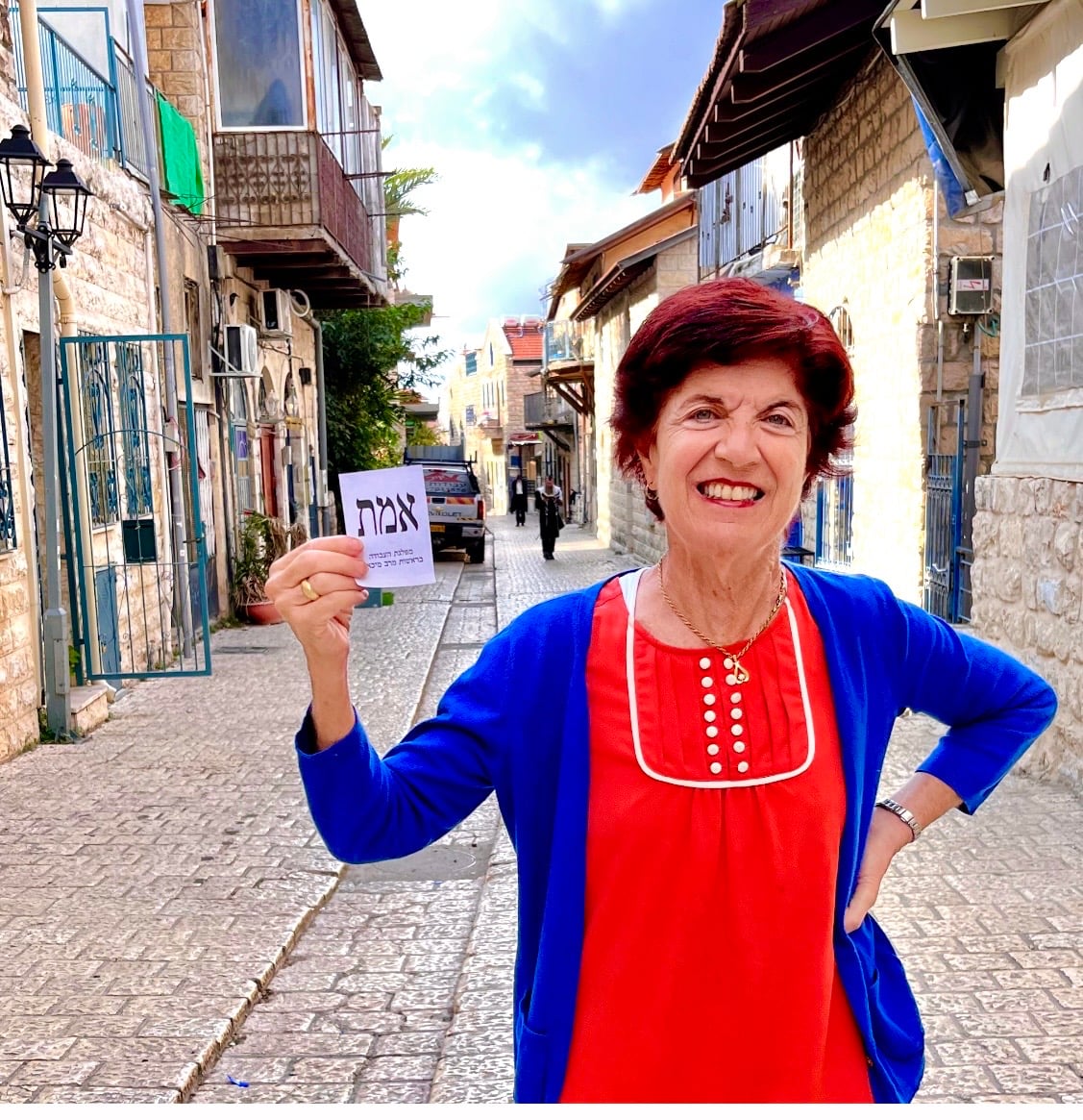
Karen Rivo holding a sample paper ballot used to vote in an Israeli election
As Israel’s October 27th (16 Heshvan 5787) legislative elections draw closer, our friends and family in the US are beginning to flood us with questions.
They know we are flying to Israel to vote. First question answered: with few exceptions, you must vote in person.
Israel’s Democracy: Israel operates as a parliamentary democracy, with a system of nationwide proportional representation. Voters cast ballots for a political party rather than an individual candidate. In your voting precinct, you simply select and submit a post-it sized paper ballot with the name of your preferred party. Election Day is a national holiday. After you vote, it’s off to the beach, a hike, or a barbecue.
The Knesset’s 3.25% vote threshold. The 120 Knesset (Parliament) seats are allocated by the proportion of party votes received. For example, a party who receives 10% of the vote receives roughly 10 seats. Those 10 seats are allocated per their candidate list. However, a party must cross the 3.25% minimum threshold of all votes received to enter the Knesset. Parties have until September 8th to register with their list of candidates. Currently, 18 political parties are registered. The majority of these parties will not cross the 3.25% threshold.
Post Election Day. Typically, the composition of the 120-member Knesset is known within a day or two. Then, the fun (agony) begins.
Number 61. A party must garner 61 of the 120 seats in the Knesset to elect a new majority government and prime minister. No Israeli party has ever come close to winning 61 seats.
After elections, Israeli President Isaac Herzog (who serves a largely ceremonial position except for this role) meets with each Knesset party, and then selects a single Knesset member (MK) who has the best chance of cobbling together multiple parties to reach 61 seats. Oftentimes, but not always, it is the leader of the party with the most votes. The Knesset member who successfully forms the coalition of parties with 61 Knesset votes becomes prime minister of the new coalition government.
The ruling coalition of 61 MKs must agree to work together, reach consensus on many key policy issues, and divide up the key ruling coalition’s cabinet positions, such as Defense and Foreign Affairs (there is no separation of the Legislative and Executive Branch). This negotiation process can take weeks or more. If a ruling coalition of at least 61 MKs cannot be assembled after several attempts, Israel goes back to vote.
The Key Political Issues: Israel’s national security and the three-year war with Iran and its terrorist proxies remain the major issue for voters. Yet, other issues will influence the outcome.
- The Haredi Draft Crisis: Netanyahu’s ruling coalition of far-right political parties and the Haredi (ultra-orthodox) remained in power by agreeing to exempt yeshiva students from the IDF, while diverting much of Israel’s budget to keep the Haredi political parties satisfied. Outrage over the unequal treatment and special status of Haredi during Israel’s longest war is at an all-time high. A new moderate Haredi party may soon register, which calls for some form of secular education, workforce participation and military enlistment. If so, it may offer an alternative for some ultra-Orthodox voters of the Shas (Mizrahi and Sephardi) and United Torah Judaism (Ashkenazi) Haredi parties.
- Israel’s Civil Society: Pressure is growing to address key issues unique to Israeli systems of education, religious observance, Judiciary, economy, security, and more.
- Arab party turnout and its role: Some 21% of Israel’s total population and 17% of eligible voters are Arab citizens. Arab voter participation of 50-55% generally lags below the 70% overall turnout. Mansour Abbas’ Ra’am party was a part of former Prime Minister Naftali Bennet’s and Yair Lapid’s previous historic, but short-lived broad coalition government. Their influence will depend on the number of Arab parties running, Arab voter participation and coalition-building politics.
- Ofer Winter and the Far-Right: Former IDF General Ofer Winter recently formed Amcha Yisrael (People of Israel), a right wing party which fiercely defends Israel’s periphery while strongly supporting mandatory Haredi enlistment in the IDF or Public Service. They may offer some Far Right voters a new option to Bezalel Smotrich’s Religious Zionism or Itamar Ben-Gvir’s Otzma Yehudit parties.
The 2026 Contenders for Prime Minister. Polling presents a tight, dramatic race among these three leaders (and their parties).
- Gadi Eisenkot (Yashar): A former IDF Chief of Staff, Eisenkot recently formed the centrist Yashar party. His son and two nephews died defending the country after October 7th as IDF soldiers. He is seen as a political outsider and dedicated guardian of all of Israel who can build a strong and united governing coalition.
- Benjamin Netanyahu (Likud): He is the longest serving Prime Minister (Israel has no term-limits) in history, including during the time leading up to and after October 7th. He heads Israel’s largest party. He seeks to hold together his Likud party and coalition of Haredi and far right-wing parties to receive the mandate to form Israel’s next ruling coalition.
- Naftali Bennett (Beyachad): Former Prime Minister Bennett, and past leader of Yamina (Right) has returned to politics. He is joining forces again with Yair Lapid (Yesh Atid) to form a new centrist-right alliance called Beyachad (“Together”). He aims to recreate their broad coalition government, calling for an end to extremism, favoritism and draft evasion.
The Latest Polls. Currently, Gadi Eisenkot’s Yashar party is slightly ahead with 23-24 seats. After party registration closes on September 8th, polling results will become more accurate. Based on past elections, the October 27th election results may be the first real voter indication of the path forward to choose Israel’s next Prime Minister and governing coalition.
Where to Follow the Action. Three popular, mainstream online Israeli newspapers publish daily updates in English: The Times of Israel (centrist), Haaretz (center-left) and the Jerusalem Post (center-right).
Our Hope and Prayers. As we vote on October 27th and watch this democratic process unfold in our precious Jewish homeland under the shadow of war, we pray for wisdom, unity, and a secure, prosperous, and peaceful future.
Related Topics
Related Posts