
Strategic Intelligence Consultant & Insights Advisor
A C-17 and a Closed Door: What Ratcliffe’s Moscow Visit Tells Us — and Doesn’t
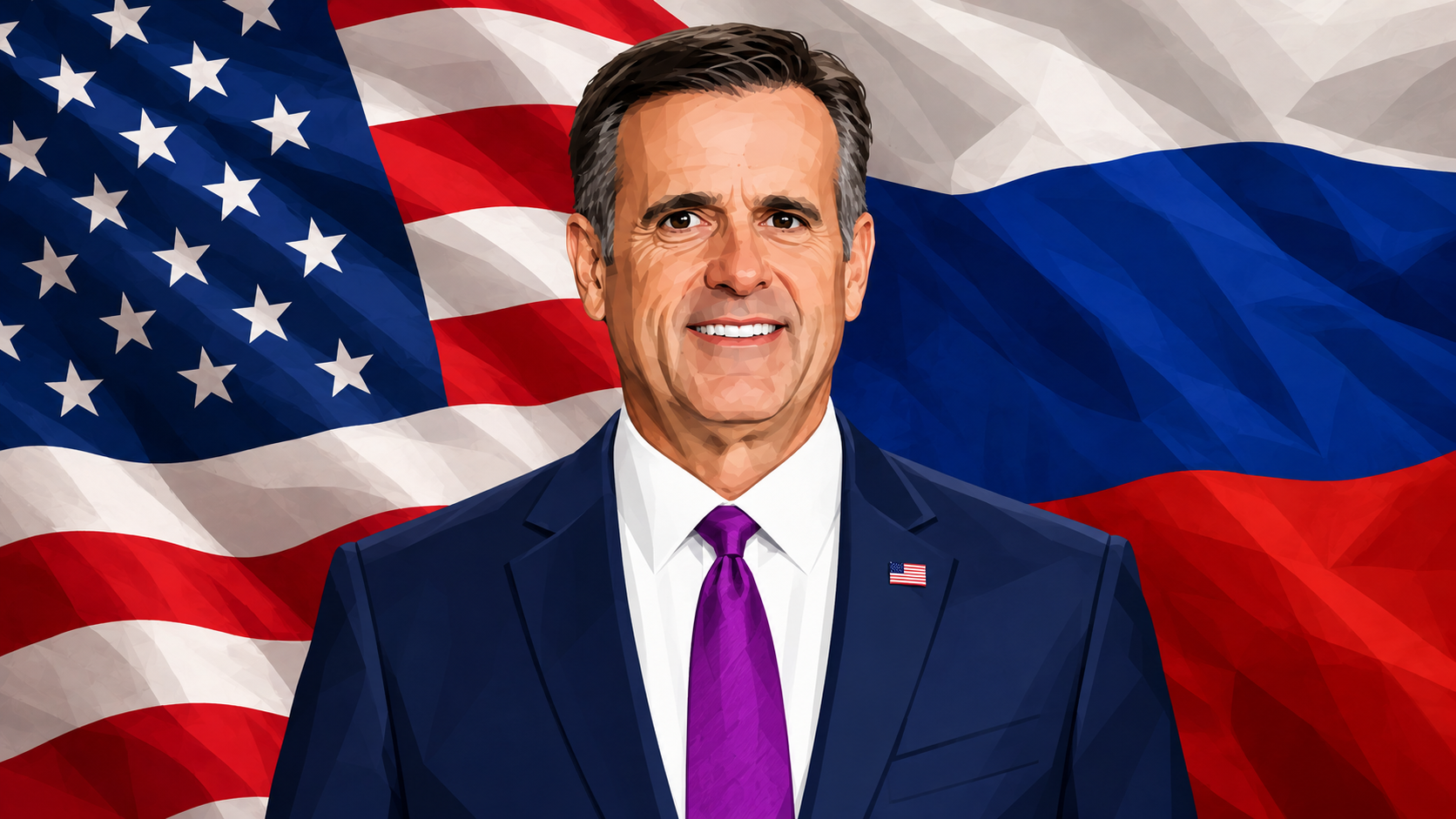
John Ratcliffe (made by AI)
A US Air Force C-17 landing at Moscow’s Vnukovo airport is not proof of a diplomatic breakthrough. A motorcade on New Arbat Avenue is not evidence of a secret bargain. But put those details alongside one confirmed fact. CIA Director John Ratcliffe held talks with Russian intelligence officials in Moscow on August 25; and the outline of an otherwise opaque encounter starts to emerge.
The Kremlin confirmed the visit the following morning. Spokesman Dmitry Peskov said Ratcliffe did not meet Vladimir Putin, but that Putin was briefed on the outcome of the intelligence-service contacts. Peskov gave no agenda and named no Russian participants. Washington has been quieter still: the CIA declined to comment as reports of the trip surfaced.
That leaves us with a familiar intelligence problem. We do not know what was said behind the closed door. What we can examine is the choreography around it; provided we keep a hard line between observation and inference.
The choreography
Flight-tracking data reviewed by The Washington Post showed the C-17 leaving Joint Base Andrews on Sunday evening, flying to Riga and sitting in Latvia for roughly a day before continuing to Moscow on Tuesday morning, landing shortly after 9 a.m. A second aircraft, a C-40B, also flew from Andrews to Riga; public tracking did not show it going on to Moscow.
The C-17 is a heavy airlifter; the C-40B a senior-leader transport with secure communications. The public record does not tell us what either carried or why Riga was the staging point. Anything more specific is guesswork.
In Moscow, the Post geolocated video of a motorcade, including vehicles with red diplomatic plates, heading east along New Arbat. The C-17 left Vnukovo shortly after 5:30 p.m.; a Moscow footprint of about eight and a half hours. That is not the same as eight and a half hours of meetings. Ratcliffe’s actual schedule is unknown.
This is why “unannounced” is a better word than “covert.” The substance was hidden; the movement was not.
One reported detail raises the stakes considerably. Axios reported that Washington told Kyiv a senior US delegation would be in Moscow and asked Ukraine to hold its strikes until it left. CBS, AP and Ukraine’s public broadcaster Suspilne carried similar accounts from Ukrainian officials. None is an on-the-record US confirmation, so it stays labelled reported, not confirmed. If accurate, though, it means Washington judged operational deconfliction with Kyiv necessary for the trip to happen at all.
Why the CIA channel matters
Ratcliffe did not arrive without an existing backchannel. In March 2025, Reuters reported that he and Sergei Naryshkin, head of Russia’s SVR, had discussed intelligence cooperation and crisis management by phone. By June, Naryshkin said the two could call each other whenever needed. There is, importantly, no reliable public confirmation that Naryshkin was the man across the table on August 25.
The precedent is instructive. In November 2022, CIA Director William Burns met Naryshkin in Ankara. The White House was explicit that Burns was not negotiating an end to the war: he was delivering a warning about the consequences of Russian nuclear use and raising detained Americans. Kyiv was briefed in advance. It was a textbook case of intelligence chiefs acting as a crisis-management channel without turning the meeting into diplomacy.
Burns had also gone to Moscow in November 2021 to warn the Kremlin that Washington knew about its invasion preparations. Ratcliffe’s trip is the first known visit by a CIA director since.
None of this reveals Ratcliffe’s agenda. It tells us what the channel is for: messages that need to reach the top of the Russian system but are too sensitive, operational or politically delicate for ordinary diplomacy.
The detail I find most telling is not that Ratcliffe did not see Putin. It is that Peskov went out of his way to say Putin was briefed on the outcome; “kept informed of everything without delay,” as he put it. The official across the table matters; the ultimate recipient of a message can matter more.
Which raises the real question. Ratcliffe and Naryshkin already had a telephone. Why was a face-to-face meeting in Moscow judged worth the trip? The journey supports an assessment of importance. It does not identify the subject.
What might they have discussed?
No reliable source has disclosed the agenda. What follows are competing hypotheses drawn from timing, precedent and observable interests; not claims about what happened in the room.
Ukraine — high plausibility. On August 18, Moscow’s mayor said Ukraine had launched 620 drones at the Moscow region, one of the largest such attacks. Russia has intensified its own strikes; an attack on Kryvyi Rih on August 21 killed 16 people, according to Ukrainian officials. Add the reported strike pause, and escalation management becomes a plausible purpose: an American warning, clarifying thresholds around deep strikes, testing a narrower understanding, or receiving a Russian message. None of that requires a peace deal, and there is no evidence Ratcliffe negotiated territory or a broader bargain.
Iran — medium plausibility, and the one that matters most for Israel. The US-Iran confrontation remained unresolved as Ratcliffe travelled, and Washington had just announced a major new sanctions campaign against Tehran. Russia and Iran signed a 20-year strategic partnership in January 2025; notably without a mutual-defense clause. In March of this year, the Post reported Russia was passing Tehran targeting information on US assets; The Wall Street Journal later reported expanded satellite-imagery and drone assistance. Moscow denied at least some of this. In July, Reuters reported US analysts were examining whether Russia had helped Iranian attacks on CIA facilities, without reaching a conclusion. That is a credible reason for a CIA director to raise Russian-Iranian intelligence cooperation, and for both sides to trade red lines. But there is no public evidence Iran — let alone Israel — was actually on the table.
Strategic stability — medium plausibility. New START expired in February 2026. Russia has said it will observe the old limits for a year if Washington does the same. The Burns precedent shows this channel has carried nuclear-risk messaging before.
Detainees or narrower business — possible. Ratcliffe helped conclude the April 2025 exchange that freed Ksenia Karelina. Less dramatic explanations deserve a place, because analysis should follow the evidence, not the most exciting headline.
Why this matters in Jerusalem
Israel should resist the temptation to make this visit about Israel. There is no evidence Israeli operations or security were discussed.
The relevance is indirect but real. Russian decisions to expand, constrain or condition intelligence and military support to Tehran shape the operational environment in which Israel and the United States confront Iran. Moscow’s denials of the more specific reporting are exactly why the issue must be treated as contested, not settled. But the US-Russia-Iran triangle is worth watching from Jerusalem even if Israel never appeared on Ratcliffe’s agenda.
What to watch
The best test of these hypotheses is what happens next. Shifts in long-range strike patterns or renewed US-Russian contacts would point to Ukraine. Changes in Russian assistance to Tehran, or unusual Moscow-Washington messaging, would point to Iran. New nuclear-risk contacts would strengthen the strategic-stability case; a detainee release would suggest something narrower. These are indicators, not predictions.
Washington sent its CIA director into the Russian capital when a phone call was available, and Putin was briefed on the result. Something warranted senior-level attention. That is all the choreography tells us.
When the substance of an intelligence meeting is secret, the choreography can still be intelligence. The discipline is knowing where it ends and the speculation begins.
Related Topics
Related Posts