Leadership With Heart
Love Them as Jews, but Oppose Their Dangerous Politics
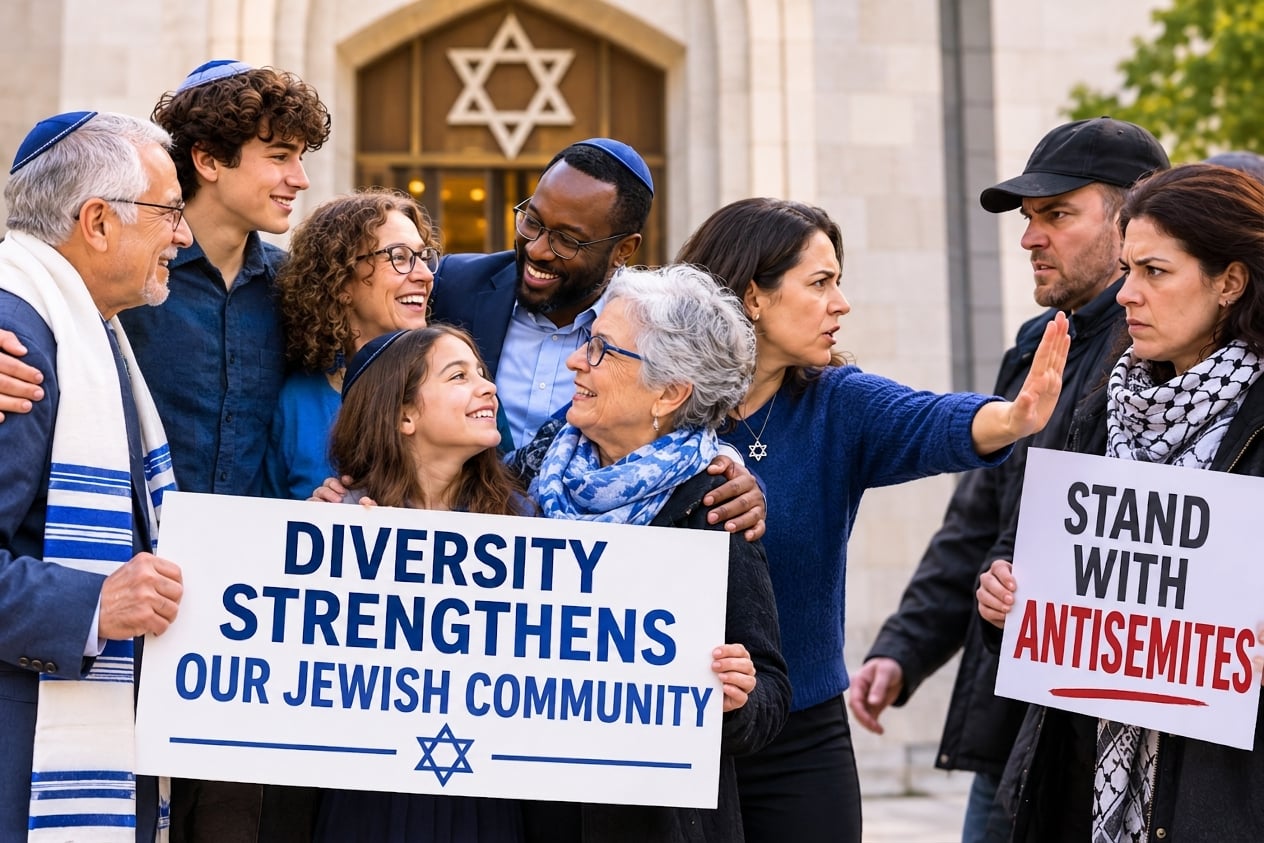
AI generated image
We must love them as fellow Jews—and relentlessly oppose them politically when they empower those who endanger us.
At kiddush after synagogue this Shabbat, someone asked where I had grown up.
“New York City,” I answered. Then I added that I was glad to be out of there—especially with Zohran Mamdani as mayor.
The woman beside me mentioned his announcement disbanding the NYPD’s Strategic Response Group, the specialized unit deployed to protect Jewish institutions and neighborhoods when anti-Israel demonstrations turn volatile.
Soon, the conversation turned from the mayor to the Jews who helped put him in office. Someone brought up the Jewish voters in Michigan who backed Abdul El-Sayed in the Senate race.
“How could they?” was the question around the table.
“What type of Jews are they?” someone asked.
“They are not Jews,” another answered.
Around the table, heads nodded. Then came the familiar verdict: “Self-hating Jews.”
I understood the fury. I shared the sense of betrayal. When Jewish physical safety is on the line, empowering politicians who treat Jewish survival as negotiable is not an ordinary civic disagreement.
Yet that exchange missed the deeper truth. Calling them “not Jews” lets them off the hook. If they weren’t Jews, their betrayal wouldn’t matter. Because they are Jews—bound to us by covenant, history, and shared fate—their choices carry lethal weight.
This Is Not a Policy Disagreement. It Is a Threat.
We need to stop treating the rise of politicians like Zohran Mamdani and Abdul El-Sayed as routine ideological dissent. When a leader’s platform actively strips away the guardrails protecting Jewish life, we are no longer debating tax rates or zoning laws. We are confronting an existential threat to Jewish security.
Consider Mamdani’s record. Upon taking office, he revoked New York City’s adoption of the International Holocaust Remembrance Alliance (IHRA) working definition of antisemitism—the global standard used by law enforcement and civil institutions to recognize when anti-Zionism crosses into Jew-hatred. He broke decades of precedent by boycotting the Israel Day Parade. He vetoed legislation requiring safety buffer zones around schools—where Jewish children are prime targets for harassment—while dismantling the very NYPD unit tasked with containing violent street mobs.
Supporters point to Police Commissioner Jessica Tisch’s reshuffling and a definition-free “antisemitism strategy.” Those excuses do not survive contact with reality. Stripping away the legal definition of Jew-hatred while weakening the tactical response to street intimidation creates a permissive environment where hostility escalates into violence.
In Michigan, Senator-elect Abdul El-Sayed has explicitly declared that Israel should not identify with one particular faith or culture—a polite euphemism for dismantling the world’s only Jewish state. On election night in Detroit, he stood before cheering supporters and pledged to cut off U.S. aid so tax dollars would no longer fund what he smeared as Israeli “apartheid” and “genocide”.
When a politician slanders the Jewish state as genocidal, denies the Jewish people’s right to national self-determination, or removes the legal protections that shield Jewish communities in the diaspora, the issue is not “progressive politics.” It is antisemitism. And history teaches us an unforgiving lesson: rhetoric that delegitimizes Jews inevitably ends in bloodshed.
A Jewish Endorsement Is a Weaponized Shield
Here is why the Jews who campaign for, fund, and vote for these candidates bear a heavy moral responsibility: they provide the ultimate political cover.
When a non-Jewish politician attacks Jewish self-determination or weakens protections against antisemitism, Jewish endorsements act as a kosher stamp. They allow hostile movements to dismiss genuine Jewish alarm as mere partisan whining. They disarm our community’s defenses from within.
In normal politics, voters weigh competing priorities—healthcare, housing, climate, taxes—and make compromises. But for the Jewish people, physical survival and the security of the Jewish state are not “one issue among many” to be traded away for municipal promises. You do not bargain over the foundation of the house while arguing about the furniture.
Jews who lend their names and votes to leaders who threaten Jewish lives are not engaging in harmless dissent. They are actively enabling harm.
Love the Jew, Exile the Politics
In Jewish law, the principle of Pikuach Nefesh—the preservation of human life—overrides nearly every other commandment. When Jewish lives are endangered, polite consensus and partisan loyalty mean nothing.
At the same time, halakha is unambiguous about identity: Yisrael af al pi she’chata Yisrael hu—a Jew, even when they sin, remains a Jew. We do not have the authority to read anyone out of the Jewish people, no matter how destructive their politics.
The Lubavitcher Rebbe famously taught that every Jew bears responsibility to bring fellow Jews closer to Torah and mitzvot. That obligation of Ahavat Yisrael—unconditional love for every Jew—is non-negotiable.
But outreach is not appeasement. True love does not mean looking away while a brother hands matches to an arsonist. Alongside the duty of love stands the biblical command of Tochacha—the obligation to rebuke a fellow Jew who is causing harm, and to stop them from endangering the community.
This requires a clear, uncompromising boundary: We must love them as Jews, and we must oppose their dangerous politics without mercy.
It cannot be business as usual. Jews who actively empower antisemites must face communal and political ostracization. They should not be given platforms in our synagogues, honors on our boards, or social legitimacy when they use their Jewish identity to validate those who threaten us. Communal excommunication is not hatred; it is self-defense.
What Comes After Kiddush
We cannot afford the luxury of confusion. Not every critique of an Israeli government is antisemitism, and not every policy dispute is a betrayal. But when politicians work to strip Jews of legal protections in New York or erase the Jewish state in the Middle East, the line has been crossed.
Our responsibility is threefold: protect our communities, relentlessly oppose the politicians who endanger us, and deny communal legitimacy to the Jews who enable them.
At the same time, we never abandon their souls. We keep the door open to Torah, to mitzvot, and to a return to their people—provided that return begins with an honest reckoning over the harm they have helped unleash.
The answer to “They are not Jews” is not anger. It is accountability.
They are Jews. Their choices matter. And we must love them as Jews—while standing relentlessly in the way of the dangerous politics they enable.
Related Topics