A Faustian Bargain
Mahmoud Khalil is a despicable human being. He served as a spokesman for CUAD—the organization that took over Hamilton Hall at Columbia University last spring. The group he led smashed windows, glorified the October 7 massacre, blocked “Zionist” students from accessing university resources, and even held a janitor hostage. To put it succinctly, I have no sympathy for Khalil or the other jihadist cosplayers that have found safe haven at many of our elite universities.
Yet there is something unsettling about Khalil’s detention. CUAD committed multiple crimes during the height of the encampment movement, but the administration has not charged Khalil—or the other campus agitators who have been targeted for deportation—with criminal activity. Rumeysa Ozturk, Mohsen Mahdawi, and Khalil were all detained because of their speech. More specifically, they were charged under the expansive (and potentially unconstitutional) 1952 Immigration and Nationality Act, which grants Secretary of State the authority to deport “any alien whose presence or activities in the United States… would have potentially serious adverse foreign policy consequences.” They were not charged with vandalism, illegally occupying a private building, or providing material support to Hamas.
In the case of Khalil, the deputy secretary of the Department of Homeland Security, Troy Edgar, defended the administration’s rationale as follows: “We’ve invited and allowed the student to come into the country, and he’s put himself in the middle of the process of basically pro-Palestinian activity.” Despite the possibility that Khalil engaged in criminal behavior as a member of CUAD, the administration predicated their case on his “pro-Palestinian” activity—which can only be read as a chilling affront to the spirit of the 1st Amendment.
To be sure, the legality of the case against Khalil and other anti-Israel demonstrators is not as unequivocal as many pundits—on the left and right—have contended. The question of whether immigrants, even green-card holders, have the same right to free speech as citizens is unclear at best. Past courts have not ruled definitively on whether a legal resident can be deported on the grounds that their speech is abhorrent. Indeed, the case is defined by crosscutting precedents and its outcome will likely hinge on the politics of the court that decides it.
But there’s an even deeper, more consequential question than whether deporting Khalil is permissible under the law. Just because the government can do something—and in this case, that is debatable—does not mean it should. Khalil’s detention might be technically legal, but is it right for America? And is it right for the Jews?
The deportation of Khalil carries the potential to chill the speech of all Americans—especially its Jewish minority. American history is full of shameful periods when the Congress passed overly broad laws to repress speech. Some of these laws have been repealed or invalidated, but many of them—in the paraphrased words of Justice Robert Jackson—lie around like loaded guns, cocked and ready to be weaponized against the politically unpopular. Today, its Mahmoud Khalil and the other Hamas-loving comrades that we revile. But tomorrow it could be (and if history is any indication, probably will be) us.
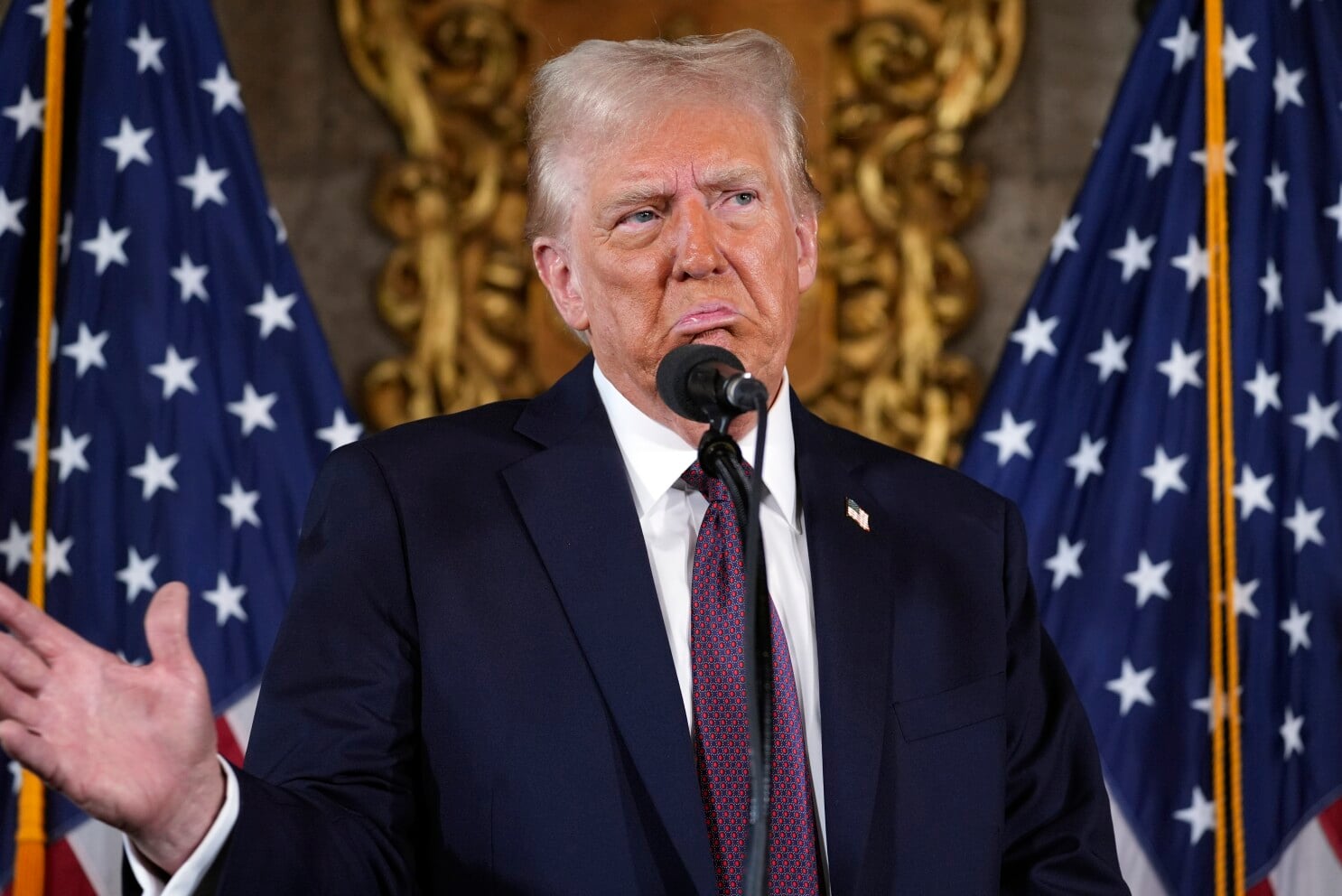
Every despotic society eventually turns on its Jews. We have a vested interest in the survival of American democracy and civil liberties. Western values have served us exceptionally well; they guarantee our freedom of religious practice and our ability to speak out when our rights and livelihoods are threatened. It’s dangerous to use the threat of antisemitism as an excuse to limit those rights. President Trump may purport to protect us today, but what happens when he identifies us as “disloyal” as he did to Michael Cohen, Mike Pence, John Kelly, and a host of others? Likewise, a future Democratic administration could easily be an adversary of the Jewish community—except in that dreaded scenario, it would be armed with the precedent of Khalil’s arrest and deportation. Put another way, our acquiescence to Trump today could empower a future President Alexandria Ocasio-Cortez to deport an Israeli of whom she does not approve because his presence would have “adverse foreign policy consequences.”
So that is why we must oppose the brazen actions of the Trump administration, even as they ostensibly protect us. Silencing anti-Israel voices—even those as repugnant as Khalil’s—may be a short-term sugar high. But we stand to suffer as a community if we entrust our security to a wannabe autocrat such as President Trump. Life in a free society asks us to accept certain risks and defend the rights of the indefensible, and that includes those who support the genocidal butchers of Hamas. That includes people who would not extend the same right to us. It’s a platitude but freedom is not free—it demands that we tolerate speech that is intended to intimidate us. The trade-off may be agonizing at times, but it’s the price we must pay as a vulnerable minority.
In fact, it’s the difficult but necessary burden of living in a country as wonderful as ours.