
Grammy and Emmy nominated singer-songwriter, author, essayist
A Leaping Spirit of Love, Music, & Light (Eulogy for my friend Richard Friedman)
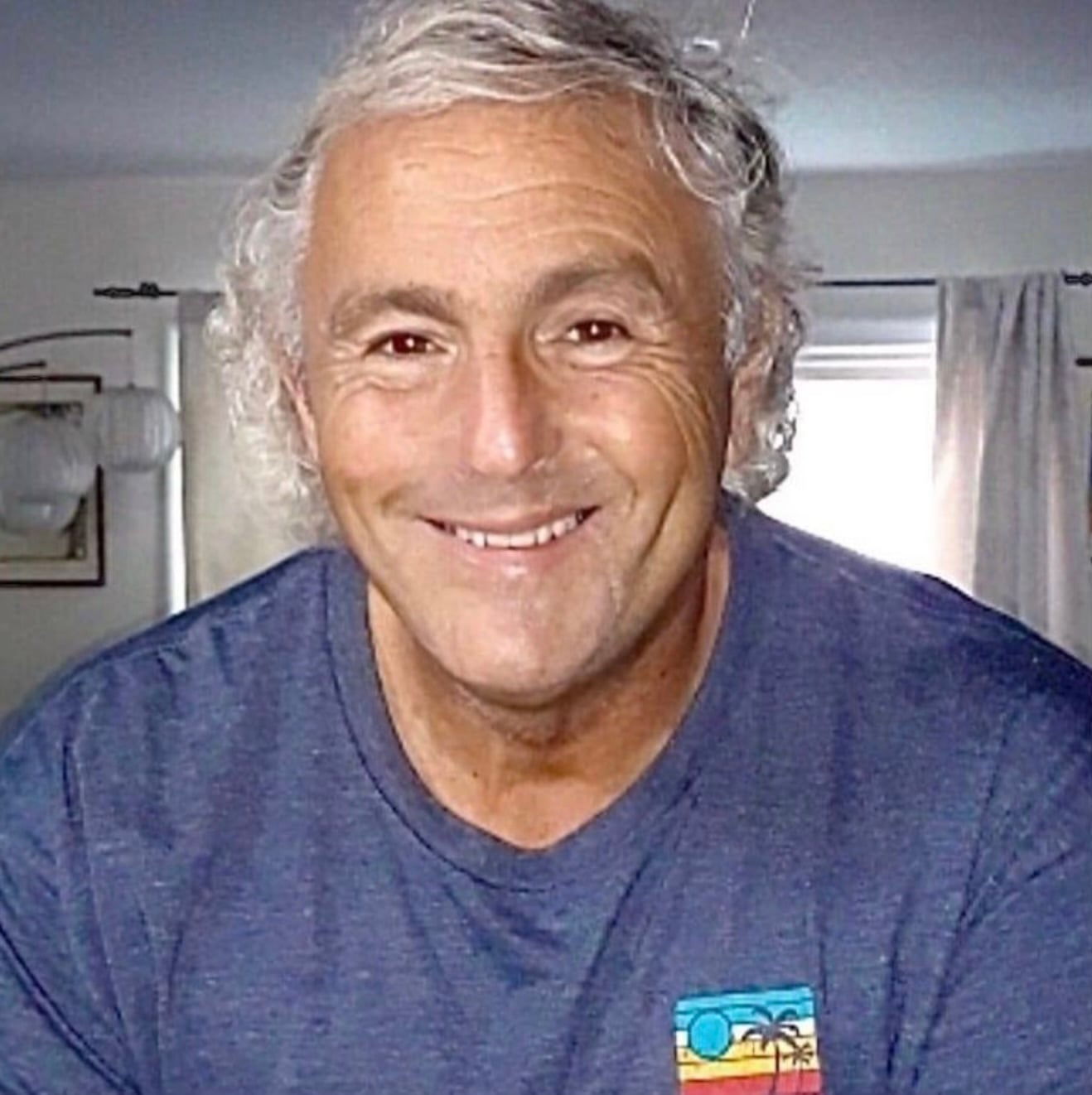
The brilliant musician, mench, and dear friend, Richard Friedman. (courtesy)
Very early this morning I found myself in a kind of half-wakeful, half slow-moving liminal dream. The sun hadn’t risen yet. I felt something opaque, something solid hovering above me. A wall of lead? A rubber barrier of some kind with a tire-like consistency? A massive block of black ice? It was, as strange thoughts often go, none of those things. But a decision had to be made. That, I was sure of. I knew I needed a way to pierce each one of them—to see beyond them, to poke holes through them in hopes of letting a shaft of light come through to brighten the dimness.
And what was dim? Well, for one, the idea that a dear friend of mine—a truly brilliant musician whose funeral I was to attend later in the day was gone. His name is … or do I say “was”? I’ll stay with is for a while, if only because I prefer the sound of it, and because he feels so alive for me even now. Even now, after I’ve returned home, after shoveling dirt on his casket—the dirt that is still stuck in the treads of my shoes.
His name is Richard. Richard Friedman.
I hadn’t expected to cry while the eulogies were being read. Not even while knowing Richard was no longer alive, no longer pouring out his music and his love—which for him, I believe, were one and the same. Were the essence of him.
When you see genius like Richard’s —a pure, undeniable genius—it is breathtaking. When you see a man whose genius is perfectly matched with his selflessness and his pure and honest light, you are bearing witness not to the man’s body, not to his form alone, but to his spirit. Richard had a “leaping spirit,” a leaping spirit that could not be tamped down by greed, by malice, or by the kinds of insecurities that cause normal people to remain chained by the their need for self-protection.
It was when I heard his children speak of him—“he was my best friend,” “I won’t ever find someone to love me as he did”—that I began to shed tears. Having lived sixty-five years, I am no longer ashamed of my tears or anyone else’s. I’ve come to understand that tears are simply evidence that a person has reached a certain pinnacle—whether large or small, whether in a lifetime or in a single moment.
It is then that he or she has shed the limitations of even time and space. It is in that shedding—in letting go of posturing, of defensiveness, of the sense and the definitions of one’s own body—that one becomes a leaping spirit as well.
The barriers I described earlier are those I believe we all wish to shed. This, I think, is the value and purpose of music: to make us aware that we are embodied spirits. To remind us that there is mystery and truth in a world that seems ready to deny us both those things.
More than that, music lets us know—quite happily—that we are not self-created. That no matter how much we strive to become more than human, to buy our way into happiness or to grasp onto a fictive impression of ourselves—a Creative Force exists. There exists a Lonesome All-Encompassing Oneness that in ways we cannot and will never be able to comprehend, creates us—along with every aspect of reality and beyond so-called reality—at each infinitely small fraction of time.
The opaqueness, the solidity. The wall of lead. The block of ice. In my dream, they needed to be bored, pierced, broken. They have been. This morning’s tormented reverie has become clearer. I see now that the world has opened for me, if only just a crack.
And here, in the auspicious days between the Jewish holidays of Rosh Hashana and Yom Kippur—days when we are called to find those holes and cracks for ourselves, to look beyond our normal sense of things, beyond our robotic, myopic, and desensitized view of ourselves, those around us, and the universe at large—we are summoned to free ourselves from complacency, from an unwillingness to seek and to find not something remote, but something that stands before us in every instant of our lives: the miracle of our own sentience; our potential for hope, joy, and love; and the willingness to acquiesce to the reality that, despite what we are fed by forces of unholiness that threaten to subsume us within their darkness and despair, there is a Great Light—call it God if you like—that creates and animates all things at every moment.
This is something every musician of a certain caliber knows and reaches for instinctively. I have no question that Richard knew this, reached for this—and found it, again and again.
Along with my treasured memories of Richard—of his spirit, his ebullience, and his heaven-sent music—I want to thank him one last time for disrupting the world in a way that allows me a glimpse of that brighter, stronger light, and of my renewed soul, which has truly leapt today and found its way closer to love, to compassion, and ever toward the Creator of Heaven and Earth.
Thank you, my friend,
Peter
Related Topics