
A Love Letter to Jewish Education and Its Hidden Rewards
Exactly one year ago, I stepped out of the Jewish day school ecosystem after nearly two decades. When you spend that much time embedded in institutional life, your brain gets hopelessly rewired. You start thinking in rigid, predictable cycles: semesters, looming enrollment cliffs, budget reconciliations, and the mythical five-year strategic plan. You become horrifyingly fluent in bureaucratic communal-ese. But away from the Pavlovian response to daily bells and the immediate crisis of school leadership, the institutional data points fade. What remains is something far more human, entirely unscripted, and—frankly—impossible to capture on a spreadsheet.
Looking back now, I’m struck by a simple realization: the most transformative parts of my career arrived as complete surprises. They were gifts wrapped in the mundane, exhausting routine of the school calendar—things I never had the foresight to ask for, let alone plan for. In a cultural moment where the conversation around Jewish communal work is almost exclusively framed through a grim lens of burnout, structural crisis, or financial doom-scrolling, I want to look closely at the hidden returns. This isn’t a corporate audit; it’s a personal dispatch on the unforeseen rewards waiting in the classroom.
The Transaction and the Transformation
To be honest, for my wife and me, working in Jewish schools and summer camps was originally a pragmatic, transactional calculation. We had three children, and we wanted them to have an immersive Jewish education. In the modern American Jewish community, that desire represents an eye-watering financial mountain to climb—less a hill to walk up, more a sheer cliff face of tuition bills. Working inside the system wasn’t just a spiritual calling; it was our sherpa pass over that mountain.
The expected transaction was straightforward: we traded our talent and time for subsidized tuition fees and basic text literacy for our kids. We knew the salaries were modest, and the compromises were real. But looking back from the quiet perspective of an empty nester, the return on that investment leaves me profoundly, deeply moved.
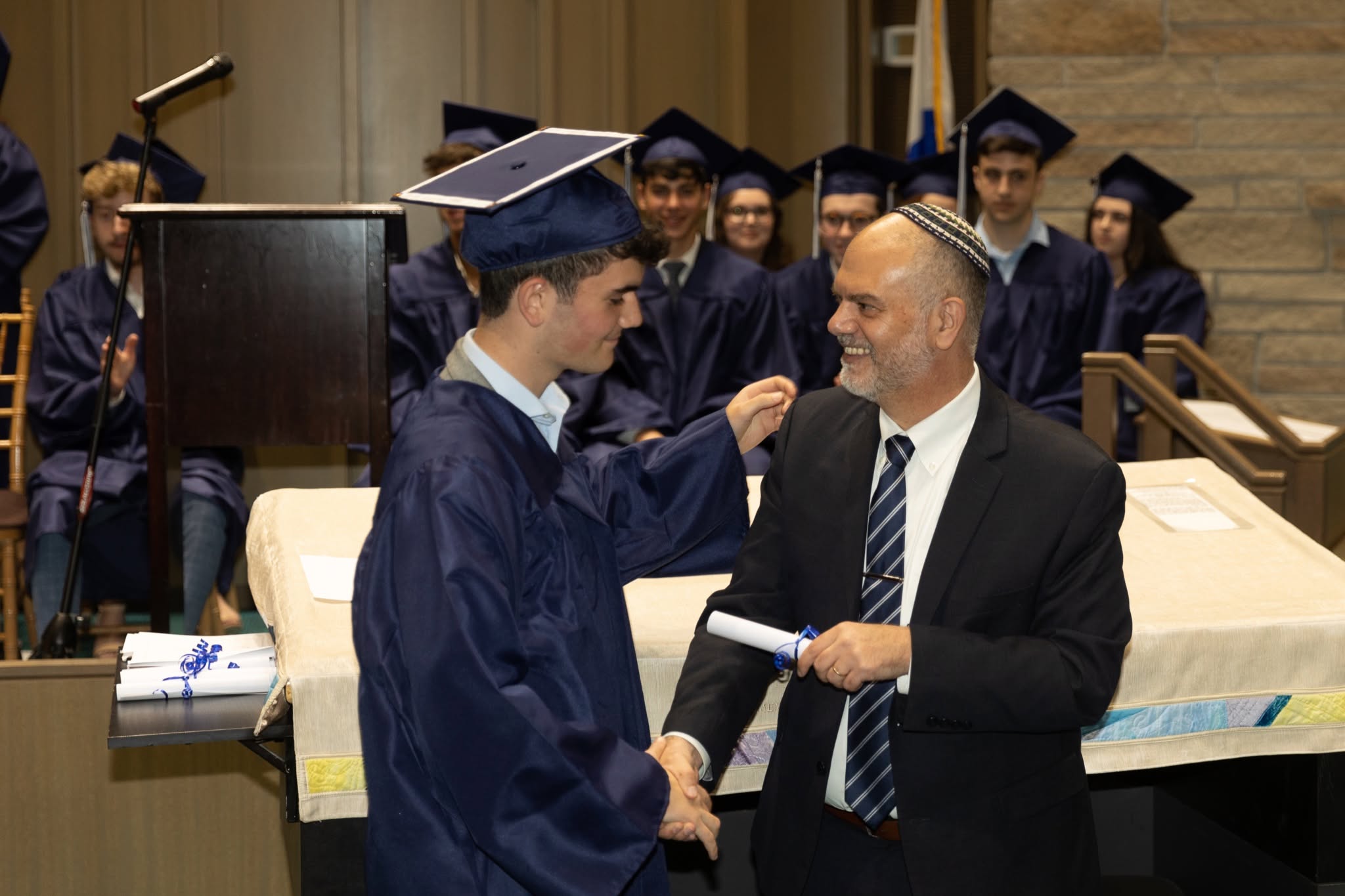
I knew intuitively that day schools delivered a solid academic education. What I didn’t realize was that I was securing a premium, front-row seat to watch my own children become proud, courageous, independent thinkers who move through a hyper-complicated world with deep Jewish values and a confident identity. There is no greater naches than watching that identity solidify daily. Having the rare opportunity to stand on that graduation stage and personally hand each of my three children their high school diplomas wasn’t a career milestone—it was a sacred privilege I could never have anticipated when I first walked into the classroom.
The Real Curriculum Walks on Two Feet
We spend an immense amount of creative and financial energy designing curricula, but any seasoned educator knows the real curriculum walks in on two feet every single morning, usually holding an extra large iced coffee it shouldn’t be drinking. I spent twenty years talking to young people about Jewish history, communal responsibility, and the singular, complex blessing of living in an era of Jewish sovereignty. The true impact of those conversations never shows up on a final exam; it returns decades later. It happens when you run into a former student—now an adult, navigating the complexities of their own adulthood—and they mention a casual comment or a shared text from years ago that somehow became an anchor for their adult choices.
Even more poignantly, I think of the dozens of my former students who took those abstract classroom discussions about responsibility and translated them into the ultimate action, choosing to serve the Jewish people directly by joining the IDF. Every one of them is a hero to me. They represent a fierce reality that no lesson plan could have fully captured or predicted.
They are also a reflection of the brilliant, beautifully complicated people who staff our schools. A school faculty room is a unique human landscape, part monastery and part comedy club. I’ve worked alongside some phenomenally talented secular and Judaic studies teachers—across math, Talmud, science, Tanakh, art, and history—who were fiercely professional, deeply creative, and sometimes delightfully eccentric. Some were strictly by-the-book; others were entirely unconventional. But they all shared a rare alchemy: they held the absolute respect of their students, and they maintained standards so exacting that they quietly expanded what those students believed they were capable of achieving.
A Journey Through the Communal Diaspora
For me, this career also became an unexpected passport, allowing my family to belong to and learn from distinct Jewish communities across the country. We discovered quickly that the American Jewish experience is anything but monolithic.
- In Seattle, we were welcomed into the beautiful heritage of Sephardic Ladino culture, framed by salmon fishing and the breathtaking nature of the Pacific Northwest.
- In Dallas, we learned the warmth of Texas pride, summer-night rodeos, and a local kosher chili cook-off that stands as a masterclass in community building and Southern hospitality.
Serving in communities of all sizes taught me a profound lesson about the Jewish people: we are beautifully unique in our local flavors, yet fundamentally bound by the same core longings. Being an educator means standing with families in their quietest moments of personal trial and their loudest moments of celebration. It means doing work that actually matters, day in and day out, far away from the echo chambers of Jewish Twitter.
The Beauty of the Second Act
Jewish education wasn’t my first professional chapter; it was my second, or by some accounts, my third. For anyone standing at a career crossroads, wondering if it’s too late to shift toward a life of communal purpose, I cannot recommend this path highly enough.
It is not a landscape without friction. Jewish educators are rarely given the societal prestige or the compensation they deserve, and entering any school ecosystem means mastering the art of absorbing a certain amount of institutional drama and parental over-enthusiasm.
But if you are looking for a challenge that pays back in deep, enduring meaning, there is no richer canvas. Beyond the administrative models and the macro communal challenges, there is a simpler, lighter truth that we don’t talk about enough: some of the funniest, strangest, and most deeply inspiring moments of my life took place inside a classroom. When it is done with heart, teaching is quite simply an incredible amount of fun.
The field gave me twenty years of work, but more importantly, it gave me a life deeply rooted in what matters most. For those stepping into the classroom next semester, the challenges are real—but so are the quiet wonders you never saw coming.