A new home, with Israel at its center
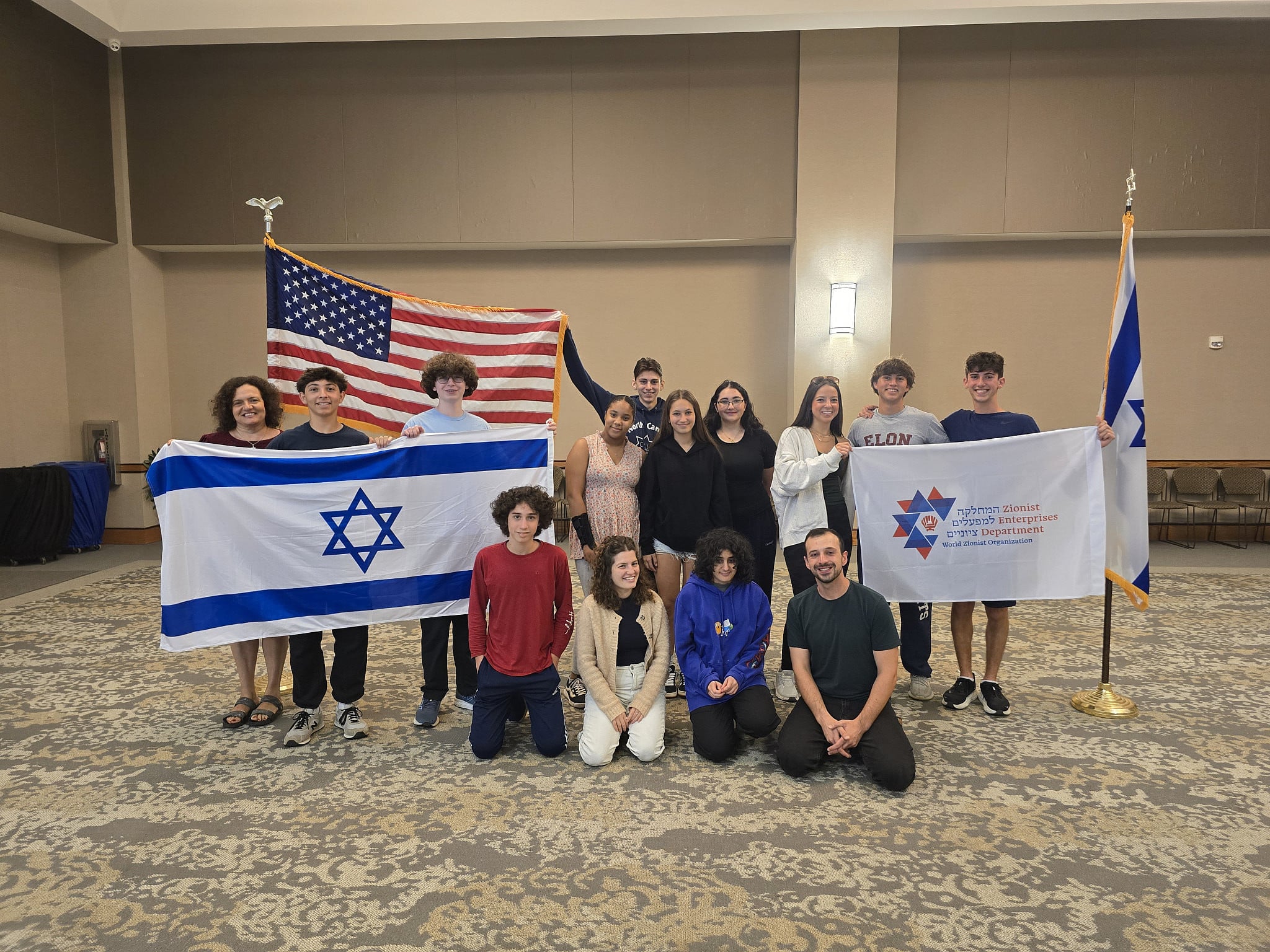
Last year, I arrived in Charlotte, North Carolina, with a suitcase and a return ticket.
I was there for a two-week assignment on behalf of the Jewish Agency – long enough to meet people, begin conversations and get a sense of the community, but hardly enough time to imagine that Charlotte might soon become home.
Still, something about the visit refused to feel temporary.
I encountered a Jewish community that was warm, thoughtful and deeply invested in its future. People wanted to speak about Israel, but not only through the familiar language of politics, war and crisis. They were looking for something more personal: a better understanding of Israeli society, stronger relationships with Israelis, and more opportunities to explore what Israel could mean within their own Jewish lives.
In some communities, a visiting emissary leaves with a stack of business cards and a full schedule behind him. I left Charlotte with a strong feeling that the conversation had only begun.
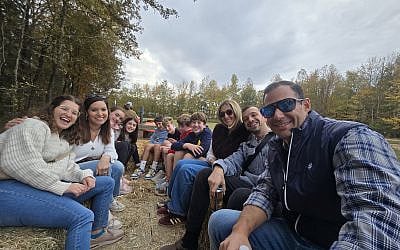
After returning to Jerusalem, I remained connected. I continued writing for the Charlotte Jewish News, stayed in touch with people I had met and followed the community from a distance. When the opportunity arose to establish a new Israel Center at the Jewish Federation of Greater Charlotte, it did not feel like applying for a position in a place I knew only on paper. It felt like being invited back into a story that had already started.
This October, I will return to Charlotte as the Center’s founding director.
The words “founding director” sound orderly on a job description. The reality is more complicated. I am preparing to pack up my life in Israel, leave the familiar rhythms of home and begin again in a city I have known for only two weeks.
Leaving Israel is never emotionally neutral, especially now. In such a painful and unsettled period, that feels to many like a pivotal moment in our shared story, any decision to move away can be interpreted as a judgment or an escape. I have wrestled with that myself.
But I am not moving because I want less Israel in my life. I am moving because I want to help build a deeper and more human relationship with it.
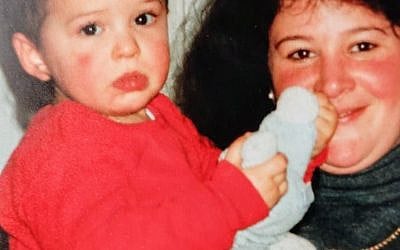
For me, that relationship has never been abstract. My American mother came to Israel for a gap year and met my Austrian father on a kibbutz. I was born in Austria and raised in Israel. My life is, quite literally, a product of the connections that can form when Jews from different parts of the world encounter Israel directly and allow it to become part of their own stories.
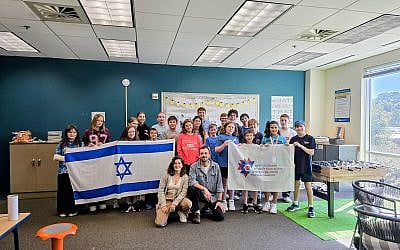
The Israel Center is intended to create more opportunities for those kinds of connections. Not by reproducing anyone else’s experience, but by giving members of the Greater Charlotte community the knowledge, relationships and space to build their own.
Its ambition is much larger than assembling another calendar of Israel-related events. The Center is being established to help shape Charlotte’s relationship with Israel for the next decade and beyond. It will work closely with synagogues, schools, educators, youth organizations, local Israelis, community leaders and partners in Israel. It should become a central address for bringing people, institutions, ideas and opportunities together.
That does not mean arriving with a blueprint and immediately building something from scratch. Charlotte already has organizations and individuals doing meaningful work around Israel. My first responsibility will be to listen: to understand what is already happening, where efforts overlap, which voices are missing and where the Center can add genuine value.
The goal is not to reinvent the wheel. It is to help the existing wheels turn smoothly.

Over time, that will mean developing a clear strategy and measurable goals; strengthening cooperation among community organizations, expanding educational and travel opportunities, creating lasting partnerships with Israeli institutions, and making room for honest, informed and constructive conversation.
Success will not be measured simply by how many events appear on the calendar. It will be found in whether a young person encounters an Israel larger than the one seen on social media, whether an educator has the tools to address difficult questions, whether Israeli residents feel more connected to the organized Jewish community, and whether people with different perspectives can remain in conversation without questioning one another’s belonging.
The Center also carries a legacy that I do not take lightly.
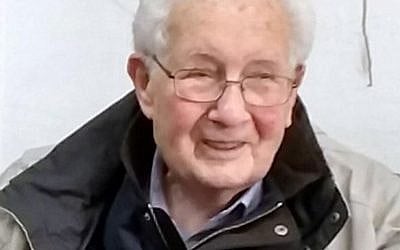
It has been made possible through the generosity of Irving Bienstock, a Holocaust survivor, US Army veteran, educator and pillar of Charlotte’s Jewish community.
Irving escaped Nazi Germany as a child after witnessing the tragedy of Kristallnacht. He later reunited with his family in the United States and served with the Army’s 10th Mountain Division during World War II. In 1975, he and his wife, Lillian, made Charlotte their home and built a life rooted in Jewish faith and communal service.
In his later years, Irving devoted himself to Holocaust education. Through the Levine Jewish Community Center’s Butterfly Project, he shared his story with thousands of students, turning personal memory into an enduring lesson about hatred, dignity and the responsibility to protect others. His philanthropy followed the same principle: support the institutions that sustain Jewish life and enable them to reach future generations.
I never had the privilege of meeting Irving. He died several months before my first visit to Charlotte. Yet I feel the weight of the trust attached to his name.
Accepting a role made possible by his legacy is not simply taking on a new position. It means inheriting a responsibility. His generosity has given the community an opportunity to build something lasting, and those of us entrusted with that opportunity must ensure that it results in more than activity. It must produce relationships, knowledge and a stronger sense of shared Jewish responsibility.
The Israel Center cannot exist only to defend Israel whenever a crisis erupts, nor can it withdraw when the conversation becomes difficult. It must help people encounter Israel as a society rather than a symbol, and Israelis as people rather than political positions.
That requires more than telling positive stories. Humanizing Israel does not mean polishing away its contradictions. It means presenting the country in its fullness and creating room for a relationship in which affection does not demand silence and criticism does not require separation.
During my first visit to Charlotte, I believed I was arriving to bring something from Israel to the community. Looking back, Charlotte gave me something as well. It reminded me how quickly a genuine connection can begin and how much care is required to help it grow.
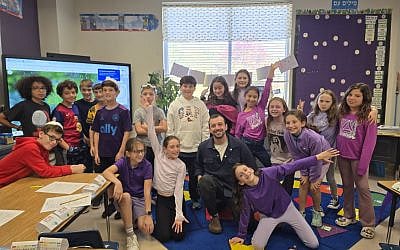
When I return this October, I will not arrive with every answer. I will come prepared to listen, to learn and to help translate the community’s aspirations into a Center with a clear purpose and an enduring presence.
Two weeks in Charlotte opened a door. Irving’s legacy has made it possible to build something meaningful beyond it.
My address will change. My relationship with Israel, and my responsibility to it, will not. Charlotte is no longer simply a place I once visited. It is about to become home.