Exiled Iranian Writer & Political Commentator
A Poet Who Died Twice. Once in Prison, Once in Silence
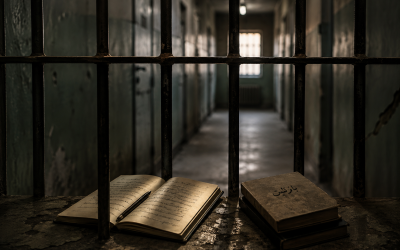
Some deaths demand to be witnessed.
Baktash Abtin was a poet, a filmmaker, and a member of the Iranian Writers’ Association, an organization that the Islamic Republic has spent decades trying to destroy. He was arrested in 2020, along with other members of the association, on charges that were as vague as they were predictable: “assembly and collusion against national security.” In Iran, this charge is a template. It fits any writer, any artist, any person who dares to think out loud.
He was sent to Evin Prison. And there, in one of the most notorious prisons in the world, he contracted COVID-19. He was denied adequate medical treatment. He was denied transfer to a hospital until it was too late. He died in January 2022, at the age of 47.
The Islamic Republic did not execute Baktash Abtin with a bullet or a rope. It simply let him get sick and did nothing. This is a newer, quieter form of killing one that leaves no visible marks, one that can always be explained away as an unfortunate circumstance. But make no mistake: it was a decision. Every hour of denied treatment was a decision. Every refused transfer was a decision. His death was not an accident. It was a policy.
I have spent years watching this regime destroy the people who give Iran its voice. Writers, poets, filmmakers, journalists the people who take the reality of life under this system and turn it into something the world can understand and feel. These are the people the Islamic Republic fears most. Not because they carry weapons. Because they carry words.
This is why the Iranian Writers’ Association has been under attack for decades. This is why journalists are imprisoned, why filmmakers are banned from leaving the country, why singers are arrested for performing without a license. Art is not a luxury in Iran it is a threat. And the regime treats it accordingly.
What strikes me most about Abtin’s story is the deliberateness of it. The Islamic Republic did not accidentally neglect him. It chose to. It calculated that a sick poet in a prison cell was less dangerous than a healthy poet outside of one. And it acted on that calculation. This is not incompetence. This is policy.
I think about what it means to die in prison for the crime of writing. Not for planning violence. Not for carrying weapons. For writing. For being part of an organization that believed in freedom of expression. For refusing to be silent in a country that demands silence from everyone.
Baktash Abtin was not the first. The 1990s saw a wave of murders of intellectuals and writers known as the Chain Murders carried out by agents of the Intelligence Ministry. The names are long. The list is painful. But each name matters. Each story matters. Because behind every statistic is a person someone who loved language, who believed in the power of words, who thought that art could change something.
As an Iranian exile, I carry these names with me. Not out of obligation, but out of necessity. Because forgetting them is exactly what the regime wants. Every time we speak their names Baktash Abtin, and all the others we are doing the one thing this regime cannot tolerate.
We are refusing to be silent.
Related Topics
Related Posts