Life Member, Hadassah Louisville, Hadassah Writers' Circle
A Screaming Silence in the Sinai Desert After the Six-Day War
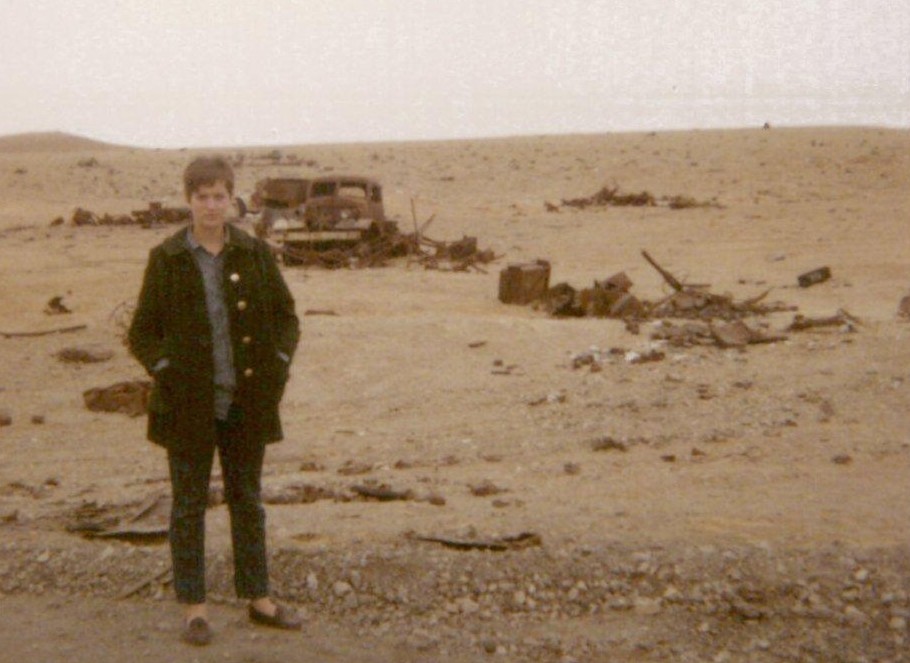
Photo courtesy of the author.
In 1968, along with about 40 other recent college graduates, I joined Sherut La’Am, sometimes referred to as the Israeli Peace Corps. It was about a year after the Six-Day War, and we were going to Israel for a year as volunteers.
The program was run by the Sochnut – The Jewish Agency. We spent the first couple of months in an ulpan – an intensive Hebrew study program. We were then assigned our jobs for the remaining 10 months.
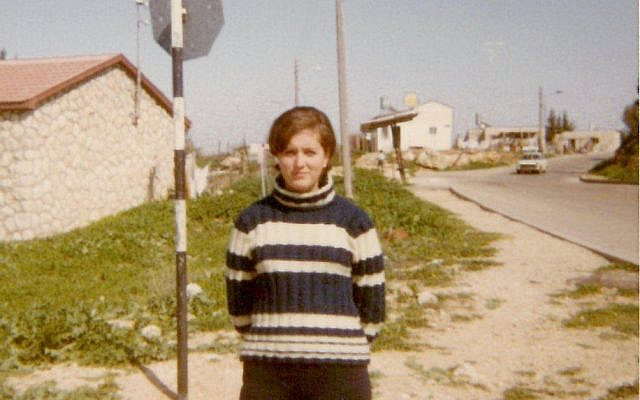
I was sent to Beit Shemesh, one of the development towns that the Israeli government established for the immigrants flowing in from less advanced countries. The hope was that these towns and the immigrants who settled there would develop together. It was also a strategic decision to scatter new towns throughout the country, rather than just increase the population size of Israel’s major cities.
Beit Shemesh, located between Tel Aviv and Jerusalem, was filled to a large extent with Spanish-speaking Moroccan immigrants. My job was to teach English to the school children. Amazing as it seemed to me then, they were using Stephen Vincent Benet’s The Devil and Daniel Webster, with its New England dialect, to teach English.
I also volunteered at Hadassah Hospital Ein Kerem in a ward of soldiers who were left multiple amputees by the 1967 war. Taking two buses to get to the hospital from Beit Shemesh, I did whatever was necessary – empty bedpans, make beds, smile at the patients and their visitors, talk with them if they wanted to talk.
I lived with two other volunteers. Our apartment was on the third floor, a “walk up” of course. There was no running hot water. To shower, we had to heat up water in a little water heater that took over half an hour to warm up, yielding only three minutes of hot water. Our showers were scheduled, and we turned off the water after we got wet, soaped up and then put the water back on to rinse off.
The apartment wasn’t heated. We had a small portable floor heater, but it had to be turned off before we fell asleep since the accumulating fumes could be dangerous. We cooked on a single hot plate.
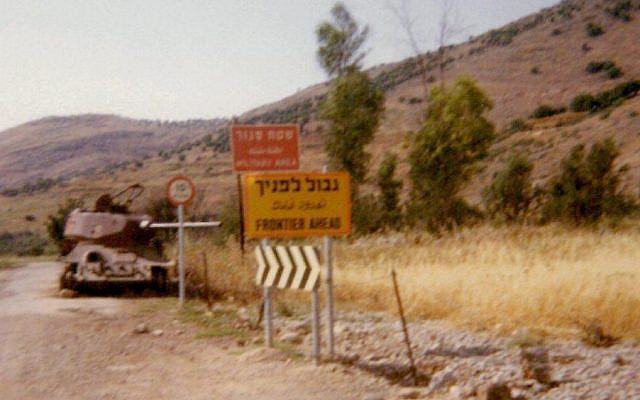
In addition to working in the development towns, we were taken on trips throughout the country. We were warned not to step off the paved roads as there were many mines that had not yet been disarmed. We were not to pick up a pen or a button as it could be an explosive device.
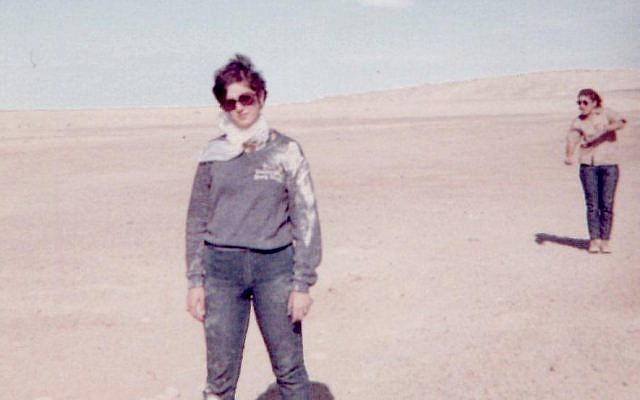
One trip, on a bus with a tour guide, was scheduled to take us through the Sinai Desert to what was deemed to be one of the possible sites of Mount Sinai, where Moses received the Torah. It was a sunny, hot day. Though there were no facilities on the bus, we were told that we would make a few stops, and that the men would do their business outside on one side of the bus and the women on the other side.
We began to chatter amongst ourselves but, as we got further into the Sinai Dessert, the chatter ceased. There was a very eerie stillness. Scary. Extremely uncomfortable. We saw a large number of abandoned tanks scattered around, partly covered by the vast desert sand, characteristic of the Sinai. We also saw large carrion scavenger birds flying around specific spots in the sand. Our guide explained that the winds had covered some of the dead soldiers and the heat had preserved them; when the winds again uncovered them, the carrion found them. The bus was then quiet. All I heard was the silent screams of the dead soldiers. Again and again, the screaming silence.
Then our bus was stopped. A cloud of smoke was visible in the far distance, and we were told that it was believed Israeli forces had killed the head of the Egyptian army. Our bus immediately turned around, and we rode back in silence, the screams of the dead soldiers still echoing in our ears.
Rhoda is a member of the Hadassah Writers’ Circle, a dynamic and diverse writing group for leaders and members to express their thoughts and feelings about all the things Hadassah does to make the world a better place. It’s where they celebrate their personal Hadassah journeys and share their Jewish values, family traditions and interpretations of Jewish texts. Hadassah members are proud of their Zionist mission and their role as keepers of the flame of Jewish values, traditions and beliefs as well as advocating for women’s empowerment and health equity for all. Since 2019, the Hadassah Writers’ Circle has published nearly 650 columns in The Times of Israel Blogs and other Jewish media outlets. Interested? Please contact hwc@hadassah.org.
Related Topics
Related Posts