A Tired Nation Cannot Dream
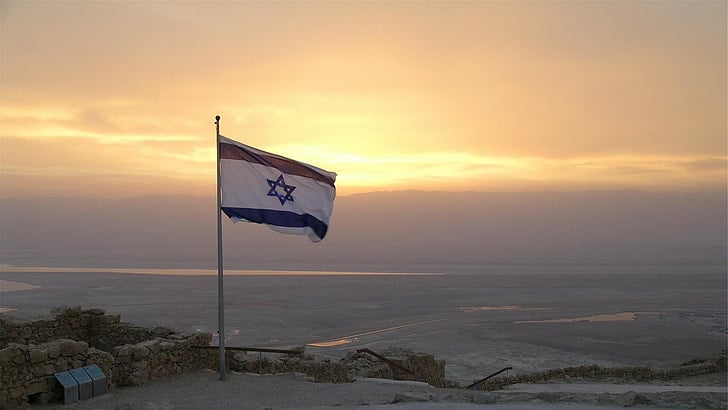
For most of Israel’s history exhaustion was not an option.
The generation that founded the state drained swamps, built roads, fought wars, buried friends, welcomed refugees, and somehow still found the energy to imagine a future that did not yet exist.
They were tired.
But they were not consumed by exhaustion.
Because exhaustion was outweighed by something else: purpose.
Today, for the first time in a long time, I worry that Israelis are losing something far more dangerous than military deterrence, political unity, or international support.
I worry that we are losing our ability to dream.
Not because we lack ambition.
Not because we lack talent.
And certainly not because we lack courage.
I worry because we have become trapped in an endless present.
For nearly three years, Israelis have lived from crisis to crisis.
Political upheaval gave way to national trauma. National trauma gave way to war. War gave way to uncertainty. Uncertainty gave way to more war.
Every morning begins with alerts.
Every evening ends with analysis.
The names change. The headlines change. The battlefields change.
The emotional weight remains.
Somewhere in Gaza, hostages remain in captivity.
Somewhere in Lebanon, soldiers remain on deployment.
Somewhere in Israel, a family is setting an extra place at the table for someone who may never return.
The war has entered our homes, our conversations, our marriages, our businesses, our schools, and our minds.
Even those who have not worn a uniform during this war have carried it.
Parents carry it.
Teachers carry it.
Business owners carry it.
University students carry it.
The burden is everywhere.
And beneath the debates about military strategy, ceasefires, politics, elections, judicial reform, diplomacy, and security lies a quieter reality:
Israel is exhausted.
Not the exhaustion of weakness.
The exhaustion of carrying too much for too long.
There is a difference.
Weakness breaks a society.
Exhaustion slowly narrows it.
A tired person stops planning.
A tired family stops dreaming.
A tired nation begins to focus exclusively on survival.
And that is where the danger lies.
Because Zionism was never a survival movement.
It was a dream.
Perhaps the greatest dream in modern history.
A scattered people, expelled from their homeland nearly two thousand years earlier, convinced themselves that they would one day return.
Not metaphorically.
Literally.
They prayed toward Jerusalem.
They ended weddings with the words “If I forget thee, O Jerusalem.”
They taught children about a homeland they had never seen.
Generation after generation carried a vision that defied every rule of history.
Empires disappeared.
Civilizations vanished.
Entire nations dissolved into memory.
Yet the Jewish people continued to believe.
Not because they possessed power.
Because they possessed imagination.
The State of Israel was born not from military strength alone but from an extraordinary act of collective dreaming.
Before there was an army, there was an idea.
Before there was a government, there was a vision.
Before there was a state, there were dreamers.
Herzl dreamed.
Ben-Gurion dreamed.
Jabotinsky dreamed.
Golda dreamed.
Rabbis dreamed.
Secular pioneers dreamed.
Holocaust survivors dreamed.
Immigrants arriving with nothing but a suitcase dreamed.
The miracle was never merely that Israel was established.
The miracle was that so many people believed it could be.
That ability to imagine a future different from the present has always been Israel’s greatest national asset.
More valuable than natural resources.
More powerful than any weapons system.
More important than any political coalition.
Because every great achievement begins as an act of imagination.
Someone first has to believe.
Today, however, it often feels as though we have become prisoners of the immediate.
Our politics revolves around the next election.
Our media revolves around the next headline.
Our social media revolves around the next outrage.
Our national conversation revolves around the next emergency.
We have become masters of reaction.
We are far less skilled at vision.
Ask Israelis what they fear and you will receive immediate answers.
Iran.
Terrorism.
Political division.
Economic pressure.
International isolation.
Ask Israelis what kind of country they hope their grandchildren inherit and the answers become less certain.
Not because people do not care.
Because exhaustion shrinks the horizon.
When people are tired, the future becomes difficult to see.
The next day matters more than the next decade.
The next crisis matters more than the next generation.
This is not a criticism of Israelis.
It is a warning.
The burden we carry is real.
The grief is real.
The anxiety is real.
No serious observer could look at the last two years and expect Israelis to emerge untouched.
Yet history suggests something important.
The Jewish people have never done their best work in moments of comfort.
We have done our best work after catastrophe.
After destruction came renewal.
After exile came return.
After persecution came revival.
After the Holocaust came statehood.
Again and again, Jews refused to allow tragedy to become the final chapter.
We mourned.
We rebuilt.
We dreamed.
And then we created realities that previous generations would have considered impossible.
That is the choice facing Israel today.
Not merely how to win a war.
Not merely how to secure our borders.
Not merely how to defeat our enemies.
Those challenges matter enormously.
But even if every military objective were achieved tomorrow, a deeper question would remain:
What is Israel trying to become?
The founders of the state asked that question constantly.
Modern Israelis rarely do.
We speak endlessly about threats.
We speak far less about aspirations.
We debate what we oppose.
We struggle to articulate what we are building.
Yet nations, like people, cannot live indefinitely on defense.
Eventually they require a positive vision.
A reason to create.
A reason to sacrifice.
A reason to hope.
The strongest societies are not those that merely survive adversity.
They are those that transform adversity into purpose.
That is what Israel once did better than almost any country on earth.
A tiny nation surrounded by hostility somehow produced world-class universities, revolutionary technologies, medical breakthroughs, agricultural innovations, cultural achievements, and one of the most remarkable stories of national revival in human history.
Not because conditions were favorable.
Because Israelis believed tomorrow could be better than today.
Hope was not a byproduct of success.
Hope was the engine of success.
And that is why exhaustion poses such a profound threat.
Not because it makes us weaker.
Because it makes us smaller.
It tempts us to lower our ambitions from flourishing to functioning.
From building to maintaining.
From imagining to enduring.
A nation can survive for a long time in that condition.
But it cannot inspire.
It cannot innovate.
It cannot lead.
Most importantly, it cannot dream.
At some point, this war will end.
The headlines dominating our lives today will become chapters in history books.
Future generations will study this period the way we study previous wars and crises.
When they do, they will not ask only whether we defended Israel.
They will ask whether we preserved the spirit that made Israel worth defending.
Whether we remained a people capable of imagining.
Capable of aspiring.
Capable of dreaming beyond the pain of the present moment.
Because the story of Israel has never been the story of a people who simply survived.
It is the story of a people who repeatedly transformed survival into creation.
A people who looked at ruins and saw possibility.
Who looked at exile and saw return.
Who looked at the impossible and saw the future.
That spirit built the State of Israel.
And it will determine whether the next chapter of the Zionist story is merely endured—or boldly written.
A tired nation can fight.
A tired nation can endure.
A tired nation can even win.
But only a nation that still knows how to dream can build the future.