
A Two-Player Method in a Three-Player World
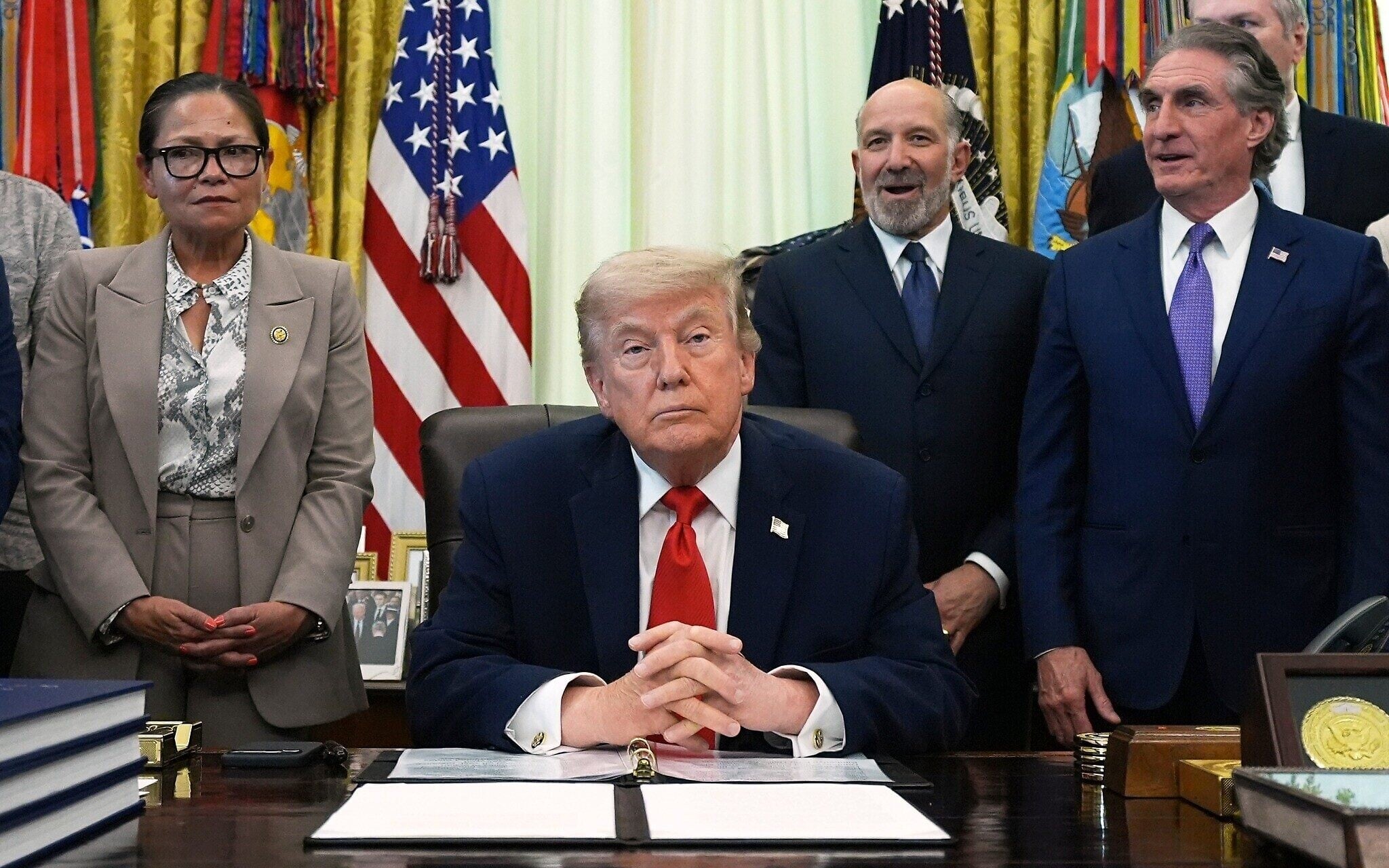
US President Donald Trump sits during an event in the Oval Office of the White House, June 11, 2026, in Washington. (AP/Jacquelyn Martin)
In just a few days, Donald Trump appeared to change direction again. He escalated rhetorically, vowing to hit Iran “very hard” and threatening to seize Kharg Island, Iran’s main oil terminal. Then he reversed course in extremis.
Two days earlier, Israel had already acted on its own. Despite Washington’s public call for restraint, the Israeli army struck the southern suburbs of Beirut. In response, Iran launched dozens of missiles toward Israel, marking the first direct exchanges since the April truce. Afterward, Donald Trump urged both sides to stop “immediately”. To many observers, this sequence looked like another episode of improvisation and contradiction. However, the real story is different: what appears as chaos may actually be the collision between an old American method and a new regional reality.
Trump’s diplomacy toward Iran is not simply erratic. It is coercive and transactional. He uses pressure, threats, and limited military force as extensions of the negotiation process. When Tehran slows down, Washington strikes. When an agreement seems within reach, Washington holds back. Violence is not necessarily the objective. It becomes a signal. It says the longer you wait, the higher the price.
This is a very Trumpian form of diplomacy. It is not based on long institutional processes or quiet strategic patience. It is based on rhythm, pressure, and bargaining. Every move is supposed to create leverage. Every threat is meant to force the other side back to the table. In that sense, there is a hidden logic behind the apparent disorder.
But this method was built for a world with two main players. Trump assumes Washington can control escalation—both its own and that of its Israeli ally. In other words, the United States not only negotiates with Iran but also manages Israel’s military tempo. This defined the old duopoly: Washington on one side, Tehran on the other, with Israel operating inside the American strategic frame.
That duopoly no longer exists.
Since October 7, 2023, Israel has entered a different strategic age, marked by a change in doctrine. Whereas previously Israel relied on American approval, it now resists doing so if it believes its security is directly threatened. This transition was evident during the Israeli strikes of June 7-8, which were not just a diplomatic incident but confirmed a deeper shift: Israel now claims greater autonomy of fire and is ready to act even when Washington asks for restraint.
This poses a problem for D. Trump. His diplomacy depends on a sequence: pressure, negotiation, threat, pause, and agreement. But Israel can now disrupt that. Washington can still veto extreme options. It can still halt some decisions. But it no longer controls timing. The US can limit actions after the fact but no longer sets the pace.
The second fracture is on the Iranian side. Tehran is not negotiating with a single, unified voice. The Iranian system is under pressure but also fragmented. As a result, some actors may want a deal to avoid economic collapse and military exhaustion, while others—especially within the security apparatus—may benefit from continued confrontation. For the Revolutionary Guards, permanent tension is not just a risk; it is also a source of power, strengthening their role inside the regime, justifying repression, and preserving their political and economic influence.
That means President Trump is not only negotiating with an adversary. He is negotiating with a system in which some forces may gain from failure. This is one of the great difficulties of coercive diplomacy: pressure can force a state to compromise, but it can also strengthen the most radical actors within it.
This is the main issue. D. Trump’s method remains readable. He wants to hit, threaten, bargain, extract concessions, and then conclude a deal. But this method was designed for a duel. It is now being applied to a triangle: Washington, Tehran, and Jerusalem. Each actor has its rhythm, its own domestic constraints, and its own definition of victory. Each can derail the other’s strategy.
The issue therefore goes far beyond the nuclear file. If the United States loses the ability to fully restrain its ally and to clearly force its adversary into a controlled agreement, then the broader American model of crisis management is weakened. For decades, Washington’s strength was demonstrated not only in military superiority but also in organizing escalations, defining the limits of confrontation, and deciding when a crisis should end.
That ability is now being tested.
China watches carefully from the Taiwan Strait. Gulf states observe from a distance, fearing both Iranian retaliation and American unpredictability. Europe, as usual, voices concern about escalation but seems slow to grasp the deeper shift: the issue is not only that the Middle East is escalating but also that Washington may no longer monopolize escalation.
Markets have accepted part of this dynamic. Higher oil prices don’t just reflect war fears. They reflect uncertainty about who controls the next move. Oil prices now measure strategic disorder.
Is President Trump ’s Iran diplomacy a failure? Too soon to say. Three tests remain: Can Washington get a stronger nuclear deal than the JCPOA? Can it avoid a ground war? Can the Strait of Hormuz stay open?
But one failure is clear. The US has lost control over its camp before restraining its adversary. Trump plays poker as if there’s only one opponent, but now another sits to his right—and that player knows some of his cards.
Related Topics
Related Posts