
TRAVEL FLASH TIPS ON THE TIMES OF ISRAEL
A voyage in India’s Rajasthan – Sacred Pushkar
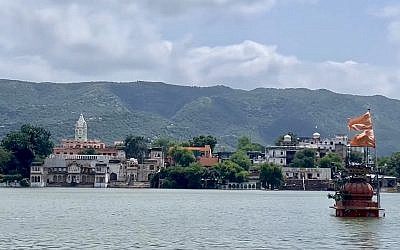
A mystical desert oasis where sacred waters shimmer beneath an endless sky, and the air hums with prayers, colors, and the quiet magic of timeless devotion. This is sacred Pushkar, 410 km south-west of the capital city New Delhi.
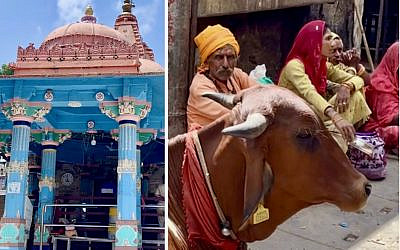
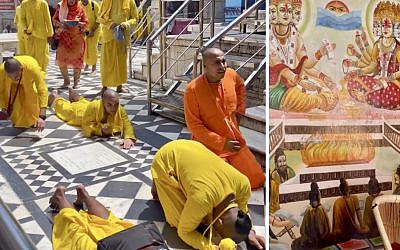
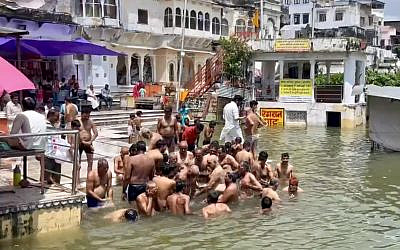
Our journey here was intriguing. First a pleasant highway drive from Jaipur. Then flooded dirt roads where cows happily swam beside us, until we arrived at this desert town. At first sight it felt like a mirage, shimmering with spirituality, color, and myth. Nestled around a sacred lake believed to have sprung from the petals of a lotus, Pushkar is one of India’s most important pilgrimage sites. Whitewashed temples rise along ghats where saffron-clad sadhus chant at dawn, and pilgrims immerse themselves in the holy waters.
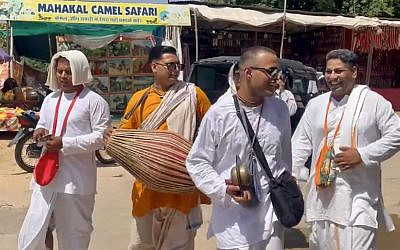
The streets are a swirl of contrasts: incense smoke and camel bells, colorful fabrics fluttering in bazaars, rooftop cafés serving both masala chai and falafel with menus in Hebrew. All of it blends into an atmosphere where the spiritual and the bohemian coexist.
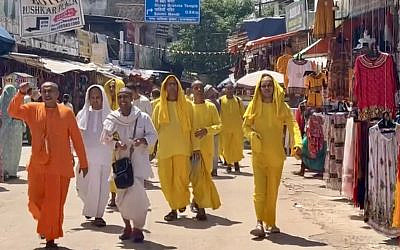
Yet this town is more than still waters and ancient myths. We walked through narrow lanes revealing doorways where every carving tells a story. Pushkar is a place where time slows down, inviting both seekers of faith and wanderers of the world – many dressed in orange and yellow gowns – to lose and perhaps to find themselves, in its golden glow.
Considered one of the most spiritual sites in India, this water basin here is among the most sacred in the country. Not far away stands the Brahma Temple, a unique and significant landmark in all of India, both spiritually and historically. Dedicated to Lord Brahma, the Hindu God of Creation, it is one of the very few temples in the world honoring him. The current structure dates mainly to the 14th century, though legends whisper that the original temple reaches back thousands of years. Visiting it is not just encountering architecture or religion. It is stepping into the very heart of Pushkar’s identity.
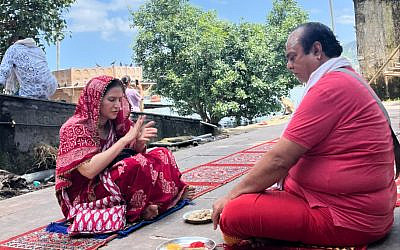
For hours we anchored ourselves in this town and were given the chance to encounter a profound side of Indian spirituality. At the lake, we joined hundreds cheerful pilgrims descending the ghats, cupping the holy water in their hands, offering flowers or coconuts, whispering prayers as they released them into the shimmering lake for blessings and purification. Most pilgrims bathe in Pushkar Lake before entering the temple, as the lake is considered Brahma’s own creation.
Pushkar attracts a rare mix of pilgrims, artists, yogis, and international backpackers. It is simultaneously a holy pilgrimage site, a cultural carnival, a desert escape, and a bohemian backpacker hub. What a combination exclusive to Pushkar.
Seeking pure tranquility and upscale accommodation not far from the sacred city, I was eager to experience an IHCL branded hotel. IHCL – The Indian Hotels Company Limited – is one of India’s most reputed hospitality groups. It is the parent company behind many well-known hotel brands, especially in the luxury and high-end space, with Taj being its marquee and most recognized name. As of the latest available data, IHCL operates around 381 hotels with an additional 134 under development.
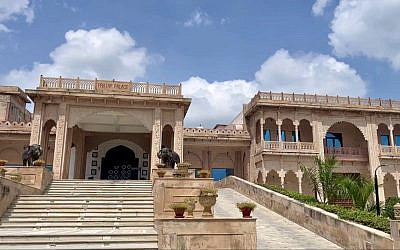
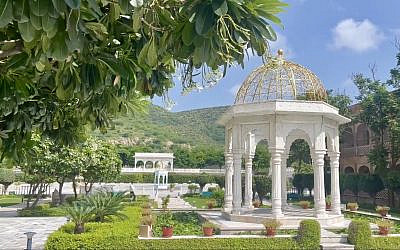
Not far from Pushkar, we resided at the impressive Pratap Mahal resort, part of IHCL SeleQtions boutique, one-of-a-kind hotels with distinctive narratives or heritage. Though officially an Ajmer property, its proximity to Pushkar makes it a convenient choice. Set at the edge of the Aravalli Hills, the resort blends Rajasthan’s regal architectural heritage with modern comfort.
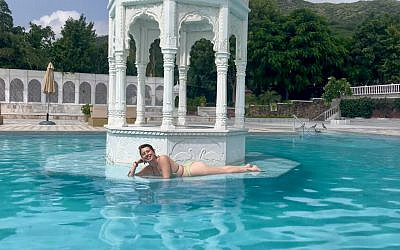
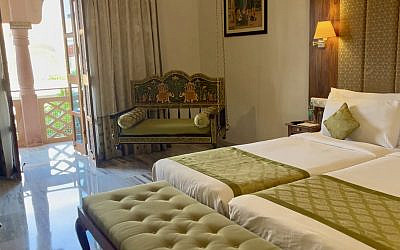
Our guestroom evoked the spirit of a royal haveli, with a sit-out balcony, elegant décor, and panoramic views of gardens, courtyards, and the hills beyond. A heritage-style pampering outdoor pool, fringed with loungers and framed by the scenic surroundings, offered calm and serenity far from the bustle we experienced in Pushkar. A joy to behold.
Curious about the brand, I inquired the gracious General Manager, Devendra Singh Ratnawat.“Every SeleQtions Hotel offers an experience that is unique to it, by the virtue of its heritage, its location or its design and service philosophy,” he explained. “These experiences, inspired by local people, cultures, traditions and celebrations, manifest themselves in the Hotel cuisine, rituals and activities.”
Indeed, the architecture here draws inspiration from traditional Rajasthani mansions, with elegantly designed rooms blending heritage ambiance and modern amenities. Courtyards, sit-out balconies, private terraces, marble accents, and garden views dominate the scenery. A perfect retreat with the Aravalli Hills forming a picturesque backdrop.
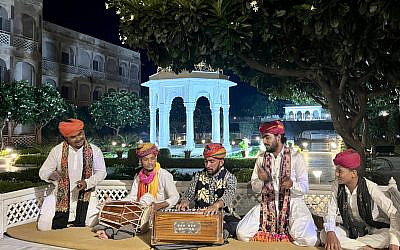
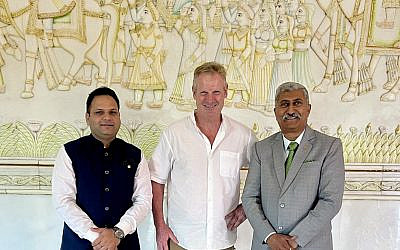
At dinner, graciously hosted by Amit Raghuwansh, one of the resort’s distinguished leaders, we delighted in a refined symphony of flavors, where Rajasthan’s royal cuisine met the contemporary tastes of India and the world. Pratap Mahal celebrates the culinary legacies of Marwar and Mughal heritage: Marwar – the ancient royal heart of Rajasthan, infuses its dishes with desert spices and the proud traditions of its warrior clans, while Mughal cuisine bears the opulent mark of the sultans’ courts – rich, aromatic, and regal in every sense. Slow-cooked curries and fragrant creations honoring the desert’s soul lingered in our memory, like the aftertaste of a story both timeless and deeply human.
Pratap Mahal provided us the delightful feeling of being in the middle of nowhere. After the vibrant energy of Pushkar, the resort embraced us with an abode of peace and tranquility. A perfect combination in a bustling country like India.
Related Topics
Related Posts