
Accountability at Last: Confronting Iran at Its Core
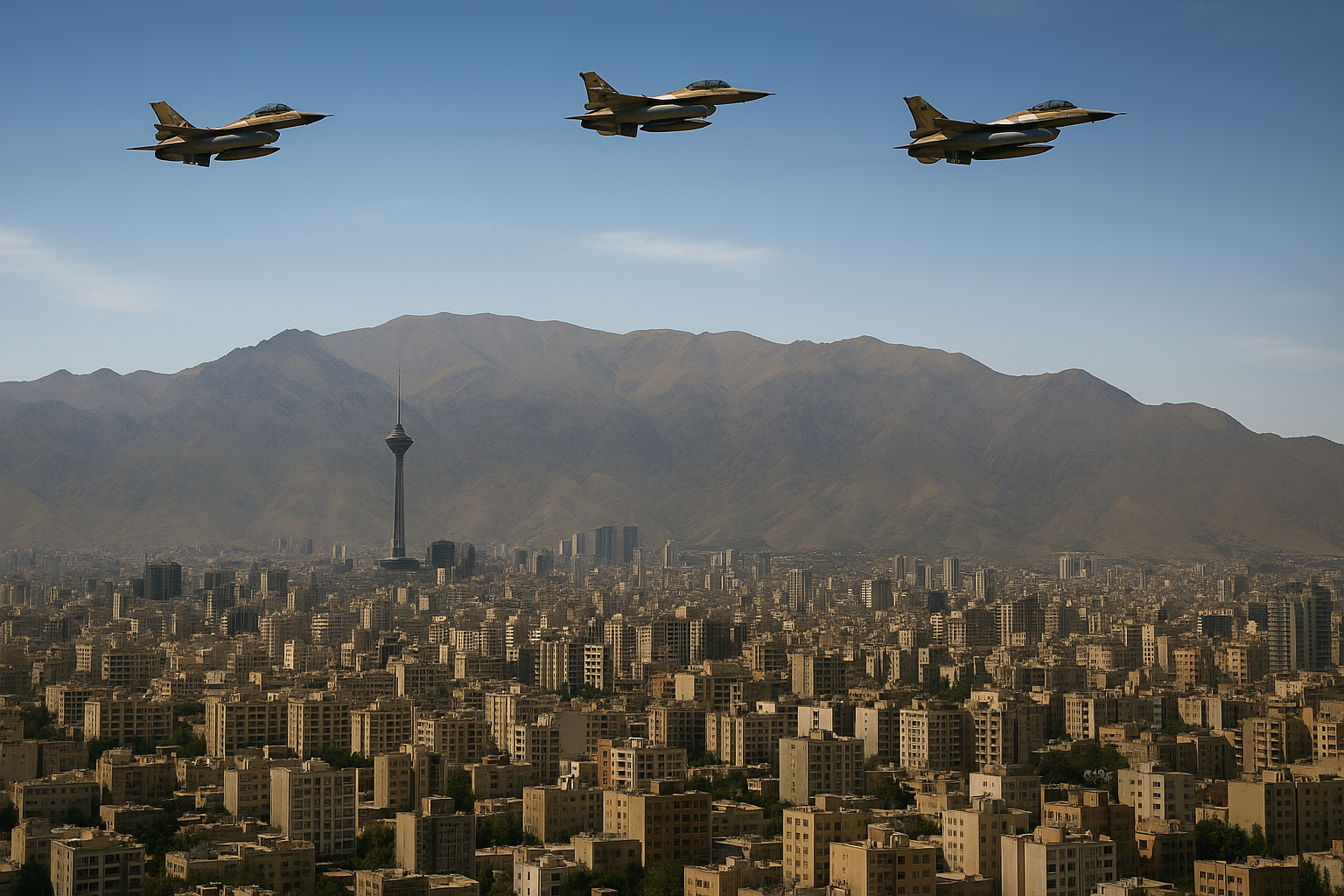
For decades, the West treated Iran like a misunderstood regime, a country that just threatens, but can be contained, only if they negotiate one more deal, we will add more sanctions, and eventually they will come to their senses. The scope is that Iran has always been reacting to something, U.S. sanctions, Israeli pressure, internal unrest, regional affairs. That’s the wrong frame. Iran didn’t want to be left alone. It wanted to export its Islamic revolution. It openly said so. From day one, Iran sought to extend its ideology, through militias, preaching in mosques, missiles, regional unrest and terror all over the world. And when a regime chants “Death to Israel, Death to America, Death to the West”, maybe we should take them at their word.
Iran didn’t wake up one day and decide to hate the West. It was built on that hatred. This regime was founded on religious fundamentalism that views anything outside its interpretation of Islam as a threat, and the West, with its values, modernism and freedoms, is the biggest threat. “The Great Satan” and “Little Satan” aren’t nicknames, they are policy. That’s how you get decades of destruction, states hollowing, hate, antisemitism, Holocaust denial, and open threats to wipe Israel, America and the West off the map. Not as a bargaining chip. As a goal. This isn’t about strategy; it’s about the regime’s identity.
Iran doesn’t stumble into failed states. It seeks them out. Wherever there’s a vacuum: Lebanon, Syria, Iraq, Yemen, Iran sends weapons, money, and ideology. It trains militias not just to defend Shia communities, but to serve its interests. These aren’t just proxies; they’re extensions of Iran power and revolution. And the result? Collapsed states, civilian casualties, and endless wars that Iran controls just enough to never resolve. Iran doesn’t offer a helping hand to these countries, instead, it keeps them destabilized enough to maintain control, exploiting the local population to advance the objectives of the Islamic revolution, encircle Israel, and ultimately the plan is to destroy Israel and the West itself.
Some people get it wrong, Iran doesn’t just threaten Israel or the West, it threatens the Sunni Arab world as well. Tehran’s goal is hegemony, not coexistence. In all over the Arab world, from Saudi Arabia, Lebanon, Yemen to Iraq, Iran stokes different conflicts to weaken Sunni countries, so it can expend its revolution. For this reason, moderate Muslim Arab countries in the Middle East have supported Israel against Iran, not out of affection for Israel, but because they share a strategic understanding of the true threat Iran poses and recognize a common enemy. Iran seeks to subjugate these Arab countries and force them to submit to its Islamic Revolution. Iran has already succeeded in Lebanon, Syria, and Yemen, and has targeted other countries, such as Jordan and Saudi Arabia.
For decades, Iran played the world with its nuclear program, always close enough to scare, never close enough to strike. It’s not about deterrence, it’s about leverage. “Hold me back, or I build the bomb”, that’s been the game. And the regime has made its intentions clear: once it gets the bomb, Israel is gone. And after Israel, what would stop them from targeting Europe and America? This isn’t speculation, it’s the regime’s stated logic. Iran’s claims that its nuclear ambitions are solely for energy purposes are questionable, given its vast reserves of crude oil and natural gas. A nation with such abundant energy resources has little justification for a civilian nuclear program that involves enrichment levels approaching those required for weapons production.
We saw again and again, how Iran waged its battles on foreign soil, keeping direct conflict far from its own borders. But this war changed everything. Iran didn’t just help plan and finance October 7, it activated every front: Hezbollah from the north, the Houthis from the Red Sea, and chaos from every direction. In response, Israel systematically dismantled much of Hezbollah’s operational capabilities in Lebanon, significantly weakened Hamas’s infrastructure in Gaza, and struck Houthi targets in Yemen. By the time Iran needed its primary proxy, Hezbollah, to act as its “shooting gun,” it was already crippled and unable to deliver the decisive blow Tehran had hoped for. For the first time, Israel struck not only the proxies but also the source, Tehran itself, sending a clear message: if you start the fire, you’re not immune to the heat.
Let’s not forget the important path of diplomacy. The U.S. had given Iran a 60-day window to negotiate in good faith, but time and again, Iran refused to alter its stance or show any willingness to compromise. On day 61, with diplomacy exhausted and Iran continuing its pattern of deception and delay, Israel acted. President Trump has he stated before, had always preferred a diplomatic solution, but when it became evident that negotiations were futile and Iran was determined to press forward with its nuclear ambitions, decisive action was the only option left. When Iran’s foreign minister met with his counterparts from Germany, the UK, and France in Geneva, it was a last-ditch effort, a negotiation held under the shadow of Israel’s ongoing military campaign, as the West desperately tried to bring Iran to its senses. This was the final attempt to avert escalation, and when it failed, the consequences were immediate, The U.S. had to intervene.
The U.S. strike on Iran’s nuclear sites wasn’t just military. it was political. For the first time, Washington admitted by bombing Iran’s nuclear facilities, what many already knew: Iran isn’t just a regional problem. It’s a regime committed to destroying Israel, the U.S. and the West, destabilizing the Middle East, and thereby threatening global stability and American interests. President Trump didn’t hesitate. With the IDF having already paved the way in the week before, beginning with a remarkable operation that eliminated all senior generals and others, The U.S. only needed to deliver the final blow to Iran’s nuclear ambitions, and as it seems by now, it was a successful operation.
Only time will tell whether this twelve-day war has halted Iran’s nuclear program, curbed their ambitions to acquire nuclear capabilities, or ultimately changed very little. Our hope is that Iran will recognize the need to cease its pursuit and redirect the hundreds of billions invested in its nuclear program and proxies toward improving the lives of its own people. This conflict served as a demonstration of Western resolve, intended to persuade Iran to reconsider its course of action.
In conclusion, the actions and ambitions of Iran have demonstrated that it is not merely a regional actor seeking security, but a regime driven by an expansionist and destabilizing ideology. Its pursuit of nuclear capabilities, support for proxy conflicts, and open hostility toward its neighbors and the West have made clear that containment and appeasement are not viable strategies. The international community must recognize the true nature of the regime in Tehran and respond with unity, resolve, and a commitment to preventing further escalation. Only by confronting the regime’s threats directly can lasting stability and security be achieved for the region and beyond.