
Intrepid Explorer
Addressing Post Trauma Reactions
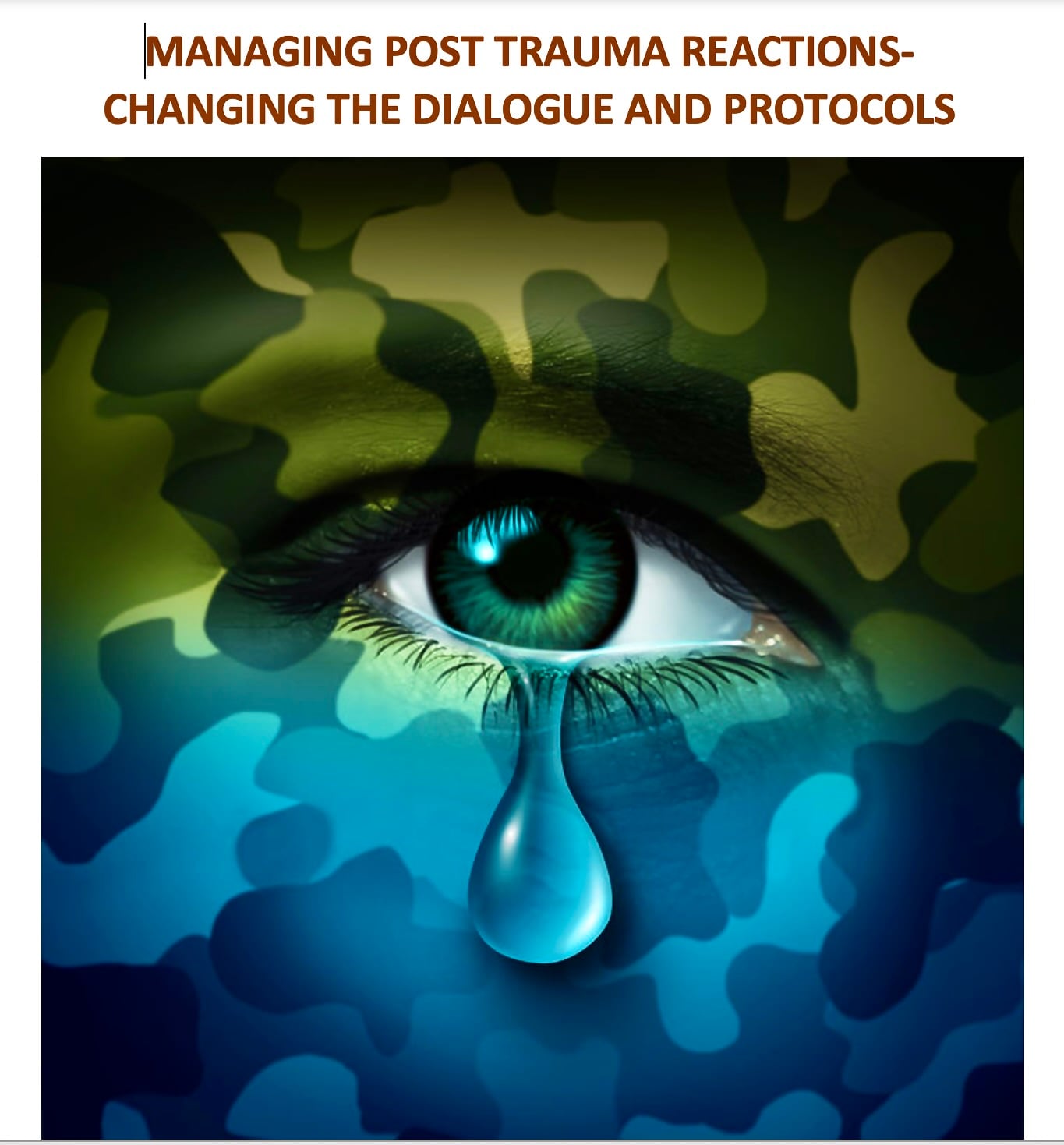
Addressing Post Trauma Reactions
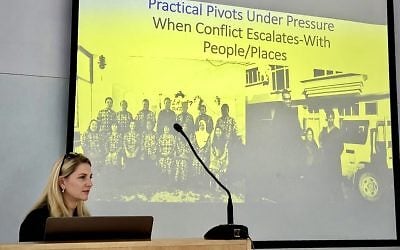
As an invited guest lecturer for Hebrew University Jerusalem this past week, I was asked to address post trauma strategies as part of my talks since it has been a specialty in my Traditional Chinese Medicine (TCM) practice over many years working in conflict zones.
As in many societies and even entire countries, acknowledging and speaking about trauma and its effects on an individual, a family, a work environment, a community and a nation-is still taboo. The spoken and unspoken rule is to be quiet about the psychological effects of trauma or even completely conceal the suffering trauma may and will cause.
Since the unit of English as a Foreign Language graciously hosted me for my time on three campuses of Hebrew University Jerusalem, and psycholinguistics is part of what I consider important in therapeutics and diagnostics both in my education trainings and in TCM; I offered a change in the labels which are used to describe the symptoms and reactions to trauma.
The language we employ to try and accurately express the dimensions of suffering.
Most people and practitioners will state that they have (or the patient has) “PTSD” which stands for post traumatic stress disorder. But is that truly accurate or even helpful as a description of what presents after experiencing or witnessing traumatic events?
“Dis” is a prefix which originates from Roman mythology, Dis Pater (Hades in Greek myths). Dis was the god of the underworld. Dis means ‘against’, as a prefix, so the word/term ‘disorder’ can simply be understood as being- against the order of ‘normal health’ and natural responses/reactions.
However, the somatic and psychic responses of human beings to violence, horrific events, abuse, sudden life-threatening natural disasters, torture, murder, rape, prolonged deprivation, imprisonment; are essential features of our human health signaling systems. They are embedded indicators which dispatch warnings to our physical, emotional and even spiritual essence to be uniquely alert to the changes that have arisen due to trauma.
Diagnosing a patient with language which can sound like a judgement to her or him; for a seemingly long term, immutable health disturbance can be devastating to hear. This can adversely affect patients and their families, as well as health practitioners mindsets in the treatment environment.
Words used therapeutically by psychiatrists, psychologists, nurses, care takers, healers can make considerable difference between short-and long-term recovery.
We know from neuroscience imaging research how important encouraging words/text/ imagery and stimulation are to growth, repair and resilience in human beings and in animals.
Therefore, promoting a shift in perspective and diagnostic label replacement from “disorder” (acute stress disorder, post-traumatic stress disorder) to a “response” or “reaction” can be the first step for all involved in post trauma management and care.
The newer name “Post Trauma Reactions” or PTR instead of PTSD can pivot how this condition is perceived on an individual and collective level.
Knowing the usual or classic reactions (PTR) to watch and listen for, as an educator in the classroom, in work situations, in public, or within a family, is important in the overall healing journey. I spoke about these reactions, observed over centuries by different cultures and medical schools of thought. In both eastern and western medicine.
Many of the participants in my workshops could identify these reactions in themselves and others. In Israel, and other countries dealing with decades/generations of war and trauma, the entire country is affected. Whether they may realize this or not.
Fortunately, in 2026 there are more therapeutic possibilities for treatment than ever before. Not just pharmaceuticals or talking therapy, but also plant and animal “medicines” which have psychedelic properties proven to be effective in alleviating symptoms of PTR. I can attest personally to this having undergone treatment in Mexico in 2022, with an American organization called Veterans Exploring Treatment Solutions (VETS). I am still part of this group.
“In 2020, the results of a retrospective study of ibogaine treatment for trauma-related psychological and cognitive impairment in SOF (Special Operations Forces) veterans was published in the peer-reviewed journal, Chronic Stress.
The research demonstrated significant reductions in suicidal ideation, cognitive impairment, depression, anxiety, and symptoms of PTSD. Conducted by Dr. Alan Davis (Ohio State University and Johns Hopkins University), the study was part of the grass roots effort that launched VETS in 2019.
VETS collaborated with Dr. Nolan Williams’ (Stanford Brain Stimulation Lab) observational and neuroimaging study, which investigated the safety of ibogaine-assisted therapy in veterans with head trauma, combat, or blast exposure. The study was published in January 2024 in the prestigious peer-reviewed journal Nature Medicine.”
At present, there are a number of states in America which are funding and supporting research into these “medicines” and promoting the legal, medical use for individuals-not only military veterans but for those affected in the wider civilian population.
Malta is at present, the only European country where the use of Ibogaine and Bufotenin, known as dimethyl serotonin or as 5-hydroxy-N,N-dimethyltryptamine (5-HO-DMT), a serotonergic psychedelic of the tryptamine family, is able to be legally administered to patients. Ambio Life Sciences founded this clinic in Malta and some of the same people from VETS monitor the treatments and the results.
There is often fear associated with dealing with a person or group of people who have PTR. Rather than sort through what is happening visibly or audibly with the person affected or within themselves, people will avoid, ignore, diminish or even dismiss this person and these reactions. They shut their eyes, ears, hearts to the “Rhinoceros in the Room”. I say rhinoceros and not elephant, since the aggressive nature and the prominent horn on a rhinoceros create an image that is more menacing as post trauma can be – at least as it was for me for a time.
All ages can be affected with PTR. Recognizing these reactions in oneself, one’s family members, in the classroom, in work places with colleagues, and realizing there are specific physical signs to identify PTR, can provide relief to those who are unsure how to start navigating through them.
There are effective strategies for managing post trauma reactions on an individual level. Knowing this fact can lessen the fear and stigma associated with these health issues.
There are choices for treatment that can suit individual cases and life situations. Those afflicted can reach out and work with a professional in the healing arts and/or a spiritual advisor. Making the decision to proceed, to address any post trauma reactions, is one of the initial ways of restoring life with equanimity and shalom.
You can read more about managing post trauma reactions in my article published online by SciTechnol.com in the Journal of Traumatic Stress Disorders and Treatment-Volume 6, Issue 3.
Related Topics