After October 7: Children and Jewish Mourning
In Elul 5776 (2016), I was ordained at Beit Morasha as a Morat Halakha. The rabbinical faculty asked our group to articulate the directions we envisioned for the future. I suggested that welcoming women’s voices (in practices, customs, and rituals) into Jewish life had brought awareness to other overlooked areas – particularly children.
I argued that we must turn our attention toward children. Are we truly seeing children with the clarity they deserve? Are we actively integrating tradition with the insights of child psychology?
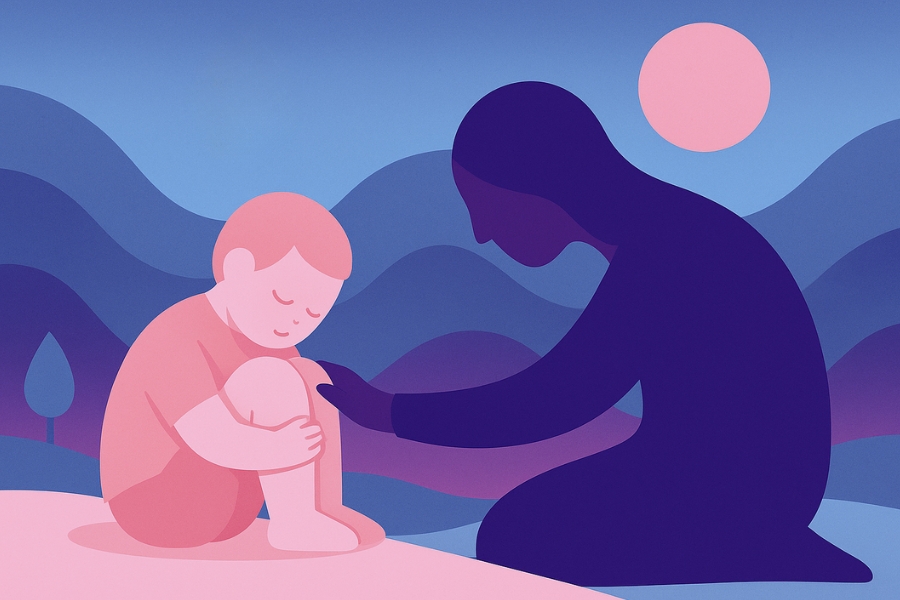
Since October 7th, this question has gained tragic urgency with hundreds of children joining the circle of bereavement. Jewish law exempts children under bar/bat mitzvah from commandments, thus ‘ein avelut l’katan’ – there is no (full) mourning obligation for a minor. Yet their grief is real and profound.
In the following essay, I explore how we can better care for orphaned children, extending the Torah’s profound sensitivity through new rituals that honor their grief.
The Doubled Call For Justice
Justice is established as a prominent principle at the very opening of this week’s Torah portion, Shoftim. The text first speaks of a “righteous judgment” (mishpat tzedek – Devarim 16:18), and then culminates in the well-known verse: “Justice, justice shall you pursue” (16:20).
This doubling of language is part of a larger biblical pattern of repetition, which we can see in the seven Haftarot (prophetic readings) of consolation read at this time of year.
In my previous post on parshat Eikev, I wrote about the mirror-image dialectic between wholeness and brokenness, life and death, blessing and curse, emerging from the Torah portions and haftarot between the Tisha B’Av and Rosh Hashanah. At this time of year, we exist within dual modes of justice and mercy, awe and love. These themes continue in parashat Shoftim. Doubling often calls our attention to the visible and the hidden: in this case, to what appears to be the path of justice and halakhic practice, yet may contain the possibility that our sight is partial, obscured by an unrecognized blindness.
Rabbi Mordechai Yosef Leiner, the Mei HaShiloach of Izbica, maps the six opening warnings of Parshat Shoftim to six directions. Though his work contains antinomian elements – soft or radical – I adopt only his directional metaphor: we typically look ‘forward’ along halakha’s path. The Torah commands ‘do not turn right or left’ לֹא תָסוּר מִן הַדָּבָר אֲשֶׁר יַגִּידוּ לְךָ יָמִין וּשְׂמֹאל (Devarim 17:11) – therefore I propose not turning from halakha but expanding our vision in all directions, adding voluntary practices. This expanded vision reveals where grieving children need support beyond obligation.
Thus, the doubled imperative “Justice, justice shall you pursue” summons us to recognize what has not yet been granted its rightful place within our halakhic vision.
Dealing Sensitively With the Complexities of Orphanhood
The poet and actor Nir Strauss, who lost his mother at eleven and his father at fourteen, gives voice in his poem “A Veteran Orphan’s Kaddish” to his resistance to consolation in the wake of his mother’s death, when he was required to recite the Kaddish. His poem is a reshaping of the words of the Kaddish – a text embodying acceptance of mortality as part of the cycle of life and world order, which in Strauss’s poem is pivoted to express defiance against acceptance of his mother’s death.
The poem’s title and lines convey to us an image of someone with a long-standing relationship to this text, who has acquired it as his own and now engages it in a polemic, rewriting the liturgical refrain into personal protest:
I will be magnified and sanctified through many years
in a world she fashioned for me by her will
she has gone to her eternal place
and I am left an orphan
…
From all the blessings, consolations, and praises
uttered by every soul
I make peace with the child
who feared to recite Kaddish
lest the words accept your death
lest they say Amen
In these lines, the Kaddish transforms from communal acceptance into intimate resistance. It expresses the complexity of bereavement at a young age, when tools for processing grief are completely lacking, and well-meaning society may impose messages that run counter to the child’s wishes.
October 7th left countless orphans: children who lost parents, siblings, entire families. The events of that brutal day and its aftermath stretched traditional mourning practices beyond recognition, leading to prolonged aninut (limbo state before a funeral) while awaiting body identification, multiple funerals within single households, shiva upon shiva.
And there, heartbreakingly scattered amongst all of these, are young children weeping or standing in confused silence at funerals and memorial ceremonies. These children require responses attuned to their specific needs, yet halakha offers little guidance for pre-bar/bat mitzvah mourners.
Jewish tradition emphasizes protecting orphans’ rights, as in Proverbs 23:10: ‘Do not encroach on the fields of the fatherless.’ Yet halakhic mourning laws apply only to those who have reached bar/bat mitzvah age. What about the hundreds of Israeli children who now fall into this pre-bar/bat mitzvah category?
We’ve witnessed children ritually tearing their clothes at burials, stumbling over the unfamiliar Aramaic words of Kaddish with childlike pronunciation, clinging to fresh graves. These children need us to meet them at eye level – not with paternalism or childishness, but with genuine human presence. The balance between acknowledging mourning and encouraging vitality requires daily attentiveness.
Psychologists emphasize that children need to grieve, particularly after sudden trauma. In the absence of halakhic obligation, we can create a voluntary framework addressing young children’s emotional needs while incorporating halakhic tradition where possible. We must examine with children themselves what rituals they need to process grief. We must balance acknowledgment of mourning with encouragement of life.
Just as Jewish feminism created voluntary practices in a context where halakhic obligation was absent, so too we must create spaces for grieving children. These children need rituals that acknowledge their loss while avoiding both the denial of going to ‘fun camps’, on the one hand, and the burden of full mourning obligations on the other.
Proposals for Rituals for Grieving Children
October 7th brought urgent attention to childhood bereavement in Israel. While professionals provide psychological support, the Jewish cultural language for children’s grief – whether from terror and war bereavement or civilian loss – remains underdeveloped. We need spaces recognizing all bereaved children not as ‘exempt’ from mourning obligations, but as individuals on a lifelong journey with loss.
[Note that references to God in the following should align with the worldview of the specific child]
A Child Who Did Not Attend the Funeral: Create an alternative ceremony in a safe space with photos and beloved objects. The child creates something (a drawing, letter) to later place at the grave, then shares if they wish and receives embracing support. This parallel ritual honors both the child’s need to mourn and their developmental limits.
Initiating a Child into Kaddish: Some children say Kaddish themselves, others with an adult, still others refrain entirely. This ritual prepares any child for this act by providing tutoring and support.
The gathering begins with an adult saying: “We’re here to support [child’s name] as they begin saying Kaddish for [parent’s name].”
Then: “Kaddish is how we remember those we love. When we say these words, we show how much [parent’s name] meant to us.”
Teach the child the Aramaic text, demonstrating when to bow and step back, repeating difficult words together.
The community promises: “Whenever you say Kaddish, we stand with you.”
Finally, the child recites Kaddish surrounded by the community responding. Someone closes: “Each time you say these words, remember we’re all here with you. [Parent’s name] would be very proud.”
First Cemetery Visit: Arrive together as a group, creating layers of meaning through stones, shared memories, and readings from Psalm 119 or other text. The child brings something personal to bridge the physical gap. Transition gently back to life through a picnic or visiting the deceased’s favorite place.
Postscript
The insights presented in this article are drawn from a comprehensive project I’m undertaking on childhood bereavement, which includes both personal reflections and a forthcoming anthology co-edited with colleagues from Rabbanut Israelit Beit Midrash and the umbrella organization Rashut Harabim.
My attention to these overlooked spaces comes from both scholarly commitment and personal knowledge. I began writing on childhood and orphanhood in Judaism in the summer of 5783 (2023). I hoped to be able to reach the fortieth yahrzeit of my late mother in Elul of 5784 – a “round” number milestone, at twice the number of years she herself had lived orphaned from her own mother – with words of my own about the experience of orphaned children, from within a Jewish halakhic and cultural lens. October 7th transformed this personal project into urgent communal need. I returned to my work with the faces of countless new orphans before my eyes: children searching for parents suddenly taken from them. In some cases, both parents and additional family members.
Our path forward requires radical empathy and creative fidelity to tradition. When young orphans tremble, the entire community must tremble alongside them, holding them steady through grief’s long journey. By engaging with these overlooked dimensions, we cultivate empathy for other neglected areas as well – an empathy broad enough to encompass the universal human confrontation with death and loss.
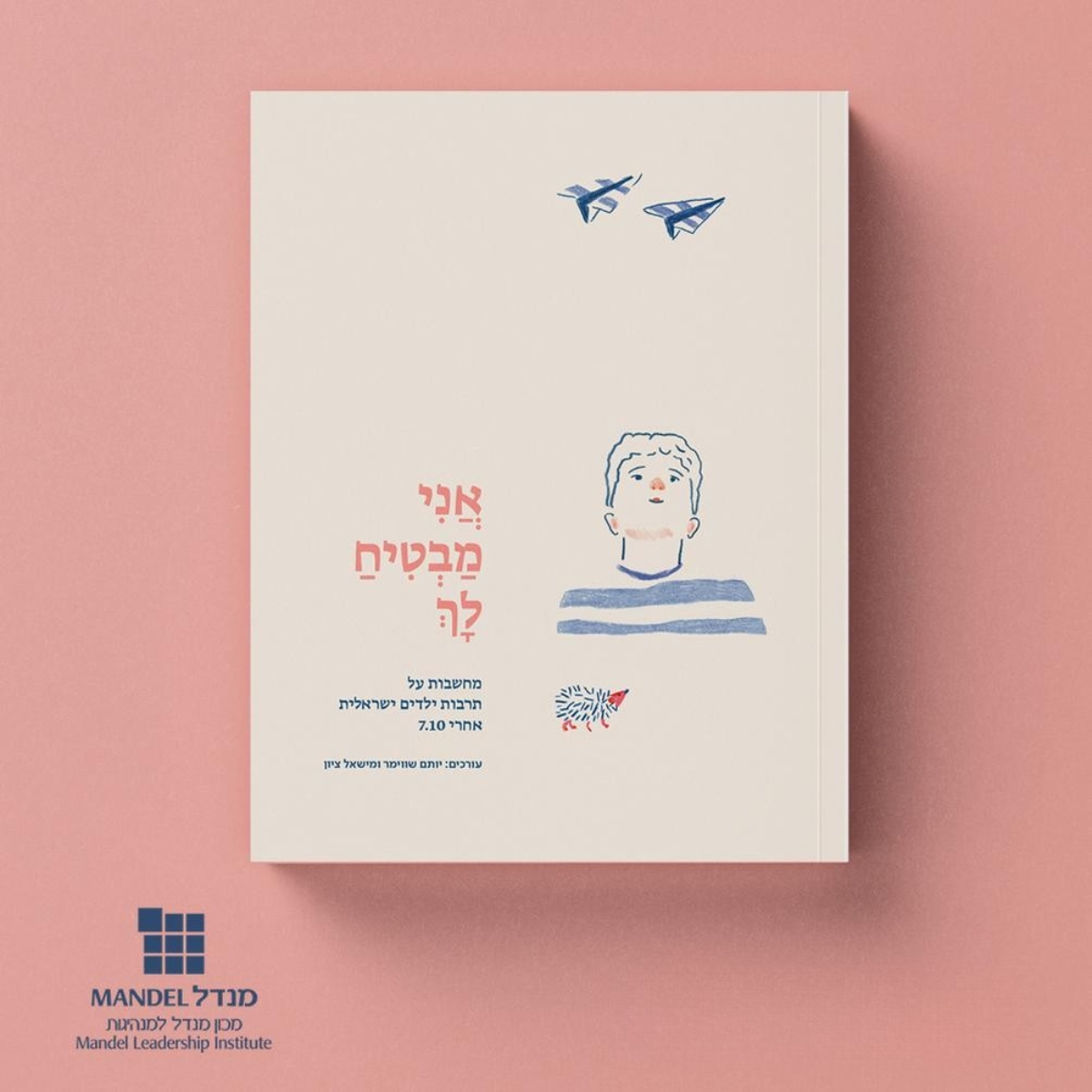
*This essay is adapted from a Hebrew article originally published in Ani Mavtiah Lakh: Mahshavot al Tarbut Yeladim Yisraelit Aharei 7.10 (I Promise You: Writing, Culture and Israeli Childhood after Oct 7), edited by Yotam Schwimmer and Mishael Zion, Mandel Leadership Institute, 2024. A fuller English version is forthcoming.
I wish to thank the Va’tichtov writing fellowship of Yeshivat Maharat which enabled me to dedicate time to writing on this topic.
___________________
I dedicate the publication of these words to the soul of my mother, Devorah (Weitz) Segal, of blessed memory, whose yahrzeit fell this week on Elul 3, forty-one years since her passing.
___________________