Strategic Intelligence Consultant & Insights Advisor
After October 7, ‘Context’ Became a Weapon
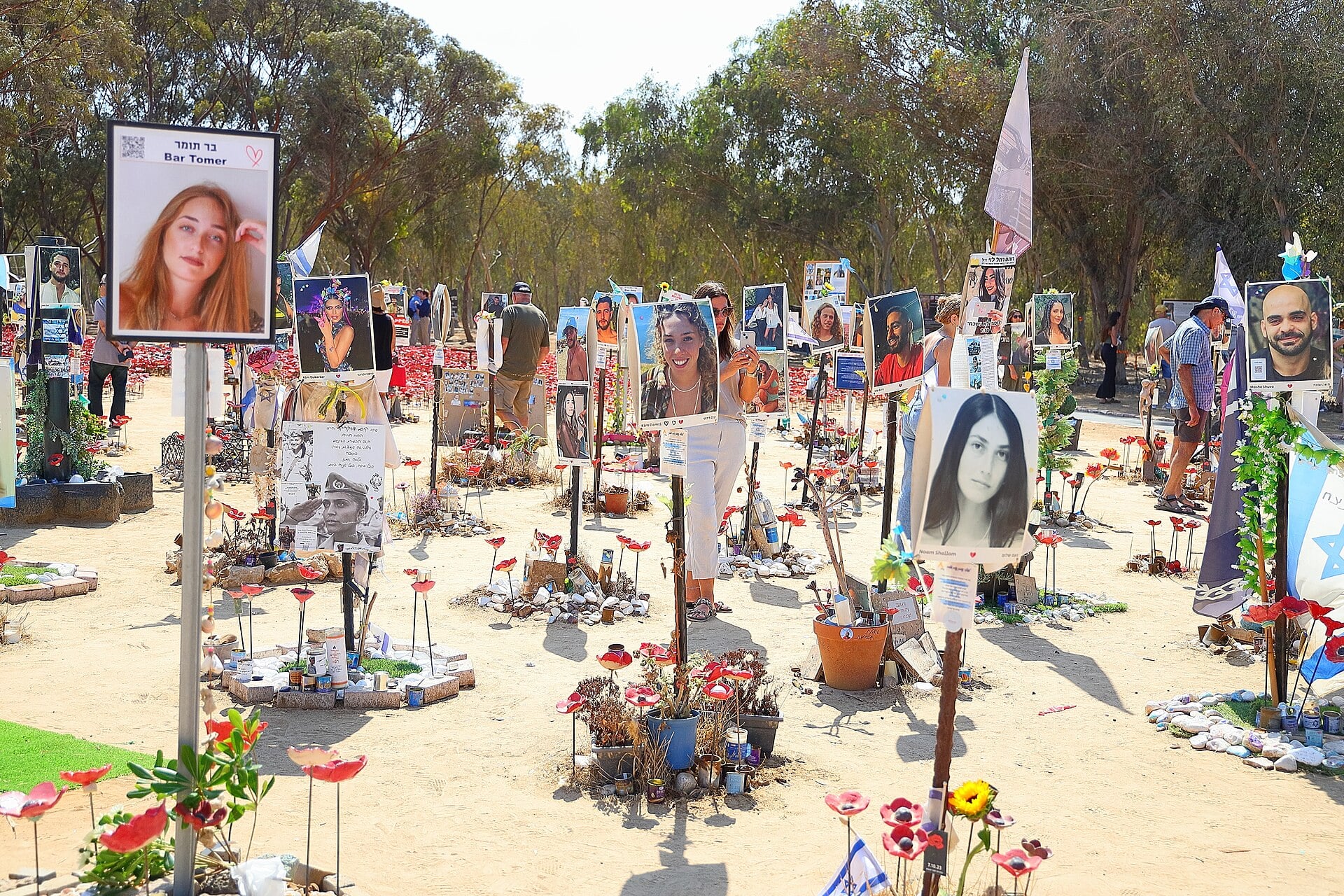
Israelis killed during Re'im music festival massacre (source Wikimedia)
Good context clarifies responsibility. Bad context dissolves it. After the massacre, too many reached for the second — not to understand what had happened, but to avoid saying it plainly.
“Context” is usually a sign of seriousness. Historians ask for it before they make judgments. Diplomats ask for it before they prescribe solutions. Journalists ask for it because the world is rarely improved by slogans, and almost never understood by them. Jews, perhaps more than most peoples, know the danger of tearing events out of history and pretending that memory does not matter.
But after October 7, the word changed.
It did not become false. It became corrupted. In too many mouths, context stopped being a tool of understanding and became a strategy of evasion. It was no longer what one reached for after first recognizing what had happened. It became the thing one reached for instead.
What must be named first
And what happened must still be named first. On October 7, 2023, Hamas-led terrorists crossed into southern Israel and murdered around 1,200 people. They abducted 251 hostages into Gaza. They targeted homes, roads, kibbutzim, a music festival — the elderly, children, families, and young people who had gone out to dance. However one writes about the wider conflict, this cannot be absorbed into the anaesthetic language of a “cycle of violence.” A cycle suggests inevitability. October 7 was not inevitable. It was chosen.
Explaining history, or explaining away murder
This is where the argument matters. The problem was never context itself. History matters. Palestinian suffering matters. Failed diplomacy matters. Gaza matters. The future of Palestinians matters. But so do Jewish history, Israeli vulnerability, Hamas indoctrination, genocidal antisemitism, regional rejectionism, and the repeated refusal to accept that the Jewish people have the right to sovereignty, security and self-defense in their ancestral homeland.
Serious people should be able to discuss occupation, settlements, diplomacy, Gaza, Palestinian despair and Israeli security policy. But serious people must also be able to draw a moral line. After October 7, the first duty was not to produce a seminar on root causes. It was to name the atrocity. Jews were hunted, raped, tortured, kidnapped and murdered. Israeli families were burned alive. Children were butchered. Hostages were dragged into Gaza. No honest discussion of context can begin by evading those facts.
But there is a difference between explaining history and explaining away murder.
Good context clarifies responsibility. Bad context dissolves it. Good context deepens moral judgment. Bad context changes the subject. Good context enlarges our view of human suffering. Bad context tells the victims of one atrocity that their suffering is not permitted to stand on its own, even for a moment, before it is folded into someone else’s theory.
That is what happened after October 7.
Too often, institutions that ought first to have mourned instead rushed to interpret. Some commentators could not simply say that a massacre had taken place; they had to reposition it immediately inside a familiar explanatory framework. Some universities moved faster to discuss structural grievance than to confront the fact that Jews had just been butchered and dragged into tunnels. Some public figures treated Israeli grief as an obstacle to proper politics, as though Jewish mourning were itself a kind of reactionary overreach. A massacre became a seminar prompt. The dead were made to wait for our geopolitical footnotes before they could be mourned.
Of course context can be offered in good faith. Of course one can say that Palestinians have suffered terribly and still say that Hamas committed monstrous crimes. Of course one can grieve for Gaza and still recognize the depravity of what entered Israel that morning. But the problem after October 7 was that “context” was often not serving truth. It was serving moral discomfort. It allowed people to speak around the massacre before they had fully spoken about it.
When Jewish suffering became inconvenient
This mattered especially because Jewish suffering had become, in some circles, ideologically inconvenient.
If Jews could still be victims, then the fashionable moral binary of oppressor and oppressed became unstable. If Israelis could be civilians, if festivalgoers could be victims, if grandparents in border communities could be victims, if abducted children could be victims, then a very tidy political script suddenly looked too small for the event in front of it. Hamas could no longer be imagined merely as an expression of resistance. It had to be seen as a perpetrator.
For some, that was intolerable. So context was summoned to restore the preferred story.
That is why the language so often felt not merely inadequate, but strangely resistant to recognition. One heard calls for proportionality before the dead had names. One heard lectures about root causes before the hostages had medicine. One heard assurances that violence must be understood in broader terms — as though the moral danger lay not in what Hamas had done, but in the possibility that one might judge it too quickly and too clearly.
But moral clarity is not the enemy of intelligence. It is the beginning of it.
Hamas made choices
Hamas is not a weather system. It is not a flash flood produced automatically by conditions. It is an organization of men who made choices. They chose to cross a border. They chose to kill civilians. They chose to film and celebrate the slaughter. They chose to abduct hostages. They chose to drag living and dead bodies into Gaza. They chose, once again, a politics in which Palestinian suffering could be spent as a strategic asset. To deny Hamas agency is not compassion. It is contempt for moral responsibility.
The hostages are the argument
And the hostages were the clearest test of all. The last living hostages came home only in October 2025; the remains of the last were returned in January 2026. For more than two years, they were the measure of whether an argument was serious.
The hostages were never a complication in the argument. They were the argument. Any moral framework that cannot keep abducted civilians at the centre of its own analysis has already failed. If one’s political language could say “ceasefire” more readily than “release the hostages,” something was wrong. If one’s conception of justice can accommodate every abstraction except the faces of kidnapped people, then that conception is not serious enough for this moment. A genuine contextual analysis should make hostage-taking look even more horrifying, not less. It should sharpen the obscenity of it.
That is also why so many Jews, in Israel and beyond, experienced the post-October 7 conversation not simply as disagreement, but as abandonment. It was not merely that people criticized Israel. Israel has always been criticized, often rightly. It was that in too many places the first instinct was not recognition but qualification. Not solidarity but reframing. Not “this is evil” but “yes, but.”
Why this is part of Zionism
The Jewish memory of that pattern is old. Others can always find reasons why Jewish suffering is unfortunate, complicated, regrettable, and somehow not quite simple enough to command immediate seriousness. This, too, is part of the history of Zionism.
Zionism was never only about flags, borders or even refuge in the narrow sense. It was also the Jewish refusal to let Jewish survival depend entirely on the conscience of others. It was the conclusion, drawn painfully over generations, that sympathy is too fragile a substitute for sovereignty. That pity arrives late. That understanding is conditional. That even after Jews are murdered, someone will still ask whether the timing is appropriate for them to be grieved without qualification.
After October 7, that insight did not become more theoretical. It became more brutal.
Context must serve truth
None of this requires indifference to Palestinian suffering. On the contrary, moral seriousness demands that we look at Gaza without flinching. A people can be devastated, displaced and hungry, and that devastation should trouble any decent conscience. But compassion for Palestinians does not require the laundering of Hamas. Sympathy for Gaza does not require the blurring of October 7. There is no honor in refusing to distinguish between the suffering of civilians and the choices of those who rule or terrorize them.
Context is still necessary. It always will be. But context must serve truth, not camouflage. It must help us see more, not excuse more. It must broaden sympathy without erasing agency. It must never become a way of telling the victims of a massacre that their dead are not yet allowed to speak in the first person.
After October 7, the first question was not whether one understood complexity. The first question was whether one could still recognize a massacre, the one that happened on October 7th.
Related Topics
Related Posts