
AI or Barbarism: An Answer to Bill Gates, with Harari in Mind
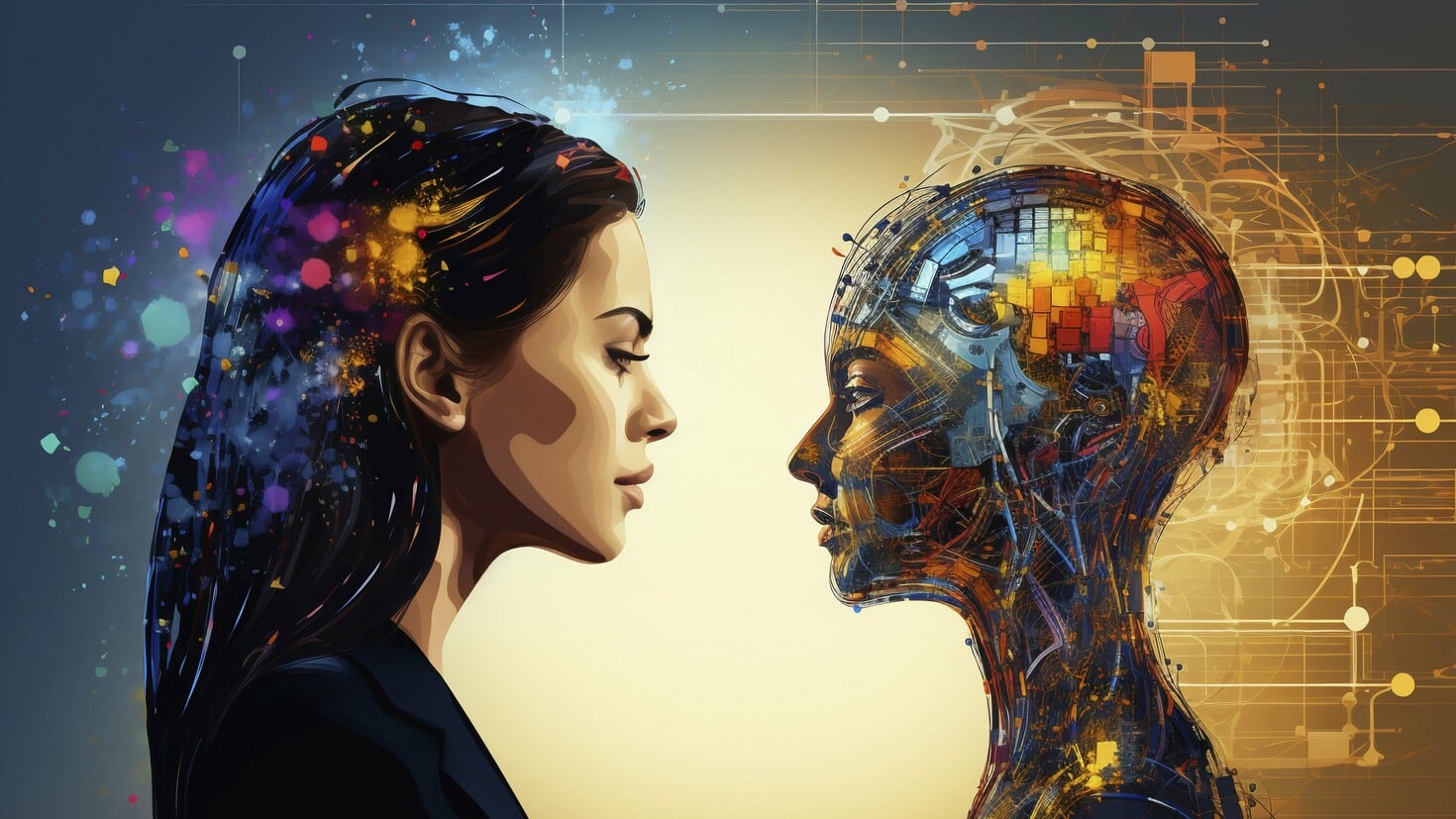
The phrase “socialism or barbarism” – which I paraphrase as “AI or barbarism” – is a deliberate provocation. I do not mean AI at any price.
Imagine waking up tomorrow and discovering that the machine on your desk can answer your emails, write music, design advertisements, create videos and even perform parts of the job for which you spent years preparing. Now imagine millions of people waking up to the same discovery. This is no longer science fiction. AI (artificial intelligence) has already entered our lives. The question is no longer whether it will change society. The question is whether we will control the change, or whether the change will control us.
The slogan “socialism or barbarism” has a long history in socialist thought, associated particularly with Karl Kautsky and Rosa Luxemburg and the critique of capitalism, while barbarism means society in ruins. I thought about it because, when I was living in London, I visited the house in Soho where Karl Marx lived. There is a blue plaque at 28 Dean Street. Marx lived there with his family in considerable poverty while working on Das Kapital. Today, the building is associated with the high-end Quo Vadis restaurant, where I had dinner. There is something almost surreal about it. A man who spent his life thinking about poverty and inequality lived in a cramped room, while the world outside was preparing for a very different future.
The world has progressed enormously in two hundred years. Medicine is better, life expectancy is higher and technology has transformed life. Yet poverty remains, the environment is under enormous pressure, and wealth has become concentrated in astonishingly few people. I often describe it simply: the money keeps moving towards the same 5,000 pairs of hands.
Bill Gates has correctly identified the turbulence. But I think he is asking the second question before asking the first. And the first question is: Who owns the AI revolution?
Electricity once transformed civilization. It changed industry, cities, communication and everything people did. AI may be an even greater revolution. Bill Gates, who wrote enthusiastically about the possibilities of AI, is now warning that society is not prepared for what is coming. He even proposed taxing AI tokens and robots and reserving certain jobs for humans. Why is someone who helped build the technological world telling us to slow down? Mr. Gates correctly identifies the problem, but his proposed remedies do not go far enough. Taxing AI tokens and robots may help pay for the transition, but it leaves the underlying ownership structure largely intact. We need democratic ownership and structural limits, not billionaire-led guardrails.
Because this is not another transition from horses to cars, sails to engines or paper files to computers. AI is different. It does not merely make human beings faster. It can increasingly perform intellectual tasks that were once considered uniquely human.
And the dangers are already visible. Data centers are spreading like the factories of an earlier industrial age, consuming enormous quantities of electricity and generating massive amounts of heat. Who bears the environmental cost? Writers, musicians, illustrators and creators are watching machines produce in seconds what took them years to master. Robots are entering areas once considered exclusively human. AI-generated videos are flooding the internet, making it difficult to distinguish the truth from invented lies.
There are darker possibilities. AI can make cyberattacks cheaper and more powerful. It can personalize misinformation, deepen political polarization and make people dependent on artificial companions. It can give governments and corporations enormous new powers. It can transform the labor market faster than human beings can adapt. (One AI researcher warns of a 10% chance that AI could cause human extinction.)
What happens when millions of people no longer have a useful economic role? Karl Marx feared the exploitation of workers; Yuval Noah Harari has warned of a future in which people may become economically redundant—a “useless class.” Unemployment is not simply a number. Work gives people income, dignity and purpose. If large numbers lose these things at once, anger, crime and political extremism may follow. If many people around you become hungry, the consequences will be much worse than any model predicts.
But this is only half the story. AI could also become one of the greatest instruments of human progress ever created. It may accelerate the discovery of medicines, improve cancer treatment, assist doctors in analyzing medical images, help farmers use water efficiently, make education more accessible and help scientists solve problems that seem impossible today. For an isolated elderly person, it may provide companionship. We should not pretend these benefits do not exist –even Harari, one of the most prominent critics of AI’s dangers, has acknowledged these potential benefits– but they may soon be locked behind corporate paywalls unless we change who owns them.
The problem is not AI itself. The problem is who controls it, who benefits from it and who pays the price. Have we forgotten who has benefited most from social media?
If companies can replace millions of workers while concentrating more wealth among the owners of technology, a basic income may become little more than a bandage. A Global Basic Income might prevent people from starving, but it does not automatically provide dignity or a place in society. Man is a history-making creature. We cannot reduce him to a consumer waiting for a monthly check from the state.
This is why I believe we need a brake. I am not arguing for the destruction of AI. I am arguing for a society capable of saying: enough. Enough to uncontrolled development and use. The United States and China cannot treat this as another technological race. It is extraordinary that companies developing the most powerful systems are expected to regulate themselves. We would never ask nuclear weapons manufacturers to write their own rules.
Europe, despite falling embarrassingly behind the United States and China in the AI race, has tried to establish rules for protecting citizens. Regulation will not solve everything, but the principle matters: technology must serve society, not society serve technology.
There is the question of power. OpenAI, NVIDIA, Anthropic, Google, Microsoft, Apple, Amazon, Meta, Alibaba, Baidu and Elon Musk’s xAI represent an extraordinary concentration of technological and economic power. If they want society to trust them with technologies capable of transforming human life, they must accept public limits when necessary. If they refuse, perhaps citizens should reconsider how much power they are willing to give them through their money, their data and their use of their products.
This is why Marx still matters. I am not proposing a return to the 19th century. (The Americans have an allergy to the word socialism.) But we should return to the questions he forced society to confront: Who owns the means of production—the data centers, chips, models and infrastructure behind AI? In the 19th century, the question was who owned the factory. In the 21st century, we may also have to ask who owns the computing power. Who benefits from technological progress? Who pays for it? What happens when productivity rises but the rewards go to the same few hands? If AI dramatically increases productivity, why should the ownership of that productivity remain concentrated in the hands of those who own the machines?
Humanity fought Marx, mocked Marx and tried to bury his ideas. Yet today we celebrate billionaires as saviors while inequality grows and working hours stretch again. Where did the eight-hour day go? Generations fought for it. Millions now work ten or twelve hours, connected to employers through smartphones.
The real danger is not that machines will become super intelligent. The danger is that humans will become powerless: not a new proletariat, but a “useless class.”
So the choice is not “AI or no AI.” It is whether we allow AI without limits, without democratic control and without a social contract. We need international agreements, taxation of extraordinary technological gains, human-reserved professions where presence matters, and a guarantee that productivity gains benefit society as well as shareholders.
The old question was: socialism or barbarism? Our question now is more frightening: AI or Barbarism?
I choose AI—but not AI at any price. I choose an AI governed by a society brave enough to put a brake on the machine before the machine puts a brake on us. It is better to move slowly and remain human than to move at speed and discover, too late, that we have built a magnificent future in which there is no place left for us.
Homo sapiens emerged from the caves in prehistory; it cannot return to the caves in the 21st century. And perhaps, standing again in front of Marx’s London home, listening to the echoes of Harari’s warnings, the final question is not what AI can become.
It is:
Quo Vadis, Artificial Intelligence, without Homo sapiens?