

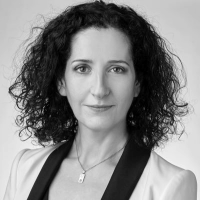
Albanese Must Go: The Urgent Case for UN Reform
When six democracies call for a United Nations’ official’s resignation within days of each other, something fundamental has shifted.
Finally, the world is taking notice: Francesca Albanese, the UN Special Rapporteur on the Palestinian territories, has abused her mandate to wage political attacks under the guise of human rights advocacy.
Most recently, following joint US-Israel operations in the Islamic Republic of Iran, Albanese let loose, posting: “I just returned from Jordan, with unprecedented clarity about what – from and through Palestine – the Israel/US axis is doing to the entire region. It pains to see what is unfolding. How come so many did not see it coming? Greater Israel, unveiled.” The trope is self-explanatory: Albanese yet again resorted to alluding to conspiracies of “Jewish world domination,” this time pointing to what could be interpreted as an allegation of Israeli manipulation of the US into using force to expand “Greater Israel.”
Just weeks before, at an Al Jazeera conference, she characterized Israel as a “common enemy” of humanity. While she has denied this is what she meant, it’s been widely interpreted as her intent. On Feb. 11, France’s Foreign Minister Jean-No?l Barrot condemned Albanese’s “outrageous and reprehensible remarks,” noting they were “directed not at the Israeli government, whose policies may be criticized, but at Israel as a people and as a nation, which is absolutely unacceptable.” He called her “a political activist who stirs up hate speech,” citing her “long list of scandalous positions,” including “comparing Israel to the Third Reich.”
The Foreign Ministers of Germany, Italy, Austria, and the Czech Republic followed with statements pressing her resignation.
But this moment of moral clarity exposes an uncomfortable truth: the UN Human Rights Council’s system for appointing, supervising, and removing special rapporteurs is fundamentally broken. Unless structural reform takes place, Albanese will be neither the first nor the last to abuse a UN mandate. In fact, Richard Falk, one of Albanese’s predecessors, himself had a long history of antisemitic and incendiary statements during his 2008-2014 tenure as Special Rapporteur.
Albanese’s record speaks for itself. She described Hamas’s October 7 massacre, which included the murder of babies, the elderly and entire families as a “logical” response to occupation. She has trafficked in antisemitic tropes about Jewish power. She has promoted Holocaust distortion. She appeared at events alongside individuals who celebrated October 7.
This isn’t advocacy for Palestinian rights—it’s the instrumentalization of a UN platform to legitimize violence against Jews and demonize the world’s only Jewish state.
What makes this especially insidious is the UN imprimatur. Her statements carry institutional weight. Her reports are cited globally. The UN logo lends credibility to antisemitism, and the Council’s silence sends a message: When it comes to Israel and Jews, the rules don’t apply.
But even with overwhelming evidence and major democracies calling for her removal, the UN HRC system has no meaningful accountability. The appointment process is, at best, opaque and, at worst, transactional. Candidates are nominated by states, reviewed by a Consultative Group from regional blocs, and selected by the HRC President after “broad consultations.” In theory, the system prioritizes independence and impartiality. In practice, it’s deeply political.
Regional blocs trade support for mandate holders. States advance candidates aligned with their interests. Because final approval occurs at the Council level—where voting reflects political alliances, there’s little incentive to vet for objectivity or exclude those with documented bias.
Albanese exemplifies this failure. Before her appointment, she publicly accused “the Jewish lobby” of controlling American foreign policy and described Israel as an apartheid state. These obvious preconceptions weren’t considered disqualifying red flags; she was appointed not despite her bias, but because of it.
Once appointed, special rapporteurs are virtually untouchable. The Code of Conduct exists, but enforcement is discretionary and rarely invoked. Removal requires a Council resolution—which means mustering a majority in a body whose 47 members include Cuba, China, and other serial human rights abusers. The result? Antisemites operate with near-total impunity.
This is the paradox: a body dedicated to universal rights operates according to anything but universal principles. Israel remains the only country with a permanent agenda item at every session—Agenda Item 7—ensuring ritualized condemnation. Meanwhile, China’s mass detention of Uyghurs, Iran’s execution of thousands of protestors, and Russia’s war crimes receive comparatively little scrutiny.
In this environment, removing a special rapporteur for antisemitic and anti-Israel bias is not about evidence. It’s about votes. And the votes aren’t there. But collective action problems aren’t insurmountable. They require leadership, coordination, and leverage.
For the first time in years, we have all three.
The US is pursuing comprehensive UN reform, with a focus on accountability. European democracies, long reluctant to confront the Council’s dysfunction, are now speaking with unusual clarity. This reflects genuine concern that the Council’s credibility is collapsing under the weight of its double standards.
Crucially, this isn’t just about Israel. The system that tolerates antisemitism from mandate holders is the same system failing to hold accountable those who whitewash abuses in China, Venezuela, or Iran. Reform serves anyone who believes human rights institutions should serve their stated purpose.
Meaningful reform requires transparent and rigorous vetting of candidates. And Agenda Item 7 must end. All countries should be treated equally.
France will raise Albanese’s removal at the Human Rights Council session starting February 23. Country representatives should use this moment to push for systemic reform so the next Albanese can be stopped before taking office.
The Albanese scandal isn’t an anomaly. It’s the logical outcome of a system that has lost its way. The question is whether we’ll demand better—or allow the next abuse to unfold under the UN flag. The answer will determine whether the UN Human Rights Council remains credible or becomes a failed institution that history remembers for betraying its mission.
