


CEO of Time to Stand Up for Israel
Albert Battel, Righteous Among Nations
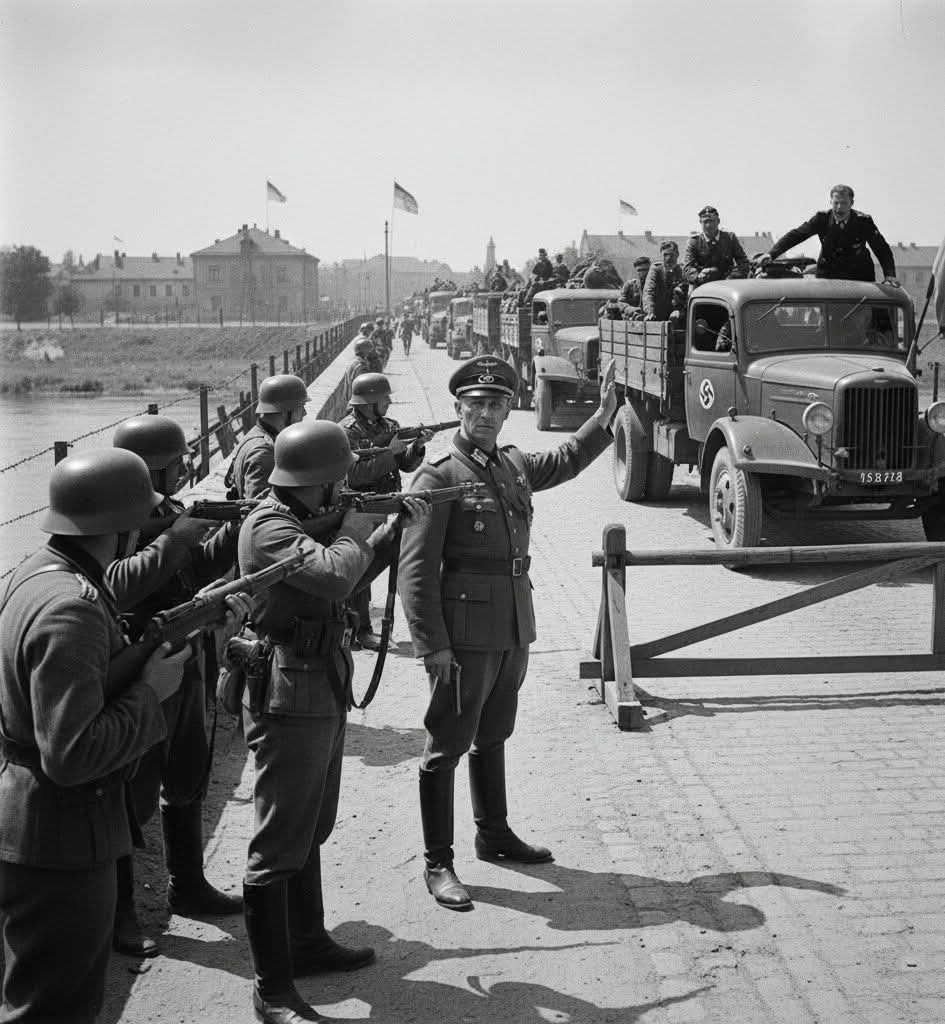
photo Credits: wikipedia, Creative Common License.
The Day One German Officer Said “No” And Saved Dozens of Jewish Lives
History often remembers the powerful, the monstrous, the architects of destruction. But sometimes the most important stories begin with a single, ordinary man who decides that obedience has limits.
One of those stories unfolded in the summer of 1942, on a bridge in the town of Przemyśl, Poland, when Wehrmacht officer Albert Battel stood in the path of the SS and simply said, “Not today.”
A Town Under the Weight of Fear
By 1942, the Jewish quarter of Przemyśl had been sealed for months. Barbed wire cut off whole families from the world. The word “resettlement” had become a cruel euphemism everyone understood. People whispered, waited, and feared the day trucks would come.
The summer heat lay over the city like a suffocating blanket. German flags hung motionless from windows. Officers marched through the streets. The ghetto had become a place of silence, dread, and resignation.
The Bridge That Stopped an Atrocity
Albert Battel, forty-nine years old, a lawyer by profession, a Wehrmacht officer by circumstance, walked onto the San River bridge that morning. He was not a hero. He was not a rebel. He was simply a man who had followed orders for too long.
But something shifted inside him when he saw the SS convoy approaching. Truck after truck. Engines growling. Men ready to empty the ghetto and send hundreds to their deaths.
Battel raised his hand. His soldiers lowered the barrier.
“The bridge is closed,” he told the SS commander.
The commander, furious, demanded to know “on whose authority.”
“Mine,” Battel said, knowing full well he had none.
That moment hangs in history like a held breath. German soldiers blocking other German soldiers. Rifles raised. Engines idling. A bridge where silence said everything.
And the impossible happened: the SS trucks turned back.
But Battel Was Not Finished
Instead of stepping aside after defying the SS, Battel climbed into his own military truck and drove straight into the ghetto. He began knocking on doors, startling families who were preparing for what they believed would be their last day alive.
“Get in the truck,” he told them. “Now.”
He gathered grandparents too frail to walk, mothers clutching infants, children holding the last toys they would ever own. He loaded them into Wehrmacht vehicles. He transported them to army barracks, fed them, and posted guards to protect them.
For hours he moved families to safety, all under the flimsy pretext of “military necessity.” Every moment was a gamble. Every decision was an act of rebellion punishable by immediate execution.
By nightfall, dozens of Jews who should have been deported to death camps were instead lying in German army beds…alive.
The Price of Doing What’s Right
Berlin reacted with rage. Heinrich Himmler personally took note of Battel’s insubordination, labeling it “unacceptable fraternization.” Battel was expelled from the Nazi Party and placed under investigation. His military career collapsed.
Yet he never apologized. Not once.
Forced out of service by illness, he returned to civilian life with no recognition, no book deal, no public praise. Just a ruined career and the quiet knowledge that he had done the only thing a human being could do.
Rediscovered by the People He Saved
After the war, survivors began searching for him.
The officer who protected us.
The German who said no.
The man who stood on the bridge.
In 1963, long after Battel had died in 1952, Yad Vashem in Jerusalem honored him as one of the Righteous Among the Nations, Israel’s highest tribute to non-Jews who risked everything to save Jewish lives.
He never lived to see it. His story was almost lost to time.
What Albert Battel Proves
Courage is not loud. It does not always arrive wrapped in glory or medals.
Sometimes it is a quiet man on a bridge saying one forbidden word: No.
Courage is not the absence of fear, it is the refusal to let fear decide who you become. It is the belief that orders never outweigh human lives. It is standing up while the rest of the world looks away.
Albert Battel wore the wrong uniform. He served under the wrong flag. But in the darkest place imaginable, he chose the light, alone.
His story reminds us that history can pivot on a single decision, a single moment, a single person.
One bridge.
One officer.
One act of defiance that saved dozens of lives.
Sometimes, that is all it takes to change everything.
(Inspired by EnLil’s Legacy FB)
About Time To Stand Up for Israel
Time To Stand Up for Israel is an independent foundation dedicated to fighting misinformation, countering antisemitism, and providing clear, fact-based education about Israel. We do not engage in internal Israeli politics. We stand on two core principles: Israel has the right to exist. Israel has the duty to defend itself. Support our work: Donate and/or subscribe at: www.timetostandupforisrael.com

Related Topics
Related Posts