
All Eyes on Antizionism?
It turns out there’s a new fad making the rounds among the pretty young things who like to think of themselves as opponents of antisemitism: forget antisemitism, there is now only one elephant in the room, and its name is antizionism.
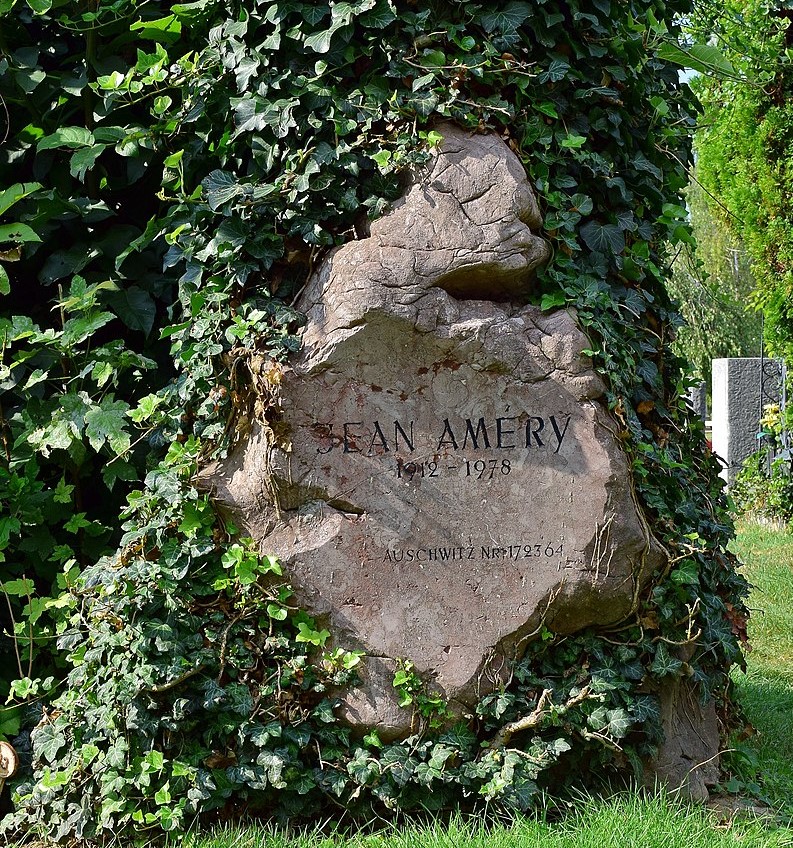
Jean Améry publicly lamented that the New Left’s antizionism was just another iteration of antisemitism for the first time in 1969, and even then, he was not the first to do so. In terms of its credibility, the contention that antizionism is not antisemitism has always had about as much argumentative validity and force as the suggestion that (allegedly) having Jewish friends automatically exempts one from any suspicion of antisemitism.
What is more, the antizionists know full well that they are lying when they claim that antizionism is not antisemitism or, to put it more precisely: that they are wilfully bending the definition of antisemitism in order to give the appearance of engaging in a form of hostility towards Jews that supposedly does not qualify as antisemitism. This strategy is akin to pedophiles invoking the principle of free love or abusive men calling for justice. They want to transgress, they know they are transgressing, they feel no shame at transgressing, but they do want their conduct to be adorned with a veneer of respectability.
If antizionism is a mask, it has always been just that: a mask instantly recognizable as such; it has never been a mask of the kind that could possibly have deceived anyone not themselves beholden to antisemitism that they were looking at the bearer’s actual face rather than a disguise. There is nothing one could now conceivably reveal or unmask on this score and, if anything, the claim to the contrary only exonerates those who would like to pretend one could not previously have known something which it has, for at least half a century now, taken wilfull blindness to ignore. There has only ever been one appropriate response to the claim that antizionism is not antisemitism: contemptuous laughter.
All this makes it all the more remarkable that even now, when the (historically speaking) totally exceptional post-Shoah taboo on antisemitism has largely receded and is set to disappear altogether in the near future, a good many of those falling over themselves to profess their antizionism at every turn still feel the need to insist that they are not antisemites. In this light alone, it seems positively bizarre to suggest one might combat antisemitism by doing them the favor of addressing them as they themselves would prefer to be addressed and not with the correct term they apparently still detest: antisemites.
Serious scholarship on antisemitism has been predicated since the 1940s at the latest on the fundamental insight that differing forms of antisemitism do not replace each other but undergo constant transformation and adaptation to changing circumstances, and that their impact is cumulative. This has been borne out not least by every single empirical study undertaken since. Even in the last two years, all relevant surveys have shown that the massive increase in Israel-related antisemitism comes not instead of, but on top of, other persisting forms of antisemitism.
It has been obvious for some time that Israel-related antisemitism is now the dominant form of antisemitism, just as other forms have been dominant in the past. Yet the fact that it is the dominant form does not make it the only or the only significant form, and it not only happily coexists with a wealth of other forms of antisemitism, in fact, all of them interact and enable each other to varying degrees. Those intent on rendering this complex constellation one-dimensional are cutting off the branch on which they sit and making it not easier but impossible to combat antisemitism in any effective manner.
Yet this approach not only addles any meaningful comprehension of the problem, it also throws the (potential) targets of all the other forms and various admixtures of antisemitism who do not enjoy the privilege of being targeted specifically by antizionist antisemites under the bus. This includes even forms of Israel-related antisemitism that cannot be classified as antizionist in a meaningful way.
As has rightly been pointed out antizionism has in common with antisemitism that neither constitute a meaningful response to the phenomena they claim to address. Yet, while this reasoning holds true for one side of the equation it obviously falls down on the other: while there is no such thing as semitism, there absolutely is such a thing as Zionism. The question therefore arises whether the proposed exclusive focus on antizionism is predicated on the assumption a) that antizionism is an inappropriate response to actual Zionism or b) that antizionism is the only currently significant form in which pathological misgivings about Jews more generally find expression. If one assumes the latter, it is perfectly obvious that the ostensible antizionism that some now want to occupy the entire stage is simply a specific form of generalized hostility towards Jews, i.e., Israel-related antisemitism that treats Israel collectively as it treats Jews as individuals (hence the notion of Israel as the Jew among the nations)—rendering the whole “all eyes on antizionism” approach totally ridiculous.
The first option—basing one’s approach on an understanding of antizionism as an inappropriate response to actual Zionism—in turn, leaves us with a least two further possibilities. Zionism might be understood in this context, in descriptive terms, as the ideology that underpins Israel’s existence or, from a variety of normative vantages, as what one thinks Zionism ought to be. The second issue strikes me as being too theoretical to merit discussion in this context. The first issue points to the nexus between Zionism as an ideology and the long since answered question of Israel’s right to exist. Some will be unable to recognize any distinction between the two. Yet one can be unreservedly committed to Israel’s non-negotiable right to exist as a Jewish state in secure borders the IDF is realistically capable of defending without being committed to Zionism as an ideology. Israel exists, it needs to exist, and the fact that Jews have a long historical connection with the territory of the State of Israel is no doubt a strong motivational factor.
But: not every group with national aspirations can or should have its own nation state. Not every group that lived somewhere first or the longest has a right to the territory in question. Calling out the denial of the Jews’ historical roots in the Land of Israel as antisemitic is not the same as acknowledging a general “first come, first serve for all eternity” principle. Calling out the contention that the Jews alone should not be allowed to have their own nation state—usually while the right of the Arabs in the contested territories to national self-determination is considered so self-evident that no one even notices the discrepancy—as antisemitic is not the same as acknowledging that every group is entitled to its own nation state. One can acknowledge that the Jews had and have no other choice but to operate Israel as a nation state (which, in turn, cannot function without a national ideology/mythology), because this is how the world works, and emphasize how deranged one needs to be to obsess about Israel of all places as the embodiment of all the evils of nationalism, without embracing or idealizing nationalism in normative terms.
Finally, and far from least, there is the thorny question of the Shoah’s significance in all this. One of the other virulent forms of antisemitism the “all eyes on antizionism” approach sidelines is secondary antisemitism, antisemitism “because of Auschwitz”. This is all the more paradox in that secondary and Israel-related antisemitism are in very many cases virtually inextricable and mutually reinforcing. Relativizing the Shoah and denying its specificity as an unprecedented and specifically antisemitic genocide helps undermine the legitimacy of the State of Israel, and equating Israeli conduct with that of the Nazis makes it easier to relativize the unprecedented character of the Shoah. Whatever one’s position on the significance of the Shoah for the creation of the State of Israel may be, this much is clear: the relativization of the Shoah can only ever lead to more barbarism, and the fantastical notion that more barbarism might lead to less antizionism, let alone less antisemitism, is simply gob-smacking.