All the News that’s Unfit to Print

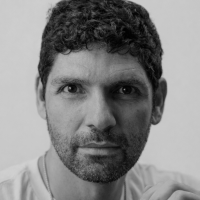
Last week, the New York Times ran a lengthy op-ed by Ben Rhodes titled “This Is the Story of How the Democrats View It on Gaza.” Rhodes is no random pundit. He was Barack Obama’s deputy national security adviser for “strategic communications, which is Washington-speak for the guy who told the story.
And make no mistake: this was storytelling.
Rhodes’s essay was a carefully constructed moral narrative arguing that Democrats who support Israel’s war against Hamas are betraying the “rules-based order,” democratic values, and basic human equality. It was eloquent. It was confident. It was also riddled with omissions, distortions, and outright falsehoods, a point made forcefully by military and legal experts almost immediately after publication.
What’s striking is not that Rhodes wrote it.
What’s striking is that the Times published it without publishing a rebuttal.
As of this writing, there has been no counter-opinion in the Times’ pages, despite the fact that Rhodes accuses Israel of conduct bordering on war crimes, flirts with the genocide charge, and implicitly indicts American support for Israel as morally corrupt. Outside the Times, his argument has been dismantled by urban-warfare experts like John Spencer and others who actually study the laws of armed conflict. Inside the Times? Crickets.
For a paper that still styles itself as the “newspaper of record,” that omission matters.
For more than a century, the New York Times has carried the motto “All the News That’s Fit to Print,” a standard adopted in 1896 to signal rigor, restraint, and fidelity to fact. That promise matters most when the subject is war, when accusations are grave, emotions are raw, and errors are measured in lives, not column inches. Publishing a sweeping moral indictment of Israel’s conduct without offering readers any factual rebuttal or countervailing expert analysis does not honor that tradition. It leaves the argument untested and the record incomplete.
Rhodes’s essay raises serious legal and moral assertions about Israel’s conduct and the rules-based order, yet it omits key facts about the October 7 attack, misstates core principles of international humanitarian law, and presents a framework for self-defense that no democracy, including the United States, could realistically adopt.
To understand Israel’s response, one must begin with the scale of the attack on October 7, a scale Rhodes never confronts. Hamas terrorists murdered roughly 1,200 Israelis and kidnapped more than 250. Israel’s population is about one-thirty-fourth that of the United States. Scaled to American population, the attack would be equivalent to 41,000 Americans killed in a single day.
Imagine terrorists crossing from Mexico into Texas, slaughtering 41,000 people and abducting roughly 8,600 which is about the size of the entire freshman class at the University of Texas at Austin. No American president, Democratic or Republican, would respond to that with what Rhodes calls “restraint.” Under Article 51 of the U.N. Charter, every sovereign nation possesses the right, and obligation, to defend itself after an armed attack. Israel is not an exception to this principle; it is the test case.
Rhodes asserts that Israel’s war violates the rules-based order. In fact, the opposite is true. As urban warfare scholar John Spencer has pointed out, Israel is fighting an enemy that embeds its fighters in schools, hospitals, and apartment buildings and uses its civilian population as shields. The laws of war recognize the profound moral distinction between the intentional killing of civilians and civilian casualties that occur when a military targets enemy combatants illegally positioned among them. That distinction is not a loophole. It is the moral core of international humanitarian law.
Rhodes collapses this distinction by presenting all loss of life as morally equivalent. It is not. A baby murdered by Hamas and a child tragically killed because Hamas placed rocket launchers under residential buildings are not morally or legally identical cases. No military in the world, including America’s, has ever faced an adversary that integrates itself into civilian infrastructure as systematically as Hamas. And no military has taken as many steps as Israel to warn, evacuate, and safeguard civilians: daily pauses, evacuation corridors, roof-knocking, precision targeting, and operational constraints that increase risk to its own soldiers.
Rhodes also repeats claims that have already been discredited. He cites a statement suggesting Israeli leaders described Palestinians as “human animals.” The full record shows the comment referred specifically to Hamas, two days after the massacre. He suggests Israel “cut off” civilians from food and water, implying deliberate deprivation as a tactic of war. Yet humanitarian aid from Israel and international partners flowed throughout the conflict, even as Hamas diverted it. Recent evidence has also corroborated that Hamas deliberately diverted tons of baby formula to sustain the propaganda claim that Israel was intentionally withholding aid. These are not semantic nuances. They are factual distinctions essential to honest analysis.
Another major pillar of Rhodes’s essay — that President Biden offered Israel “unconditional support” — is contradicted by the historical record. The administration withheld key munitions, publicly opposed Israel’s entry into Rafah, and delayed arms shipments during active operations. Israeli commanders adapted tactics in real time in response to these constraints. Whether one agrees with the administration’s choices or not, presenting U.S. support as “unconditional” is simply inaccurate.
But the deepest problem with Rhodes’s argument is not any single misstatement. It is the worldview beneath it: the belief that a democracy’s use of force, even after a mass-casualty attack, undermines its legitimacy. Applied to the United States, this principle would be unthinkable. It would require us to renounce self-defense in the face of terrorism or aggression. It would render our alliances meaningless, our deterrence hollow, and our commitments unreliable. It would reward the strategy of embedding fighters among civilians, because any response that risks civilian harm would be labeled immoral.
Israel today is fighting a war it did not start, against an adversary that openly declares genocidal intent and operates in violation of every tenet of international law. It is doing so while attempting to rescue hostages dragged from their homes — the equivalent, in American terms, of an entire university freshman class kidnapped across the border. That context is indispensable. Without it, one cannot understand the scale, urgency, or moral structure of Israel’s response.
Debate about this conflict is necessary and healthy in any democracy. But it must begin with facts, law, and proportion — not with narratives that obscure more than they clarify. Supporting an ally in a lawful war of self-defense is not hypocrisy. It is entirely consistent with the democratic values the United States has upheld in its own wars.
The Times owes its readers a fuller, more accurate picture of this conflict. At minimum, that means publishing serious rebuttals alongside grave accusations. The stakes for Israel, for American foreign policy, and for the credibility of the rules-based order are far too high for anything less.
And at some point, the argument stops being about Israel and starts being about us.
About whether democracies still believe they have the right to defend their citizens after mass murder. About whether intent still matters in war. About whether the laws of armed conflict exist to restrain barbarism — or to reward it. And about whether America’s most influential newspaper still believes that extraordinary claims demand extraordinary scrutiny.
Ben Rhodes is entitled to his views. He is not entitled to have them stand uncontested as fact.
October 7 was not a policy debate. It was a slaughter. Scaled to American terms, it was 41,000 dead and an entire college freshman class dragged into captivity. Any country that survives such an attack responds with force — not because it has abandoned its values, but because it has them.
“All the News That’s Fit to Print” is not just about what appears on the page.
It’s about what is challenged, corrected, and contextualized.
Silence in the face of distortion doesn’t make the story truer.
It just leaves the record incomplete.
And the record still matters.