
Iran: things are not going well. But should we care?
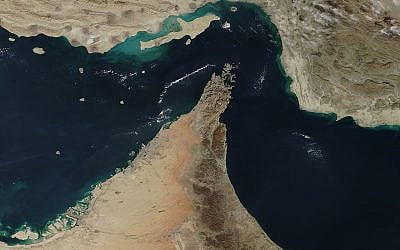
The so-called negotiations between the USA and Iran are not going well. In truth the two parties, assisted by less-than-reliable intermediaries are talking past each other, but certainly not with or at each other. None of the wish list items sought by the USA and Iran are even close to being agreed upon, redlines are stepped on and quickly forgotten, and new discussion items are added randomly. In recent days, we’ve seen re-emerge a sort of low intensity warfare, indication that neither party wants the resurgence of an all-out war. Paradoxically, the USA are being perceived as weak, even considering their sizeable military successes, and Iran is being perceived as strong, resolute and dangerous, even considering the dismal state of their economy and the defeat they suffered earlier. To make things even more complicated, the US congress just passed a resolution (which probably will not come to fruition) attempting to severally limit President Trumps ability to wage war, or even to continue this war campaign against Iran. And yet, both Iran and the USA repeat day in and day out that they want to sign a long-term cease fire agreement as soon as possible.
As I said, “Things are not going well”. Then “Should we care”?
I believe I made the case abundantly clear in my previous chronicle; I am going to repeat it: whatever deal, verbal, written, or otherwise the USA sign with Iran will not be worth anything. As demonstrated by the 2015 JCPOA, Iran will lie, cheat, renege, dissimulate, etc.
At this time, I believe I need to be more precise in my argument: Throughout this opinion piece, and unless otherwise specified, the word “Iran” refers to the regime that controls the country of Iran and which is made of Mollahs, Ayatollahs and the Islamic Revolutionary Guard (also known as Pasdaran). This dictatorial (or terrorist) organization has been holding absolute power over Iran since 1979. In these 47 years, they have terrorized their neighbors, built a formidable war force, impoverished their population and enriched themselves beyond anyone wildest dreams. They draw their legitimacy through the enforcement of the strictest form of Islam. Part of it is their stated objectives of destroying Israel and the United States. Not so publicly stated is their dream of becoming the absolute dominant power over the entire middle East and more. This explains why they believe they need nuclear weapons and the means to project them across the oceans.
Looping back to my argument: whatever agreement they reach, sign and seal, Today’s Iran leaders will never ever abandon these projects (nuclear weapons, ICBM’s, etc..). Again, see what happened to the JCPOA as an example.
My reasoning is really simple: If we continue to deal with these same Islamic extremists, and since we know that they will never respect any treaty we sign with them, then Why Should We Care?
By now, it should be obvious to everyone that the only way to inject credibility in these negotiations and to ensure all parties walk toward a peaceful future is through a drastic and complete change of regime and of constitution in Iran. This must be the highest priority for all goodwill countries wanting to help the cause of peace and to finally free the Iranian people from a horrible oppression. This should be an underground effort aimed at empowering and protecting the Iranian citizens. From there, a truly democratic regime can be put in place, devoid of any Islamist influence, and committed to peace including with the USA and Israel.
In conclusion, in my humble opinion, the parties negotiating with Iran (i.e. the USA and to some extend Israel) should approach the negotiations with a sharper set of strategies and tactics. First, time is not our enemy. As long as the underground efforts to empower the Iranian people are under way, we should not feel in any hurry to move forward with a deal signing. Second, in this potential cease fire deal being discussed, we should put the highest priority in monitoring and inspection, constant, in depth, with no limitation in sites, time and scope. Of course, we can ask the Mollahs to transfer out their stock of Uranium and maybe even their long-range missiles, but they will not agree to it, and even if they do, they will not comply. Inspection and monitoring give us the next best thing: knowing how much they have and knowing where it is.
So, Why Should We Care? Well, as long as we are working towards a regime change, I see really no point in sweating the fine print in this eventual new agreement.